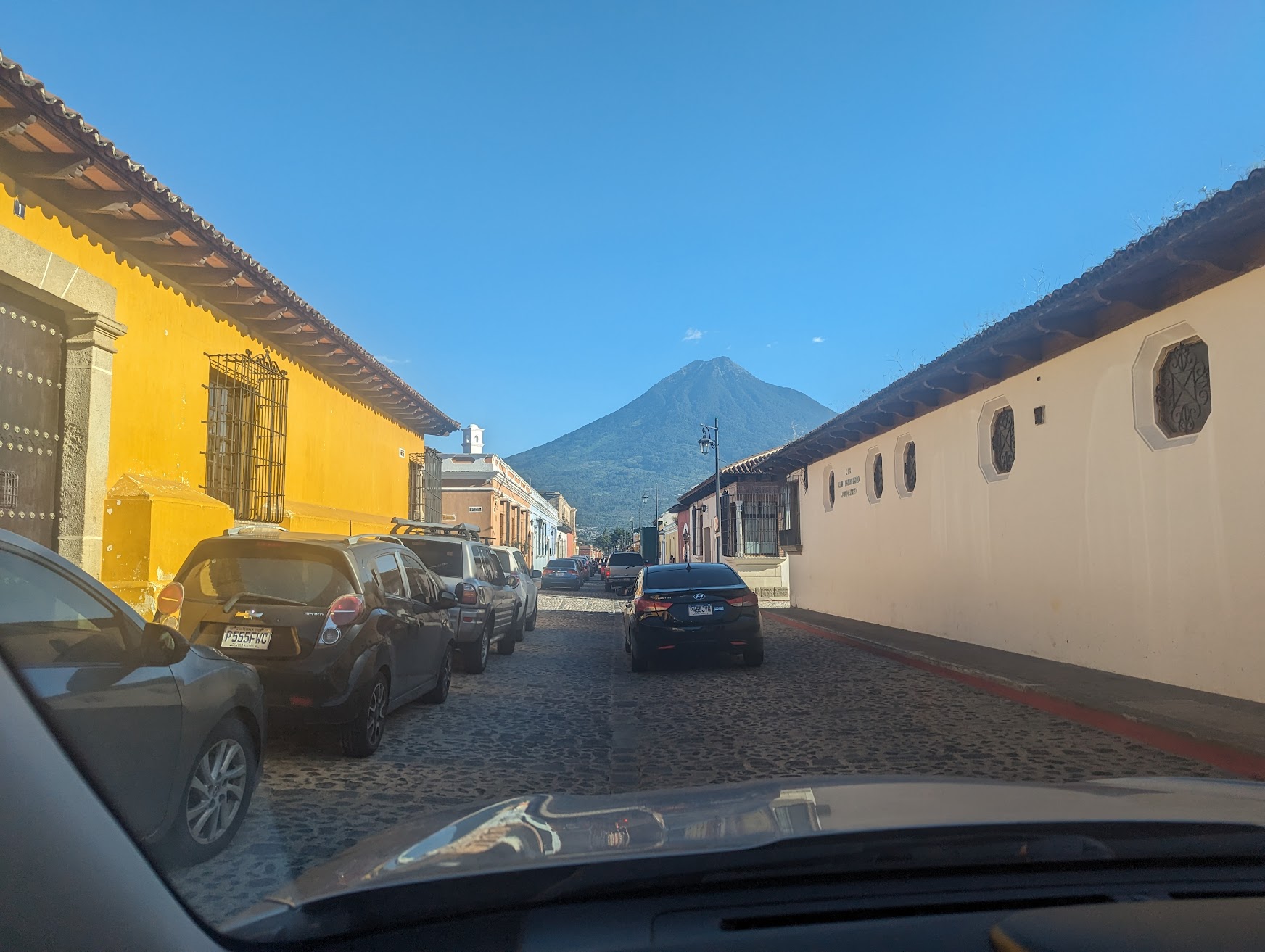
A comfortable life in Antigua Guatemala costs $1,200 to $1,700 a month. Rent a furnished one-bedroom in the centro for $600, eat at comedores for $3 a plate, walk everywhere on cobblestone streets with three volcanoes overhead, and still spend 60% less than you would in Austin or Miami. This is the most popular expat destination in Guatemala for a reason — the infrastructure is there, the community is established, and the coffee is extraordinary.
Antigua is not the cheapest place in Guatemala. Lake Atitlan and Xela both cost less. But Antigua offers something neither can match: a complete package of walkability, international restaurants, fast internet, and proximity to Guatemala City’s airport (45 minutes). For most expats balancing cost, convenience, and quality of life, Antigua is the sweet spot.
This breakdown uses real prices tracked in March 2026, cross-referenced with current exchange rates (approximately 1 USD = 7.7 GTQ) and food price data. Every figure comes from actual spending, not theoretical budgets.
Monthly Budget Summary
Updated March 2026. All figures monthly, single person, in USD.
| Expense | Budget | Comfortable | Premium |
|---|---|---|---|
| Rent (1BR furnished) | $250–400 | $500–800 | $1,000–1,800 |
| Groceries | $120–180 | $200–300 | $350–500 |
| Dining out | $80–120 | $200–350 | $350–500 |
| Utilities (electric, water, gas) | $30–50 | $40–80 | $80–130 |
| Internet | $30–35 | $35–50 | $50–70 |
| Transport | $15–30 | $30–50 | $80–200 |
| Healthcare | $20–30 | $40–80 | $100–200 |
| Entertainment | $40–70 | $80–150 | $150–300 |
| Total | $800–1,200 | $1,200–1,700 | $2,500–3,500 |
What each tier looks like in practice:
- Budget ($800–1,200): Shared house or basic studio, cooking most meals, shopping at the mercado, walking everywhere, limited eating out. Sustainable but not luxurious. Many long-term backpackers and Spanish school students live at this level.
- Comfortable ($1,200–1,700): Private 1BR apartment with a courtyard, eating out 3–4 times a week, good internet for remote work, Uber to Guatemala City when needed. The sweet spot for most expats and digital nomads.
- Premium ($2,500–3,500): Restored colonial home with views, dining at Antigua’s best restaurants regularly, a gym membership, private healthcare, and a lifestyle that would cost $7,000+ in a comparable US city.
Rent: Where You Live Changes Everything
Rent is the single biggest variable in your Antigua budget. The same city has $200 shared rooms and $1,800 colonial estates. Location within Antigua matters more than apartment size.
Centro Historico (Within the Grid)
The historic center — roughly the area bounded by the four ruinas — is where most expats want to be. Everything is walkable: restaurants, cafes, markets, coworking spaces, Spanish schools.
| Type | Monthly Rent | Notes |
|---|---|---|
| Shared room in a house | $200–350 | Common for Spanish students, basic furnishing |
| Studio / efficiency | $350–500 | Often above a shop or in a converted colonial |
| 1BR furnished apartment | $500–800 | The standard expat setup, may include courtyard |
| 2BR apartment | $700–1,100 | Good for couples or roommates |
| Colonial house (restored) | $1,000–1,800 | Courtyard, rooftop terrace, volcano views |
Centro rents run 20–30% higher from November through March (high season, Semana Santa buildup). If you arrive in May or June, you have more negotiating power. Long-term leases (6+ months) typically get 10–15% discounts.
Outskirts: Jocotenango, San Pedro, Ciudad Vieja
The villages surrounding Antigua offer significantly lower rents with a 10–20 minute walk or quick tuk-tuk ride to the center.
Jocotenango (10 min north) is the most popular alternative — it has its own restaurants, a brewery, and Calle del Arco connects it directly to Antigua’s center. Rent here runs 25–35% less than centro.
San Pedro Las Huertas (15 min south) is quieter and more residential. Even cheaper, but fewer services.
Ciudad Vieja (20 min south) is a Guatemalan town with minimal tourist infrastructure. Rents are genuinely local — $150–300 for a house — but you need Spanish and comfort with a different pace of life.
| Area | 1BR Furnished | Savings vs Centro |
|---|---|---|
| Jocotenango | $350–550 | 25–35% less |
| San Pedro Las Huertas | $280–450 | 35–45% less |
| Ciudad Vieja | $150–300 | 50–65% less |
| San Juan del Obispo | $200–350 | 40–55% less |
Furnished vs Unfurnished
Most expat rentals are furnished because landlords know their market. Unfurnished apartments exist but are primarily aimed at Guatemalan families signing multi-year leases. If you find an unfurnished place, expect to pay 20–30% less, but you will spend $500–1,000 upfront on furniture from the mercado or second-hand shops.
Deposits: Standard is one month’s rent as deposit, plus first and last month upfront. Some landlords ask for two months. Get a written contract — even a simple one — that specifies what is included (furniture, WiFi, water, gas).
Food: From Q20 Comedores to $50 Fine Dining
Antigua has Guatemala’s widest range of food options. You can eat for $3 or $50 and everything in between. Your food budget depends entirely on where you choose to eat.
Budget Eating ($150–300/month)
The mercado municipal is the backbone of affordable eating in Antigua. Full plates (comida corriente) run Q20–30 ($2.60–3.90). A typical comida includes rice, beans, a protein (chicken or beef), tortillas, salad, and a drink. You will not go hungry.
Street food around the market and bus terminal: tamales Q5–10, tostadas Q5, atol (corn drink) Q5, chuchitos Q3–5. A full day of street eating costs $5–8.
If you cook at home, the mercado’s produce section is dramatically cheaper than supermarkets. Tomatoes, avocados, onions, herbs — all at roughly half the La Bodegona or La Torre price. See our grocery shopping guide for market tips.
Mid-Range Dining ($200–350/month)
Antigua’s mid-range restaurant scene is excellent and diverse. Expect to pay Q80–150 ($10–20) per person for a main course with drink at restaurants like:
- International cuisine (Thai, Indian, Italian, Japanese) — Q90–180 per person
- Local-elevated restaurants (Hector’s, Cafe Condesa) — Q80–140 per person
- Brunch spots (Cafe No Se, Fernando’s Kaffee) — Q60–120 per person
Eating out 4–5 times a week at this level adds $200–350 to your monthly budget.
Fine Dining ($350–500+/month)
Antigua punches above its weight for a small city. Restaurants like El Tenedor del Cerro, Mesa 502, and Sobremesa serve meals that would cost $80–120/plate in New York for Q150–350 ($20–45) per person. Wine is the expensive part — imported bottles run Q150–400 ($20–52).
Regular fine dining adds $350–500 to your budget, but even at this level you are paying a fraction of US prices.
Grocery Costs
| Item | Mercado Price | Supermarket Price |
|---|---|---|
| Chicken breast (lb) | Q18–22 ($2.35–2.85) | Q25–30 ($3.25–3.90) |
| Avocados (3) | Q10–15 ($1.30–1.95) | Q20–25 ($2.60–3.25) |
| Tomatoes (lb) | Q5–8 ($0.65–1.04) | Q8–12 ($1.04–1.56) |
| Eggs (dozen) | Q16–20 ($2.08–2.60) | Q22–26 ($2.85–3.38) |
| Bread (local bakery) | Q3–8/roll | Q5–10/roll |
| Ground coffee (lb, local) | Q30–45 ($3.90–5.85) | Q45–65 ($5.85–8.45) |
| Beer (Nacional, 12-pack) | Q80–100 ($10.40–13.00) | Q100–120 ($13.00–15.60) |
For the full price list updated monthly, see our food price tracker.
Transportation: A Walking City
Antigua is one of the most walkable cities in Central America. The centro historico is about 1 km by 1 km — you can cross it in 15–20 minutes on foot. Most expats rarely need motorized transport within town.
| Transport | Cost | Notes |
|---|---|---|
| Walking | Free | The primary mode within centro |
| Tuk-tuk (within Antigua) | Q10–20 ($1.30–2.60) | Negotiate before riding, standard fares |
| Tuk-tuk (to Jocotenango) | Q15–25 ($1.95–3.25) | Fixed routes, slightly more at night |
| Chicken bus (to Guatemala City) | Q10–15 ($1.30–1.95) | 1.5 hours, from the bus terminal |
| Shuttle (to Guatemala City) | Q60–100 ($7.80–13.00) | Tourist shuttle, door-to-door |
| Shuttle (to Airport) | Q100–150 ($13–19.50) | Pre-book, 45–60 min |
| Uber (to Guatemala City) | Q150–250 ($19.50–32.50) | Available, 45–90 min depending on traffic |
| Monthly motorcycle rental | Q1,500–2,500 ($195–325) | Popular for trips to surrounding villages |
Total monthly transport: $30–50 for most expats who walk within Antigua and take occasional shuttles. If you commute to Guatemala City regularly, add $100–200.
The cobblestone streets are not car-friendly. Parking is limited and expensive in the centro. A car is more burden than benefit unless you regularly travel outside the Antigua valley. For day trips and intercity travel, see our transportation guide.
Internet & Remote Work
Internet is Antigua’s most important infrastructure story for remote workers. The good news: fiber is available. The nuance: not everywhere.
Speeds and Providers
Tigo and Claro both offer fiber in the centro historico with speeds of 50–100 Mbps download. Plans run Q235–350/month ($30–45). Installation is typically free with a 12-month contract.
Outside the central grid, coverage drops fast. Jocotenango has partial fiber coverage. San Pedro Las Huertas and Ciudad Vieja rely more on cable or mobile data. Always test internet speed before signing a lease.
| Provider | Plan | Speed | Monthly Cost |
|---|---|---|---|
| Tigo Fiber | Home 50 | 50 Mbps | Q235 ($30) |
| Tigo Fiber | Home 100 | 100 Mbps | Q350 ($45) |
| Claro Fiber | Plan 50 | 50 Mbps | Q250 ($32) |
| Starlink | Residential | 50–150 Mbps | Q345–510 ($45–66) |
| Mobile hotspot (Tigo/Claro) | Prepaid | 10–30 Mbps | Q150–250 ($19–32) |
For the full ISP comparison, see our internet guide.
Coworking Spaces
Antigua has a well-developed coworking scene:
- Day passes: Q50–100 ($6.50–13)
- Monthly memberships: Q600–1,200 ($78–156)
- Cafe WiFi: Free with purchase at dozens of spots (Cafe No Se, Fernando’s, Artista de Cafe)
Most remote workers alternate between home WiFi and coworking spaces. Budget Q80–150/month ($10–20) for occasional coworking if your home internet is reliable.
Healthcare
Antigua has adequate healthcare for routine needs and several private clinics catering to expats. For anything serious, Guatemala City’s hospitals are 45 minutes away.
| Service | Cost |
|---|---|
| General doctor visit | Q150–400 ($20–52) |
| Specialist consultation | Q300–600 ($39–78) |
| Dentist (cleaning) | Q200–400 ($26–52) |
| Dentist (filling) | Q300–800 ($39–104) |
| Blood work (basic panel) | Q150–350 ($20–45) |
| Pharmacy (antibiotics, generic) | Q30–80 ($3.90–10.40) |
| Private health insurance (annual) | $600–1,500 |
Hospital San Pedro is Antigua’s main facility. For emergencies, most expats head to Guatemala City hospitals (Hospital Herrera Llerandi, Centro Medico). Ambulance service is available through Bomberos Voluntarios (dial 122).
Monthly healthcare budget: $40–80 for a comfortable level (occasional visits, basic meds). Add $50–125/month if you want private insurance through a Guatemalan provider.
Utilities
Antigua’s climate is mild year-round (average 20–25C / 68–77F), so heating and air conditioning are not factors. This keeps utility costs low.
| Utility | Monthly Cost | Notes |
|---|---|---|
| Electricity | Q150–350 ($20–45) | Higher if using electric water heater |
| Water | Q50–100 ($6.50–13) | Municipal water, not potable |
| Purified drinking water | Q48–80 ($6–10) | 4–6 garrafones per month |
| Gas (cooking/hot water) | Q100–200 ($13–26) | Tankito delivery, varies with usage |
| Cell phone (Tigo/Claro prepaid) | Q75–150 ($10–20) | With data package |
Total utilities: $40–80 for a comfortable setup. See our SIM card guide for the best phone plans.
The biggest wildcard is electricity. Guatemala charges tiered rates — the more you use, the higher the per-kWh price. If you run a water heater, fans, and multiple devices all day, expect Q300–450 ($39–58). If you are minimal about power, Q120–200 ($16–26).
How Does Antigua Compare?
Antigua vs US Cities
| Expense | Antigua | Austin, TX | Miami, FL | San Francisco |
|---|---|---|---|---|
| 1BR apartment | $600 | $1,800 | $2,200 | $3,200 |
| Lunch (casual) | $4 | $15 | $18 | $20 |
| Monthly groceries | $250 | $450 | $500 | $550 |
| Internet (50 Mbps) | $30 | $60 | $65 | $70 |
| Uber (5 km) | $2.50 | $12 | $14 | $16 |
| Comfortable total | $1,400 | $3,500 | $4,000 | $5,500 |
Antigua costs roughly 60% less than Austin, 65% less than Miami, and 75% less than San Francisco for a comparable lifestyle. The gap is widest on rent and dining, narrowest on imported goods and electronics.
Antigua vs Other Guatemala Cities
| Expense | Antigua | Guatemala City (Z10) | Lake Atitlan | Xela |
|---|---|---|---|---|
| 1BR apartment | $500–800 | $750–1,035 | $200–400 | $300–450 |
| Comida corriente | Q25–35 | Q25–40 | Q20–30 | Q20–30 |
| Monthly total | $1,200–1,700 | $2,350–3,250 | $800–1,200 | $900–1,200 |
Antigua sits in the middle of Guatemala’s cost spectrum — cheaper than the capital’s upscale zones, more expensive than the highlands and lake towns. The premium you pay over Xela or Atitlan buys you walkability, better internet, and proximity to the airport.
For the full country-wide comparison, see our complete cost of living guide.
The Antigua Premium: What You Pay For (and What You Do Not)
Worth the premium:
- Walkability — no car needed, everything within 20 minutes on foot
- Established expat community — making friends is easy
- Restaurant and cafe scene — Guatemala’s best outside the capital
- Spanish schools — dozens of excellent immersion programs ($150–200/week)
- Airport proximity — 45 minutes to La Aurora International
- Reliable internet in the centro — 50–100 Mbps fiber
Not worth it (or overpriced):
- Tourist-trap restaurants near Parque Central — walk 3 blocks for 50% savings
- Furnished short-term rentals on Airbnb — $40–80/night vs $20–27/night (monthly equivalent of $600–800 lease)
- Guided tours — easy to visit coffee farms, volcanoes, and villages independently
- Imported goods at “gourmet” shops — overpriced; use La Bodegona or PriceSmart in Guatemala City instead
The gringo tax is real but avoidable. Antigua has a two-tier economy: tourist prices and local prices. Learn enough Spanish to order at comedores, shop at the mercado, and negotiate tuk-tuk fares. The difference between a $1,200 month and a $1,700 month is largely about knowing where locals eat and shop.
Sample Monthly Budgets: Real Scenarios
Remote Worker ($1,500/month)
| Expense | Amount |
|---|---|
| 1BR apartment, centro (furnished, WiFi included) | $650 |
| Groceries (mix of mercado and supermarket) | $220 |
| Dining out (3x/week mid-range) | $250 |
| Coworking space (occasional) | $40 |
| Tuk-tuks and occasional shuttle | $40 |
| Utilities | $60 |
| Cell phone (Tigo 30GB) | $15 |
| Healthcare (occasional visit) | $25 |
| Entertainment (bars, events) | $100 |
| Gym | $30 |
| Misc (haircut, laundry, household) | $70 |
| Total | $1,500 |
Spanish Student ($900/month)
| Expense | Amount |
|---|---|
| Shared room in casa de familia | $280 |
| Groceries and mercado meals | $200 |
| Dining out (1–2x/week budget) | $80 |
| Transport (walking + occasional tuk-tuk) | $20 |
| Utilities (included in rent) | $0 |
| Cell phone (prepaid) | $10 |
| Entertainment | $60 |
| Misc | $50 |
| Total | $700 |
| Spanish school (20 hrs/week) | +$200 |
| Total with school | $900 |
Retired Couple ($2,400/month)
| Expense | Amount |
|---|---|
| 2BR colonial house with courtyard | $1,000 |
| Groceries | $350 |
| Dining out (4–5x/week) | $400 |
| Utilities | $90 |
| Internet | $35 |
| Transport (tuk-tuks + monthly GC shuttle) | $70 |
| Healthcare (private insurance + visits) | $200 |
| Entertainment and social | $150 |
| Misc | $105 |
| Total | $2,400 |
Getting Started: First Month in Antigua
Your first month will cost more than average. Budget an extra $300–600 for:
- Security deposit: One month’s rent ($500–800)
- SIM card + data package: Q100–200 ($13–26) — see our SIM card guide
- Household basics: Q300–500 ($39–65) from the mercado (towels, kitchen supplies, cleaning products)
- Groceries stocking: Q400–600 ($52–78) initial pantry fill
Tip: Arrive without a long-term lease. Book an Airbnb or guesthouse for 1–2 weeks while you walk neighborhoods, compare apartments in person, and test internet speeds. Rental prices are almost always better in person than online.
For the step-by-step relocation process, see our how to move to Guatemala guide and visa guide.
Related Resources
- Complete Cost of Living in Guatemala — country-wide breakdown with all 7 cities
- Cost of Living in Guatemala City — zone-by-zone capital guide
- Cost of Living at Lake Atitlan — town-by-town lakeside costs
- Antigua Guatemala Municipality Page — demographics, safety, elevation data
- Best Places to Live in Guatemala — ranked comparison of 10 cities
- Exchange Rates — live USD/GTQ conversion
- Internet in Guatemala — ISP speeds and coverage
- Spanish Schools in Guatemala — school comparison and costs