Guatemala packs more into a small country than almost anywhere else in Central America. Ancient Maya ruins rising from jungle canopy, volcanic highlands draped in cloud forest, turquoise rivers cutting through limestone caves, and colonial cities frozen in time – all connected by a patchwork of shuttles, boats, and winding mountain roads. The challenge is not finding things to do. The challenge is deciding what to skip.
This guide gives you four tested itineraries – 5, 7, 10, and 14 days – with real transport times, current prices, and practical daily schedules. Whether you are a backpacker stretching every quetzal or a traveler who wants a private driver and boutique hotels, each itinerary scales to your budget.
How to Use This Guide
These itineraries follow the most popular travel routes through Guatemala, optimized to minimize backtracking and maximize your time at each destination. All prices are listed in Guatemalan quetzales (GTQ/Q) with US dollar equivalents at the current rate of approximately Q7.66 per dollar. Check our exchange rates page for the latest conversion.
Every route starts and ends at La Aurora International Airport (GUA) in Guatemala City. If you are crossing overland from Mexico or Belize, adjust accordingly – Flores is the natural starting point from Belize, and Xela or Huehuetenango from Mexico’s southern border.
A few ground rules before you start planning:
- Book Semana Santa early. If your trip overlaps with Holy Week (March or April), book accommodation in Antigua at least 2-3 months ahead. Prices triple and rooms sell out.
- Thursday and Sunday matter. The famous Chichicastenango market only runs on Thursdays and Sundays. Build your itinerary around those days if you want to visit.
- Shuttles beat chicken buses for tourists. Tourist shuttles cost more but run door-to-door, are air-conditioned, and are significantly safer with luggage. Book through your hotel or GuateGo.com.
- ATMs are your friend. Banrural and BAM ATMs are the most reliable nationwide. Withdraw quetzales rather than exchanging dollars – you will get a better rate.
- Altitude varies wildly. Guatemala City and Antigua sit at 1,500m. Lake Atitlan is at 1,560m. Flores is at 127m. You will feel the temperature swings, so pack layers.
5-Day Quick Highlights
Five days is tight, but it is enough to experience Guatemala’s two most iconic destinations – Antigua and Lake Atitlan – with a volcano hike thrown in. This itinerary works well for long weekends or as an add-on to a Mexico or Belize trip.
Day 1: Arrive Guatemala City, Transfer to Antigua
Your plane lands at La Aurora International Airport (GUA). Do not linger in Guatemala City – head straight to Antigua, one hour west. Tourist shuttles wait outside the arrivals hall and cost Q80-100 ($10-13). Private transfers run Q250-400 ($33-52) and can be arranged through your hotel.
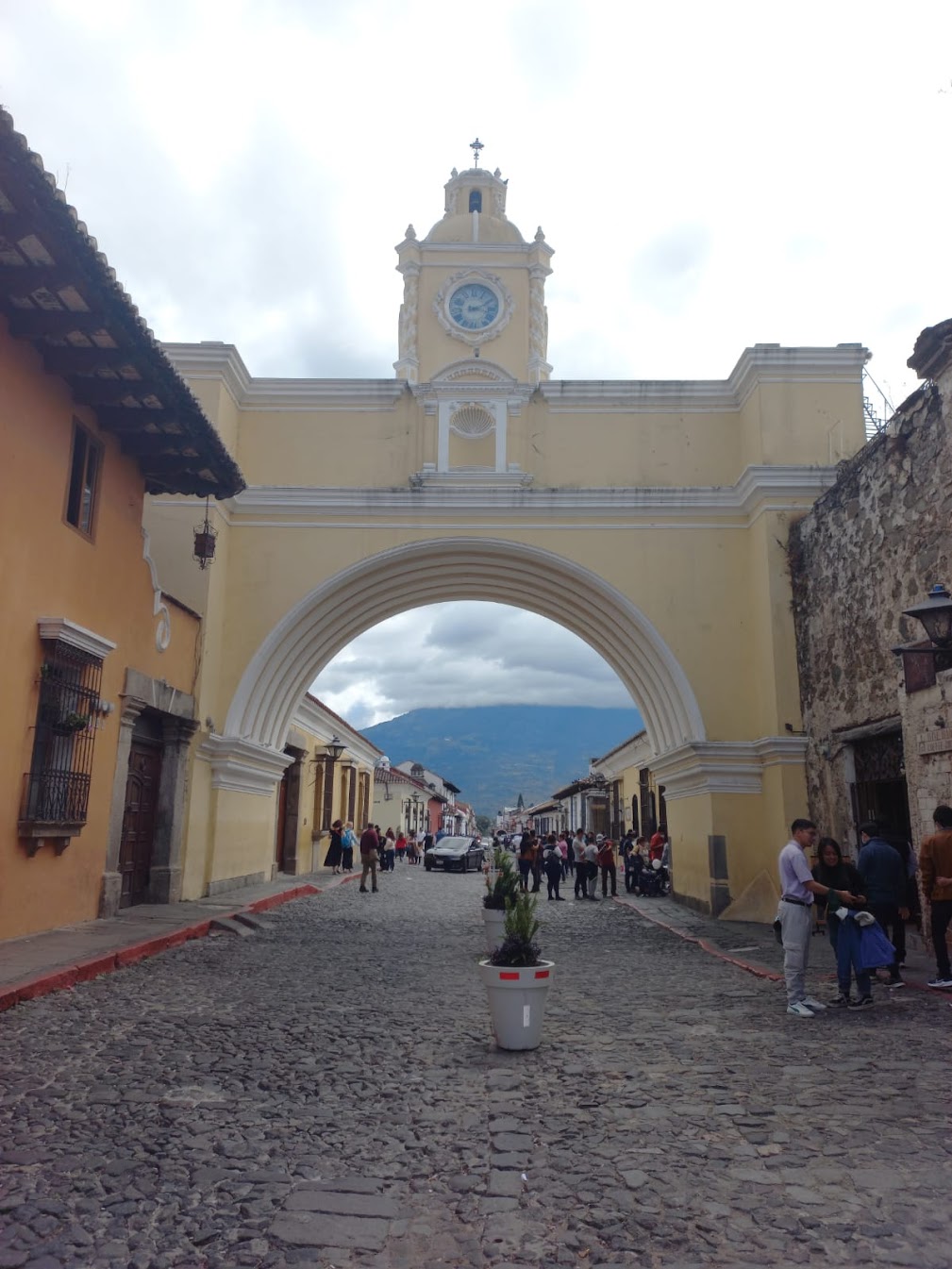
Once in Antigua, check into your hotel and spend the afternoon walking the colonial center. Start at Parque Central, the main square framed by the Cathedral of San Jose, the Palace of the Captains General, and the City Hall. Walk north on 5a Avenida Norte to the Santa Catalina Arch – the most photographed landmark in Antigua, with Volcan de Agua framed perfectly behind it.
For dinner, Cafe Sky offers rooftop seating with panoramic volcano views and solid international food (mains Q60-120). For something more local, try Rincon Tipico on 6a Calle Poniente for traditional pepian or jocon – hearty Guatemalan stews that run Q35-55.
Where to stay: Budget – Hostal Antigua (Q80-120/night, dorms). Mid-range – Hotel Casa del Parque (Q300-500/night). Comfortable – Hotel Casa Santo Domingo (Q1,000-1,800/night, a converted monastery with museum grounds).
Day 2: Antigua – Volcano Hike + Colonial City
Wake early for a Pacaya volcano hike. Tours depart Antigua around 6 AM and cost Q150-250 ($20-33) including transport and guide. The hike takes 4-5 hours round trip and is moderately strenuous – you climb about 600 meters to reach the active lava fields at the summit. On a clear day, you can see Volcan de Fuego erupting in the distance. Read our Pacaya trail guide for detailed preparation tips.
Return to Antigua by early afternoon. Spend the rest of the day exploring the city’s ruins and museums. Top picks:
- Convento de las Capuchinas (Q40 entry) – the best-preserved convent, with a unique circular tower of 18 tiny cells where nuns lived in isolation.
- Iglesia y Convento de La Recoleccion (Q40 entry) – massive earthquake-toppled ruins, dramatically photogenic.
- Casa del Jade (free entry) – jade museum and workshop where you can watch artisans carve the stone the Maya valued more than gold.
- ChocoMuseo (free entry, workshops Q80-150) – learn about cacao’s role in Maya culture, taste artisan chocolate, or take a bean-to-bar workshop.
For dinner, Hector’s Bistro near 5a Avenida serves excellent fusion cuisine (mains Q80-140). For a budget option, the comedores along the Mercado de Artesanias serve filling set meals (almuerzo) for Q25-35.
Day 3: Antigua to Lake Atitlan
Catch a morning shuttle from Antigua to Panajachel (Q80-120, 2.5 hours). The road climbs through pine forests and indigenous highland villages before dropping down to the lake – your first glimpse of Atitlan, ringed by three volcanoes, is genuinely breathtaking.
In Panajachel, head to the public dock and catch a lancha (small motorboat) to San Juan La Laguna (Q25, about 20 minutes). San Juan is the quieter, more artisanal alternative to the backpacker hub of San Pedro next door. Visit the women’s weaving cooperatives where you can watch backstrap loom weaving and buy directly from the artisans. Book a coffee tour at one of the local fincas (Q50-80, 1.5 hours) – the coffee grown on Atitlan’s volcanic slopes is some of Guatemala’s best.
Stay in San Juan or take a short tuk-tuk ride to San Marcos La Laguna, the lake’s wellness and yoga hub. San Marcos is more tranquil, with swimming spots and meditation retreats scattered among the avocado trees.
Where to stay: Budget – Hostel Fe (San Pedro, Q60-100/night). Mid-range – Hotel Uxlabil (San Marcos, Q250-400/night, lakefront). Comfortable – Casa Palopo (Santa Catarina, Q800-1,500/night, infinity pool overlooking the lake).
Day 4: Lake Atitlan – Indian Nose Sunrise + Villages
Set your alarm for 3:30 AM. The Indian Nose (Nariz del Indio) sunrise hike is one of Guatemala’s signature experiences. A guide from San Juan or San Pedro picks you up at 4 AM and drives you to the trailhead above Santa Clara La Laguna. The hike itself is short – 20-30 minutes uphill – but the view at the top is extraordinary: Lake Atitlan spreading out below you as the sun rises over the volcanic rim. Tours cost Q50-100 ($7-13). See our Indian Nose hike guide for what to bring.
After descending, rest and eat breakfast. Then take a lancha to San Pedro La Laguna (Q25, 10 minutes from San Juan). San Pedro has a lively backpacker scene with affordable cafes, street art, and the best nightlife on the lake. Walk up to the mirador above town for panoramic views.
In the afternoon, catch a boat to Santiago Atitlan (Q25 from San Pedro, 30 minutes). Santiago is the largest lakeside town and home to the Tz’utujil Maya community. Visit the shrine of Maximon (also called Ri Laj Mam) – a syncretic Maya-Catholic deity housed in a different local family’s home each year. Ask around at the central market and someone will guide you there (a small tip of Q10-20 is customary). Browse Santiago’s daily market for the best prices on textiles and handicrafts anywhere on the lake.
Return to Panajachel by boat (Q25, 25 minutes) for your final lakeside evening.
Day 5: Return to Guatemala City + Depart
Spend the morning browsing Calle Santander in Panajachel – the main commercial street lined with textile vendors, art galleries, and cafes. This is your last chance to buy souvenirs. Handwoven huipiles (traditional blouses) run Q150-800 depending on quality and complexity. Jade jewelry starts at Q50 for simple pieces.
Catch an afternoon shuttle from Panajachel to GUA airport (Q200-250, about 3 hours). Book a shuttle that goes directly to the airport rather than to Guatemala City center – most shuttle companies offer this route. Allow at least 4 hours before your flight to account for traffic and check-in.
5-Day Budget Summary
| Category | Budget | Mid-Range | Comfortable |
|---|---|---|---|
| Accommodation (4 nights) | Q320-600 ($42-78) | Q800-1,600 ($104-209) | Q2,000-4,800 ($261-627) |
| Food (5 days) | Q250-500 ($33-65) | Q500-1,000 ($65-131) | Q1,000-2,500 ($131-326) |
| Transport | Q300-400 ($39-52) | Q400-600 ($52-78) | Q600-1,000 ($78-131) |
| Activities | Q250-500 ($33-65) | Q500-1,000 ($65-131) | Q1,000-2,000 ($131-261) |
| Total | Q1,120-2,000 ($146-261) | Q2,200-4,200 ($287-548) | Q4,600-10,300 ($600-1,344) |
7-Day Classic Route
Seven days opens up the itinerary significantly. You can add the Chichicastenango market, spend more time at Lake Atitlan, and move at a pace that does not feel like a sprint.
Day 1: Arrive Guatemala City, Transfer to Antigua
Same as the 5-day plan. Shuttle from GUA airport to Antigua (Q80-100, 1 hour). Settle in and explore the colonial center. Walk Parque Central, Santa Catalina Arch, and 5a Avenida.
Day 2: Antigua – Volcano Hike + Ruins
Morning Pacaya volcano hike (Q150-250 with tour). Afternoon exploring Antigua’s ruins, museums, and chocolate shops. If you prefer a less touristy hike, consider Cerro de la Cruz for sunrise views over the city (free, 20 minutes up, go in a group or with a tourist police escort).
Day 3: Antigua – Cooking Class + Free Afternoon
Take a morning Guatemalan cooking class (Q200-400, 3-4 hours). Several operators offer market-to-table experiences where you shop for ingredients at the Mercado Central and then cook traditional dishes like pepian, hilachas, and tamales. This is one of the best cultural experiences in Antigua.
Spend the afternoon at leisure. Visit the Cerro de la Cruz viewpoint if you have not already, browse the jade and textile shops, or simply sit in a cafe on the park and people-watch. Antigua rewards slow exploration.
Day 4: Chichicastenango Market (Thursday or Sunday)
Important: This day only works if it falls on a Thursday or Sunday. If it does not, swap this day with Day 5 or skip Chichi and add an extra day at the lake.
Catch an early shuttle from Antigua to Chichicastenango (Q100-150, about 2.5 hours). The Chichi market is one of the largest and most colorful indigenous markets in the Americas. It spills out of the central plaza and down every surrounding street. The market opens around 6 AM and winds down by 4 PM.
What to buy: Handwoven textiles (bargain – start at 50% of asking price), carved wooden masks (Q100-500 for authentic ceremonial pieces), jade jewelry, leather goods, and aromatic copal incense. Inside the Iglesia de Santo Tomas on the plaza, you can observe a fascinating blend of Maya and Catholic ritual – locals burn incense on the church steps and conduct ceremonies inside.
Shuttle back to Antigua in the afternoon, or continue directly to Panajachel (Q60-80, 45 minutes) to start your lake days early.
Day 5: Antigua to Lake Atitlan
Shuttle to Panajachel (Q80-120, 2.5 hours). Boat to San Juan La Laguna or San Marcos. Coffee tour, weaving cooperatives, and sunset from the lakeshore.
Day 6: Lake Atitlan – Indian Nose + Villages
Indian Nose sunrise hike (Q50-100). Explore San Pedro La Laguna in the morning, Santiago Atitlan in the afternoon. With the extra day versus the 5-day plan, you can linger longer at each village and even fit in a kayak rental (Q30-50/hour) or a stand-up paddleboard session on the lake.
Day 7: Lake Atitlan to GUA Airport
Morning at the lake – swim, walk, or visit one more village. Try Santa Cruz La Laguna, reachable only by boat, with excellent hiking trails and a quieter vibe. Afternoon shuttle to GUA airport (Q200-250, 3 hours).
7-Day Budget Summary
| Category | Budget | Mid-Range | Comfortable |
|---|---|---|---|
| Accommodation (6 nights) | Q480-900 ($63-117) | Q1,200-2,400 ($157-313) | Q3,000-7,200 ($392-940) |
| Food (7 days) | Q350-700 ($46-91) | Q700-1,400 ($91-183) | Q1,400-3,500 ($183-457) |
| Transport | Q400-550 ($52-72) | Q550-800 ($72-104) | Q800-1,400 ($104-183) |
| Activities | Q400-800 ($52-104) | Q800-1,500 ($104-196) | Q1,500-3,000 ($196-392) |
| Total | Q1,630-2,950 ($213-385) | Q3,250-6,100 ($424-796) | Q6,700-15,100 ($875-1,971) |
10-Day Explorer
Ten days lets you venture beyond the Antigua-Atitlan circuit and into Guatemala’s wilder interior. You have two main options for the extra days: the natural wonder of Semuc Champey or the highland culture of Quetzaltenango (Xela). Both are excellent – your choice depends on whether you want adventure or immersion.
Option A: Add Semuc Champey
Semuc Champey is a natural limestone bridge in the jungle where the Cahabon River disappears underground and turquoise pools form on top. It is one of Guatemala’s most spectacular natural sites, but getting there requires commitment – the road from Coban is rough and the area is remote.
Days 1-6: Follow the 7-Day Classic Route through Antigua, Chichi, and Lake Atitlan.
Day 7: Lake Atitlan to Coban
This is a long travel day. Shuttle from Panajachel to Guatemala City (Q200-250, 3 hours), then onward to Coban (Q150-250 for a Transportes Monja Blanca or Hedman Alas bus, 4-5 hours). Total travel time: 8-9 hours with the connection. Alternatively, some shuttle companies offer direct Antigua-to-Coban routes (Q200-300, 5-6 hours) – ask your hotel.
Arrive in Coban in the evening. This highland city at 1,316m has a pleasant year-round drizzle and is the gateway to Alta Verapaz’s cloud forests. Stay near the central park – Hotel La Posada has clean rooms for Q150-300/night.
Day 8: Coban to Semuc Champey
Morning shuttle or pickup truck to Lanquin (Q80-120, 2.5-3 hours on unpaved road). From Lanquin, continue to Semuc Champey (Q40-60, 30 minutes of very bumpy road). Most hostels in Lanquin run daily trips to Semuc.
At Semuc Champey, the main activities are:
- Natural pools – Swim in the tiered turquoise limestone pools. The water is cool and clear, surrounded by tropical forest. Allow 2-3 hours.
- El Mirador viewpoint – A steep 45-minute climb up slippery jungle stairs. The view from the top – looking down at the turquoise pools snaking through the canopy – is the iconic Semuc photo. Go early before the heat.
- K’anba Caves – Explore a river cave system by candlelight (Q25-50, 1.5 hours). You wade through chest-deep water in the dark, climbing over boulders and through narrow passages. Not for the claustrophobic, but an unforgettable experience.
- Tubing – Tube down the Cahabon River (Q30-50, 1 hour). Gentle rapids and jungle scenery.
Entry to Semuc Champey is Q50 for foreigners. Stay overnight in Lanquin – Zephyr Lodge (Q60-200/night) and El Retiro (Q50-150/night) are the top backpacker picks, with riverside hammocks and communal dinners.
Day 9: Semuc Champey + Return to Coban
Spend the morning at Semuc if you did not do everything on Day 8, or explore the area around Lanquin. The Lanquin caves (Grutas de Lanquin, Q30 entry) are worth a visit – massive stalactite-filled caverns where bats stream out at sunset.
Afternoon shuttle back to Coban (Q80-120, 2.5-3 hours).
Day 10: Coban to Guatemala City + Depart
Morning bus from Coban to Guatemala City (Q50-80 for regular bus, Q150-250 for premium, 4-5 hours). Head to the airport for your flight.
Option B: Add Quetzaltenango (Xela)
Quetzaltenango – universally called Xela (SHAY-la) – is Guatemala’s second-largest city, sitting at 2,333m in a highland valley surrounded by volcanoes. It has none of Antigua’s tourist polish but offers deeper cultural immersion. Xela is famous for its Spanish language schools, indigenous markets, and hot springs.
Days 1-6: Follow the 7-Day Classic Route through Antigua, Chichi, and Lake Atitlan.
Day 7: Lake Atitlan to Xela
Shuttle from Panajachel to Quetzaltenango (Q120-180, 3-4 hours). The road climbs through the highlands past Solola, Nahuala, and Totonicapan – some of the most traditional indigenous communities in Guatemala.
Arrive in Xela and explore the city center. The Parque Central is grand and quiet, flanked by the neoclassical Espiritu Santo cathedral and the Pasaje Enriquez, an old arcade building with bars and cafes. Walk to the Mercado La Democracia for a no-tourists-in-sight market experience.
Where to stay: Budget – Casa Seibel (Q80-120/night). Mid-range – Hotel Modelo (Q200-400/night, colonial building on the park). Comfortable – Hotel Bonifaz (Q400-700/night, the city’s classic hotel since 1933).
Day 8: Fuentes Georginas + Highland Villages
Morning: Visit Fuentes Georginas, natural volcanic hot springs set in a cloud forest valley 30 minutes outside Xela (Q40 entry, Q100-150 for round-trip transport). The sulfur-scented pools range from warm to very hot, surrounded by ferns and mist. Arrive early to have the pools to yourself.
Afternoon: Explore the villages around Xela. Zunil (20 minutes south) has a beautiful church and the San Simon (Maximon) shrine – a more intimate version of what you may have seen in Santiago Atitlan. The Almolonga Valley below Zunil is Guatemala’s vegetable garden – terraced fields climbing impossibly steep slopes.
If you are interested in a serious hike, the Santa Maria volcano (3,772m) towers over Xela. The ascent is 4-5 hours up and 3 hours down, starting at 4 AM to reach the summit at sunrise. From the top, you look directly down into the crater of Santiaguito, one of the most active volcanoes in Central America, often erupting ash clouds while you watch. This is a strenuous hike – consider it only if you are fit and acclimated to altitude.
Day 9: Xela – Spanish School or Market Day
If you can time it, visit the San Francisco El Alto market on Friday mornings. Perched on a ridge above Xela, it is the largest market in Central America, sprawling across rooftops and alleys. The livestock section is particularly wild.
Alternatively, drop into one of Xela’s many Spanish schools for a single day of one-on-one lessons (Q80-150 for 4 hours). Celas Maya and ICA are well-regarded. Even one day gives you enough survival Spanish to navigate buses, order food, and bargain at markets.
Day 10: Xela to Guatemala City + Depart
Morning bus or shuttle to Guatemala City (Q120-180 shuttle, Q35-50 chicken bus, 4 hours). Head to the airport.
10-Day Budget Summary
| Category | Budget | Mid-Range | Comfortable |
|---|---|---|---|
| Accommodation (9 nights) | Q720-1,350 ($94-176) | Q1,800-3,600 ($235-470) | Q4,500-10,800 ($587-1,410) |
| Food (10 days) | Q500-1,000 ($65-131) | Q1,000-2,000 ($131-261) | Q2,000-5,000 ($261-653) |
| Transport | Q600-900 ($78-117) | Q900-1,400 ($117-183) | Q1,400-2,500 ($183-326) |
| Activities | Q500-1,000 ($65-131) | Q1,000-2,000 ($131-261) | Q2,000-4,000 ($261-522) |
| Total | Q2,320-4,250 ($303-555) | Q4,700-9,000 ($614-1,175) | Q9,900-22,300 ($1,293-2,911) |
14-Day Grand Tour
Two weeks in Guatemala lets you see the entire country without feeling rushed. This itinerary traces a large loop from the colonial highlands through the western mountains, into the jungle lowlands, and back. It covers six distinct regions and includes the option for a domestic flight to save a grueling overnight bus.
Day 1: Arrive Guatemala City, Transfer to Antigua
Shuttle from GUA airport to Antigua (Q80-100, 1 hour). Evening walk around Parque Central and dinner.
Day 2: Antigua – Pacaya Volcano + City
Morning Pacaya hike (Q150-250, 4-5 hours). Afternoon exploring ruins (Capuchinas, La Recoleccion) and the jade museum. Evening cooking class or food tour.
Day 3: Antigua – Free Day
This is your flex day in Antigua. Options: Acatenango volcano overnight camping (Q300-500, leaves 10 AM, returns next morning – but this uses Day 4 too), mountain biking to surrounding villages (Q150-300), or simply soaking in the colonial atmosphere. Visit the textile market, take a chocolate workshop, or sit in the park and read.
Day 4: Chichicastenango Market + Transfer to Atitlan
Early shuttle to Chichicastenango (Q100-150, 2.5 hours). Spend the morning bargaining for textiles and watching Maya ceremonies at Santo Tomas. After lunch, continue by shuttle to Panajachel (Q60-80, 45 minutes). Boat across the lake to your chosen village.
Note: This day only works if Day 4 is a Thursday or Sunday. If not, rearrange Days 3 and 4, or visit Chichi as a day trip from the lake.
Day 5: Lake Atitlan – Indian Nose + Villages
Indian Nose sunrise hike (Q50-100). Explore San Pedro and Santiago Atitlan by boat. Kayak or paddleboard in the afternoon.
Day 6: Lake Atitlan – Deep Dive
Spend a full day on the lake at your own pace. Suggestions:
- Hike from San Juan to San Pedro along the lakeside trail (1 hour, moderate, great views)
- Visit Santa Cruz La Laguna – boat access only, with a community tourism project and excellent swimming
- Take a traditional Maya sauna (temazcal) ceremony in San Marcos (Q100-200, 2 hours)
- Paint or take art lessons in San Juan’s cooperatives
- Simply hammock, swim, and read – Atitlan earns its reputation as a place where travelers get “stuck” for weeks
Day 7: Lake Atitlan to Quetzaltenango (Xela)
Shuttle from Panajachel to Xela (Q120-180, 3-4 hours). Afternoon exploring Xela’s central park, Pasaje Enriquez, and Mercado La Democracia. Dinner at Shai Long for surprisingly good Asian-Guatemalan fusion, or at Restaurante Royal Paris for European fare.
Day 8: Xela – Hot Springs + Surroundings
Morning at Fuentes Georginas hot springs (Q40 entry). Afternoon visit to Zunil village and the Almolonga Valley. If Friday, visit San Francisco El Alto market instead – it is unmissable.
Day 9: Xela to Nebaj (Ixil Triangle)
This is an off-the-beaten-path day. Catch a bus from Xela to Nebaj (Q40-60, 4-5 hours via Sacapulas). The road is winding and spectacular, climbing through the Cuchumatanes – Guatemala’s highest mountain range.
Nebaj is the main town of the Ixil Triangle, a region of three indigenous Maya Ixil communities (Nebaj, Chajul, Cotzal) tucked into remote highland valleys. This area was devastated during the civil war (1960-1996) and has since rebuilt with remarkable resilience. The weaving here – particularly the women’s huipiles with their intricate geometric patterns – is among the finest in Guatemala.
Walk around Nebaj’s central market, visit the church plaza, and arrange a community tourism guide for the next morning. Stay at Hotel Turansa (Q100-200/night) or Media Luna Hostel (Q50-100/night).
Day 10: Nebaj Area + Transfer to Coban
Morning community walk or hike to one of the surrounding aldeas (villages). The landscape is extraordinarily beautiful – terraced cornfields climbing steep valleys, stands of cloud forest, and distant volcanic peaks.
After lunch, catch a bus from Nebaj to Coban (Q60-80, 5-6 hours via Sacapulas and the highway). This is another long travel day, but the scenery through the Verapaz highlands is stunning. Arrive in Coban in the evening.
Day 11: Coban to Semuc Champey
Morning shuttle to Lanquin (Q80-120, 2.5-3 hours). Continue to Semuc Champey. Swim in the turquoise pools, hike to El Mirador viewpoint, explore K’anba Caves by candlelight. Stay overnight in Lanquin.
Day 12: Semuc Champey to Flores
This is the longest travel day of the trip. Leave Lanquin early for Coban (Q80-120, 2.5 hours), then catch a bus from Coban to Flores (Q80-120 for Fuente del Norte, 6-7 hours). Total travel: 9-10 hours.
Alternative (strongly recommended): Return to Guatemala City from Coban, stay overnight, and catch a morning flight to Flores on TAG Airlines (Q800-1,500, 1 hour). This saves you an exhausting overland day and the flight over the Peten jungle is beautiful. You lose a day but gain it back in energy.
Flores is a tiny island town connected by a causeway to Santa Elena on the mainland. The pastel-colored buildings, lakefront restaurants, and casual vibe make it a pleasant place to recover from a long journey. Walk the island perimeter at sunset (20 minutes). Eat at Cool Beans for coffee and Western food, or Los Amigos for budget meals and backpacker ambiance.
Where to stay: Budget – Los Amigos Hostel (Q50-100/night, legendary backpacker spot). Mid-range – Hotel Isla de Flores (Q200-400/night, lakefront). Comfortable – Hotel Boutique Casa Amelia (Q400-800/night).
Day 13: Tikal
The crown jewel. Leave Flores at 4:30 AM for the sunrise tour of Tikal (Q80-120 for transport, Q150 park entry for foreigners). Arriving at dawn, you climb Temple IV in near-darkness and watch the sun rise over the jungle canopy as howler monkeys roar and toucans fly between the pyramids. It is one of the great travel experiences in the Americas.
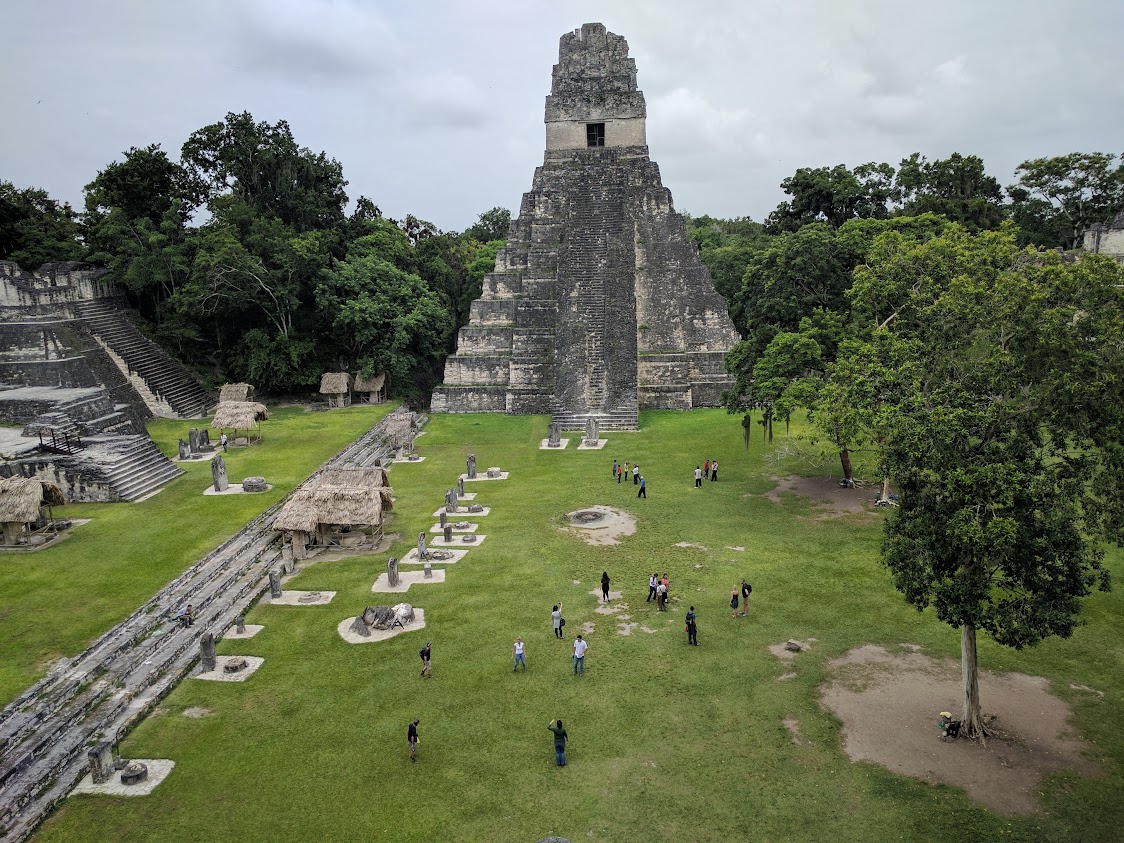
Tikal was one of the largest Maya cities, with a population of perhaps 100,000 at its peak around 700 AD. The site is enormous – you will walk 10-15 km through the jungle visiting the Gran Plaza (Temple I and Temple II facing each other across a vast limestone court), the North Acropolis, the Lost World complex, and Temple IV (the tallest pre-Columbian structure in the Americas at 65m).
Hire a guide at the entrance (Q300-500 for a private guide, 4-5 hours) – the history and details they share transform Tikal from impressive ruins into a living city. Budget 5-7 hours at the site. Watch for spider monkeys, coatimundis, ocellated turkeys, and if you are extremely lucky, a jaguar track on the trail.
Return to Flores in the afternoon. Spend your final evening at a lakefront restaurant watching the sunset over Lake Peten Itza.
Day 14: Flores to Guatemala City + Depart
Morning flight from Flores (FRS) to Guatemala City (GUA) on TAG Airlines (Q800-1,500, 1 hour). Or, if budget is tight, overnight bus the night before (Q200-300, 8-10 hours on Fuente del Norte or ADN, leaves around 10 PM, arrives 6 AM).
Connect to your international flight home.
14-Day Budget Summary
| Category | Budget | Mid-Range | Comfortable |
|---|---|---|---|
| Accommodation (13 nights) | Q1,040-1,950 ($136-255) | Q2,600-5,200 ($339-679) | Q6,500-15,600 ($849-2,036) |
| Food (14 days) | Q700-1,400 ($91-183) | Q1,400-2,800 ($183-366) | Q2,800-7,000 ($366-914) |
| Transport | Q1,200-2,000 ($157-261) | Q2,000-3,500 ($261-457) | Q3,500-6,000 ($457-783) |
| Activities | Q800-1,500 ($104-196) | Q1,500-3,500 ($196-457) | Q3,500-7,000 ($457-914) |
| Domestic flight (optional) | – | Q800-1,500 ($104-196) | Q800-1,500 ($104-196) |
| Total | Q3,740-6,850 ($488-894) | Q8,300-16,500 ($1,084-2,154) | Q17,100-37,100 ($2,233-4,843) |
Transport Between Cities
Getting around Guatemala is straightforward once you understand the three tiers of ground transport. Chicken buses (repurposed American school buses, painted in wild colors) are the cheapest and most chaotic. Tourist shuttles are minivans that run set routes between tourist towns – they are the sweet spot for most travelers. Private transfers are the fastest and most comfortable but cost 3-5x more.
| Route | Chicken Bus (Q) | Tourist Shuttle (Q) | Private Transfer (Q) | Drive Time |
|---|---|---|---|---|
| GUA Airport to Antigua | Q10-25 (not recommended with luggage) | Q80-100 | Q250-400 | 1 hr |
| Antigua to Panajachel | Q25-35 | Q80-120 | Q400-600 | 2.5 hrs |
| Panajachel – lake boats | Q25 per crossing | Q25 | N/A | 20-30 min |
| Antigua to Xela | Q35-50 | Q120-180 | Q600-900 | 4 hrs |
| GUA to Flores (bus) | Q200-300 (Fuente del Norte/ADN) | N/A | N/A | 8-10 hrs |
| GUA to Flores (flight) | Q800-1,500 (TAG Airlines) | N/A | N/A | 1 hr |
| Flores to Tikal | Q30-50 | Q80-120 | Q300-500 | 1.5 hrs |
| GUA to Coban | Q50-80 | Q150-250 | Q500-800 | 4-5 hrs |
| Coban to Semuc Champey | Q40-60 | Q100-150 | Q300-500 | 2.5-3 hrs |
| Xela to Nebaj | Q40-60 | N/A | N/A | 4-5 hrs |
| Panajachel to Chichicastenango | Q15-20 | Q60-80 | Q200-300 | 45 min |
Booking tip: Tourist shuttles are the best option for most travelers – they run door-to-door, are air-conditioned, and are significantly safer when you are carrying luggage. Book through your hotel or GuateGo.com, which aggregates shuttle schedules and prices.
Chicken bus safety note: Chicken buses are an iconic Guatemala experience but come with real risks. Luggage theft and pickpocketing occur, especially on busy routes. If you ride one, keep your bag on your lap (not in overhead storage or on the roof), avoid riding after dark, and carry small bills for the fare. The GUA-to-Antigua chicken bus is fine for adventurous travelers without much luggage. For longer routes or when carrying valuables, stick to shuttles.
Budget Breakdown
Here is a general daily budget across three spending tiers. These averages hold true for most of Guatemala, with Antigua and Flores/Tikal being 20-30% more expensive than the highland towns.
| Category | Budget | Mid-Range | Comfortable |
|---|---|---|---|
| Hostel/Hotel | Q80-150/night ($10-20) | Q200-400/night ($26-52) | Q500-1,200/night ($65-157) |
| Meals | Q50-100/day ($7-13) | Q100-200/day ($13-26) | Q200-500/day ($26-65) |
| Transport | Q30-80/day ($4-10) | Q80-200/day ($10-26) | Q200-500/day ($26-65) |
| Activities | Q50-150/day ($7-20) | Q150-400/day ($20-52) | Q400-1,000/day ($52-131) |
| Daily Total | Q210-480 ($27-63) | Q530-1,200 ($69-157) | Q1,300-3,200 ($170-418) |
Budget tier means hostel dorms, street food and comedores, chicken buses, and free or low-cost activities (hiking, swimming, market visits). You can travel Guatemala on $30/day if you are disciplined.
Mid-range means private hotel rooms, sit-down restaurants, tourist shuttles, and paid tours and entry fees. Most travelers land here at $80-120/day.
Comfortable means boutique hotels, fine dining, private drivers, and premium guided tours. Guatemala is excellent value at this tier – $150/day buys experiences that would cost $400+ in Costa Rica or Mexico.
Money-saving tips:
- Eat the almuerzo (set lunch) at local comedores – a full meal with soup, main, drink, and tortillas for Q20-35.
- Buy fruit at markets rather than tourist cafes. A pound of mangoes costs Q5 at the market, Q20 at a cafe.
- Bargain at markets – start at 40-50% of the asking price and settle around 60-70%.
- Use Banrural ATMs to avoid extra fees charged by some private bank ATMs.
- Travel overland instead of flying – the GUA-to-Flores bus is long but saves Q600-1,200 over a flight.
- Stay in lake villages (San Juan, San Marcos) instead of Panajachel – prices are 20-40% lower.
For a detailed breakdown of living costs across Guatemala’s regions, see our cost of living page.
When to Go (Month-by-Month)
Guatemala’s climate divides neatly into dry season and rainy season, but the reality is more nuanced than that binary suggests. The country has microclimates ranging from cool highland valleys to steamy jungle lowlands, and even in the “rainy” season, mornings are often sunny.
November - April (Dry Season / High Season)
This is peak travel season. Skies are clear, roads are dry, and volcano hikes offer unobstructed views. The tradeoff is higher prices (10-30% above rainy season rates in tourist areas), larger crowds at major sites, and the need to book accommodation in advance for popular spots like Antigua and Flores.
- November: Season transitions. Rains taper off. All Saints Day on November 1st brings the famous Giant Kites of Sumpango – massive, intricately decorated kites flown in a cemetery to communicate with the dead. One of Guatemala’s most photogenic festivals.
- December: Holiday season. Guatemalans travel domestically, so popular spots are busy. The Chichicastenango market before Christmas is spectacular – the largest of the year.
- January: Excellent travel month. Post-holiday lull means lower prices but still dry weather. The pilgrimage to the Black Christ of Esquipulas (January 15) draws hundreds of thousands of Guatemalans.
- February: Carnival celebrations in some towns. Dry and warm. Good for volcano hikes and Tikal.
- March/April: Semana Santa (Holy Week) is Guatemala’s biggest event. Antigua transforms with elaborate alfombras (carpets of colored sawdust and flowers) laid on the streets before religious processions. It is extraordinary to witness but extremely crowded – book Antigua hotels 2-3 months ahead and expect to pay 2-3x normal rates.
May - October (Green Season / Rainy Season)
Rain typically falls in the afternoon, usually between 2-4 PM, for 1-2 hours. Mornings are often clear and sunny. The landscape is dramatically greener, waterfalls are at full force, and tourist sites are pleasantly uncrowded. Prices drop 20-40% across the board.
- May: Rains begin, usually light and short. Shoulder season – good value with manageable weather.
- June-August: Steady rainy season. Roads in remote areas (particularly the road to Semuc Champey and the Ixil Triangle) can become difficult. Not the best time for Tikal – heat and humidity are intense, and some trails flood.
- September: Independence Day on September 15 – parades, fireworks, and marching bands nationwide. Continued rains.
- October: Tail end of rainy season. Some of the heaviest rains fall in October, including the risk of tropical storms. El Mirador treks are not recommended.
Best Time for Specific Activities
| Activity | Best Months | Notes |
|---|---|---|
| Volcano hikes | Nov-Mar | Clear skies, best summit views |
| Tikal | Dec-Apr | Cooler, drier, better wildlife viewing |
| Semuc Champey | Mar-May | Pools clearest before heavy rains |
| Surfing (Pacific) | Mar-Oct | Best swells May-Sep |
| Budget travel | May-Jun, Sep-Oct | Shoulder seasons, lowest prices |
| Photography | Nov-Jan | Clear light, green post-rainy landscapes |
| Cultural festivals | Nov, Mar/Apr | Giant Kites (Nov 1), Semana Santa |
Packing Checklist
Guatemala spans multiple climates, from cool highlands to tropical lowlands. Pack for layering rather than for a single temperature.
Clothing
- Lightweight long pants (2 pairs) – for jungle hikes, mosquito protection, and visiting churches (shorts are frowned upon in some indigenous communities)
- Shorts (1-2 pairs) – for lake towns, Pacific coast, and Flores
- T-shirts/tank tops (3-4) – quick-dry fabric ideal for humid lowlands
- Long-sleeve shirt (1) – sun protection and bug protection in the jungle
- Warm fleece or jacket – highland evenings in Xela, Nebaj, and Antigua drop to 10-15C. Volcano summit temperatures can hit 0-5C at dawn.
- Rain jacket or packable poncho – essential May-October, useful year-round. Afternoon rain can hit anywhere.
- Comfortable walking shoes – you will walk 10-20 km some days on cobblestone, dirt trails, and jungle paths. Trail runners or light hiking shoes work best.
- Sandals or flip-flops – for lake towns, hostels, and showers
- Swimsuit – for Lake Atitlan, Semuc Champey, hot springs, and Pacific beaches
- Buff or bandana – dust protection on chicken buses, sun protection on hikes
Gear
- Headlamp – essential for early-morning volcano hikes (Indian Nose 4 AM, Pacaya 6 AM, Acatenango overnight) and cave exploration at Semuc Champey
- Daypack (20-30L) – for day hikes and excursions. Leave your main bag at the hotel.
- Dry bag or waterproof phone pouch – lake boats splash, and a sudden downpour can soak your gear
- Sunscreen SPF 50 + wide-brim hat – UV intensity is extreme at altitude. Guatemala City is at 1,500m, and volcano summits exceed 3,500m. You will burn faster than you expect.
- Insect repellent with DEET (25-50%) – essential for Peten (Tikal/Flores), Semuc Champey, and lowland areas. Malaria risk is low in tourist areas but dengue is present.
- Reusable water bottle with filter – tap water is not safe to drink in Guatemala. A bottle with a built-in filter (LifeStraw, Grayl) saves you from buying plastic bottles daily.
- Power bank – long bus days and remote areas with unreliable electricity
- Universal power adapter – Guatemala uses Type A and B plugs (same as the US/Canada). If you are coming from Europe or Asia, bring an adapter.
Documents and Money
- Passport – must be valid for at least 6 months beyond your entry date. Guatemala grants 90-day stays to most nationalities (US, Canada, EU, UK, Australia) on arrival, no visa required.
- Photocopies of passport – carry a photocopy and leave the original in your hotel safe. A photo on your phone works as backup.
- USD cash ($50-100) – widely accepted in tourist areas as emergency backup, but quetzales are preferred everywhere. Do not rely on dollars.
- ATM card – Banrural and BAM ATMs are the most reliable and widely available. Visa cards work at most ATMs; Mastercard is less universally accepted. Withdraw Q2,000-3,000 at a time to minimize transaction fees.
- Travel insurance documents – print or save offline. Make sure your policy covers adventure activities (volcano hikes, cave exploration) if you plan to do them. Guatemalan hospitals are affordable but quality varies outside Guatemala City and Antigua.
Health
- Basic first aid kit – bandages, antiseptic wipes, blister pads, pain relievers
- Anti-diarrheal medication (loperamide) – stomach issues from new food and water are common in the first few days
- Altitude sickness medication – if you are hiking above 3,500m (Acatenango summit at 3,976m, Santa Maria at 3,772m), consider carrying acetazolamide (Diamox). Consult your doctor before the trip.
- Oral rehydration salts – useful for heat, altitude, and stomach issues
- Water purification tablets – backup for your filter bottle
- Prescription medications – bring enough for your entire trip plus a few extra days. Pharmacies in Guatemala sell many medications over the counter, but availability of specific brands is not guaranteed.
Practical Tips
Language
Spanish is the primary language, though 22 Maya languages are spoken across the country. In tourist areas (Antigua, Panajachel, Flores), basic English is common at hotels and tour agencies. Outside these zones, you will need at least basic Spanish. Learning 20-30 key phrases before your trip will dramatically improve your experience.
Tipping
Tipping is not mandatory in Guatemala but is appreciated. Leave 10% at restaurants if service is good (check if a service charge is already included). For tour guides, Q20-50 per person is standard. For shuttle drivers, Q5-10 is a nice gesture.
Safety
Guatemala’s tourist corridor – Antigua, Lake Atitlan, Chichicastenango, Flores, and Semuc Champey – is generally safe for travelers using common sense. Avoid walking alone after dark in cities, do not flash expensive electronics, and use ATMs inside banks or shopping centers rather than street-facing ones. See our safety guide for department-by-department crime data.
Connectivity
WiFi is available at most hotels and cafes in tourist areas, though speeds vary. For reliable mobile data, buy a Tigo or Claro SIM card at the airport or any phone shop (Q50-100 for the SIM, Q50-100 for a data package with 3-5 GB). See our internet guide for detailed coverage information.
Start Planning
Guatemala rewards every kind of traveler. Five days gives you a taste. Fourteen days gives you the full picture. Either way, you will leave wanting to come back.
Book your flights into La Aurora (GUA), choose the itinerary that fits your schedule, and use the budget tables to set your spending expectations. For current exchange rates and cost comparisons, check our exchange rates and cost of living pages.
Prices last verified March 2026. Check our exchange rates page for current USD/GTQ conversion.
![Viernes Santo Antigua 2026: Hour-by-Hour Procession Guide [Maps & Times]](/images/photos/semana-santa-2.jpg)
![7 Guatemala Hot Springs & Natural Pools [2026 Guide]](/images/photos/fuentes-georginas-hot-springs.jpg)