
If there is one food that defines Christmas in Guatemala, it is the tamal colorado. On Nochebuena, families across the country spend the entire day in the kitchen, making tamales by the dozens – sometimes hundreds. Relatives arrive, everyone helps, someone puts on music, and the house fills with the smell of banana leaves and recado.
Tamales are not just food in Guatemala. They are a social event. When someone brings you tamales, it means they thought of you. Families gift tamales to neighbors, friends, and coworkers. It is the Guatemalan equivalent of baking cookies – except each one takes five minutes to assemble and they are steaming in giant pots until midnight.
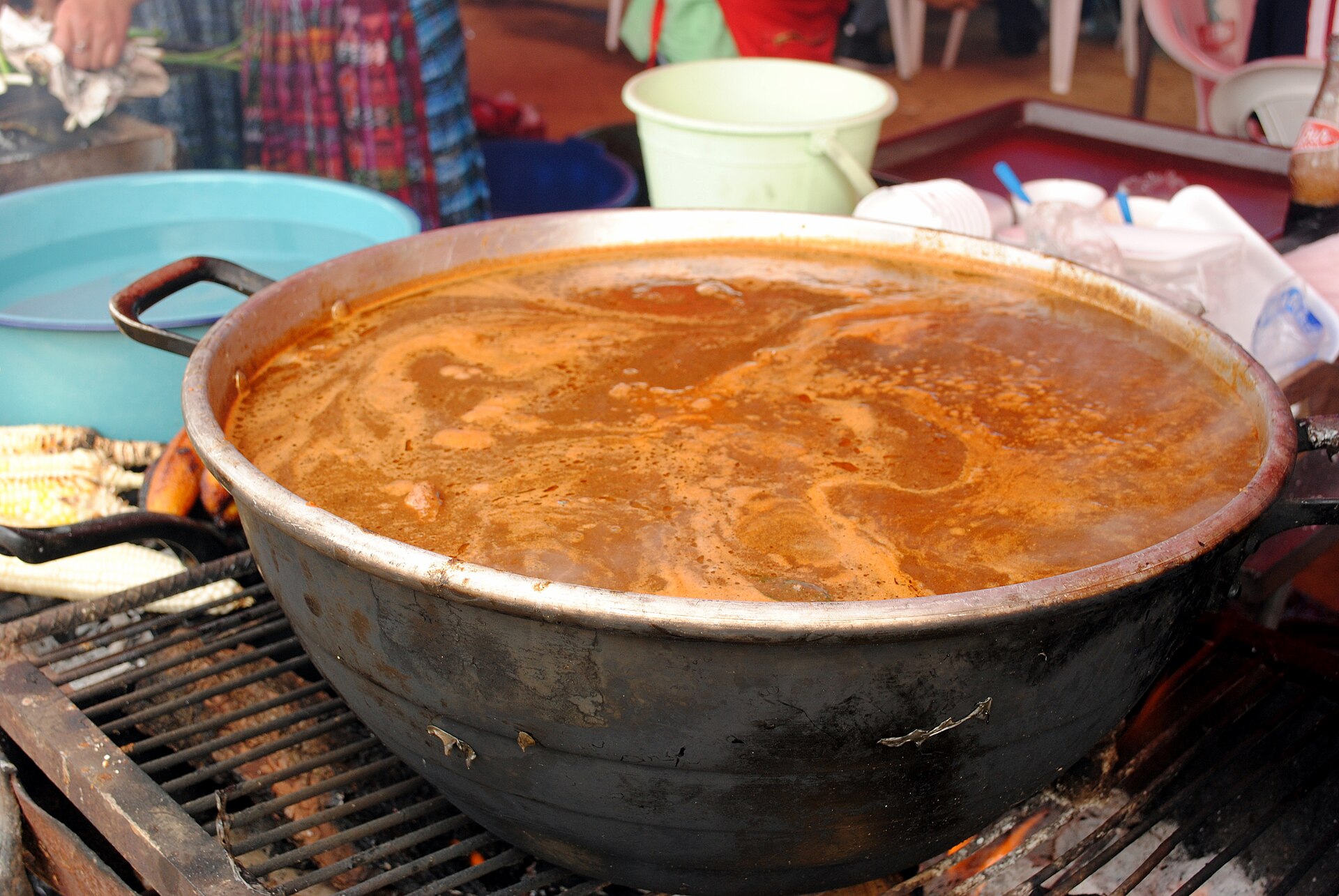
The tamal colorado gets its name from the red (colorado) recado sauce – a blend of roasted tomatoes, dried chiles, and seeds. Inside, you find tender shredded pork or chicken, green olives, and a strip of red bell pepper. All of this wrapped in a soft, slightly sweet corn masa and steamed inside a banana leaf.
Ingredients
For the Meat
- 3 lbs (1.35 kg) pork shoulder or whole chicken
- Water to cover
- 1/2 onion, 2 garlic cloves, salt
For the Recado Rojo (Red Sauce)
- 6 large ripe tomatoes
- 4 dried chile guaque, seeds removed
- 1 dried chile pasa
- 1 red bell pepper
- 1 large white onion
- 4 cloves garlic
- 60g (2 oz) sesame seeds
- 60g (2 oz) pepitoria
- 1 cinnamon stick
For the Masa
- 5 lbs (2.25 kg) fresh corn masa (masa de maiz)
- 1 lb (450g) pork lard (manteca de cerdo)
- Reserved meat broth (about 3 cups)
- Salt to taste
For Assembly
- Fresh banana leaves
- Green olives (aceitunas)
- Red bell pepper, cut into thin strips
- Capers (alcaparras) – optional
- Prunes (ciruelas) – optional
- Kitchen twine
Step-by-Step Instructions
Step 1: Cook the meat. Place pork shoulder (or whole chicken) in a large pot, cover with water. Add half an onion, 2 garlic cloves, and salt. Bring to a boil, skim foam, reduce heat and simmer for 1-1.5 hours until very tender. Remove meat, shred into bite-size pieces. Reserve 3 cups of the broth.
Step 2: Make the recado rojo. On a hot comal, individually toast: the chile guaque and chile pasa until pliable (2 minutes each), sesame seeds until golden (3 minutes), pepitoria until they pop (2 minutes), and cinnamon stick until fragrant (1 minute). On the same comal, roast the tomatoes, bell pepper, onion, and garlic until well charred (10-15 minutes).
Step 3: Blend and strain. Combine all toasted and roasted ingredients with 2 cups of broth in a blender. Blend until smooth. Strain into a pot through a mesh strainer. Cook the strained sauce over medium heat for 15 minutes, stirring, until it thickens and darkens in color. This is your recado rojo. Set aside.
Step 4: Prepare the masa. In a large bowl or mixer, beat the pork lard until light and fluffy – this takes about 5 minutes by hand or 3 minutes with a mixer. Gradually add the masa, alternating with splashes of the reserved broth. Mix until the masa is smooth, soft, and slightly sticky. It should spread easily but hold its shape. Season with salt.
Step 5: Prepare the banana leaves. Thaw frozen banana leaves if needed. Rinse and wipe clean. Pass each leaf briefly over a flame or very hot comal – this makes them pliable and prevents cracking. Cut into squares approximately 12x12 inches (30x30 cm).
Step 6: Assemble the tamales. Place a banana leaf square on your work surface. Spread about 1/3 cup of masa in an oval shape in the center. Add 2 tablespoons of shredded meat, spoon 2 tablespoons of recado rojo over the meat, place 1-2 green olives, a strip of red bell pepper, and optionally a caper and prune.
Step 7: Wrap. Fold the bottom edge of the banana leaf up over the filling, then fold the top edge down. Fold both sides in to create a neat rectangular package. Tie securely with kitchen twine or a thin strip of banana leaf.
Step 8: Steam. Stand the tamales upright in a large steamer pot (tamalera) with about 2 inches of water at the bottom. Pack them snugly so they support each other. Cover tightly and steam over medium heat for 1.5-2 hours. Check water level every 30 minutes and add more if needed.
Step 9: Test and rest. The tamales are ready when the masa pulls away cleanly from the banana leaf without sticking. If it sticks, steam for another 15-20 minutes. Once done, turn off heat and let rest for 15 minutes before unwrapping and serving.
Como Lo Hacemos en Guatemala (Local Tips)
The masa test is everything. Drop a small ball of prepared masa into a glass of cold water. If it floats, the masa has been beaten enough and is ready. If it sinks, keep beating.
Manteca de cerdo is not optional. Vegetable shortening makes a different product. Real pork lard gives tamales their distinctive flavor and texture. You can find it at butcher shops or Latin markets.
The banana leaf is flavor. The leaf is not just a wrapper – it imparts a subtle, slightly sweet, herbaceous flavor to the masa as it steams. This is what makes Guatemalan tamales taste different from Mexican ones.
Make it a family event. In Guatemala, making tamales alone is almost unheard of. Set up an assembly line: one person spreads the masa, another adds the filling, someone wraps. It goes faster and it is more fun.
Tamales freeze beautifully. Wrap cooled tamales in plastic wrap, then foil. Freeze for up to 3 months. Reheat by steaming for 20-30 minutes from frozen.
Find Ingredients in the US
| Ingredient | Where to Find | Substitute |
|---|---|---|
| Fresh corn masa | Tortillerias, Mexican bakeries | Maseca (dry masa harina) + water |
| Banana leaves | Asian or Latin markets, frozen section | Available on Amazon (frozen) |
| Pork lard (manteca) | Butcher shops, Latin markets | Do not substitute with shortening |
| Chile guaque | Latin grocery, Amazon | Guajillo chile |
| Pepitoria | Mexican markets | Raw hulled pumpkin seeds |
Approximate Nutrition (per tamal)
| Nutrient | Amount |
|---|---|
| Calories | ~380 |
| Protein | 18g |
| Fat | 20g |
| Carbohydrates | 32g |
| Fiber | 3g |
More Guatemalan recipes: Tamales Negros (Sweet Black Tamales) | Chuchitos (Corn Husk Tamales) | Pepian (National Dish)
Related: Guatemala Food Guide | Holidays in Guatemala | Food Prices