
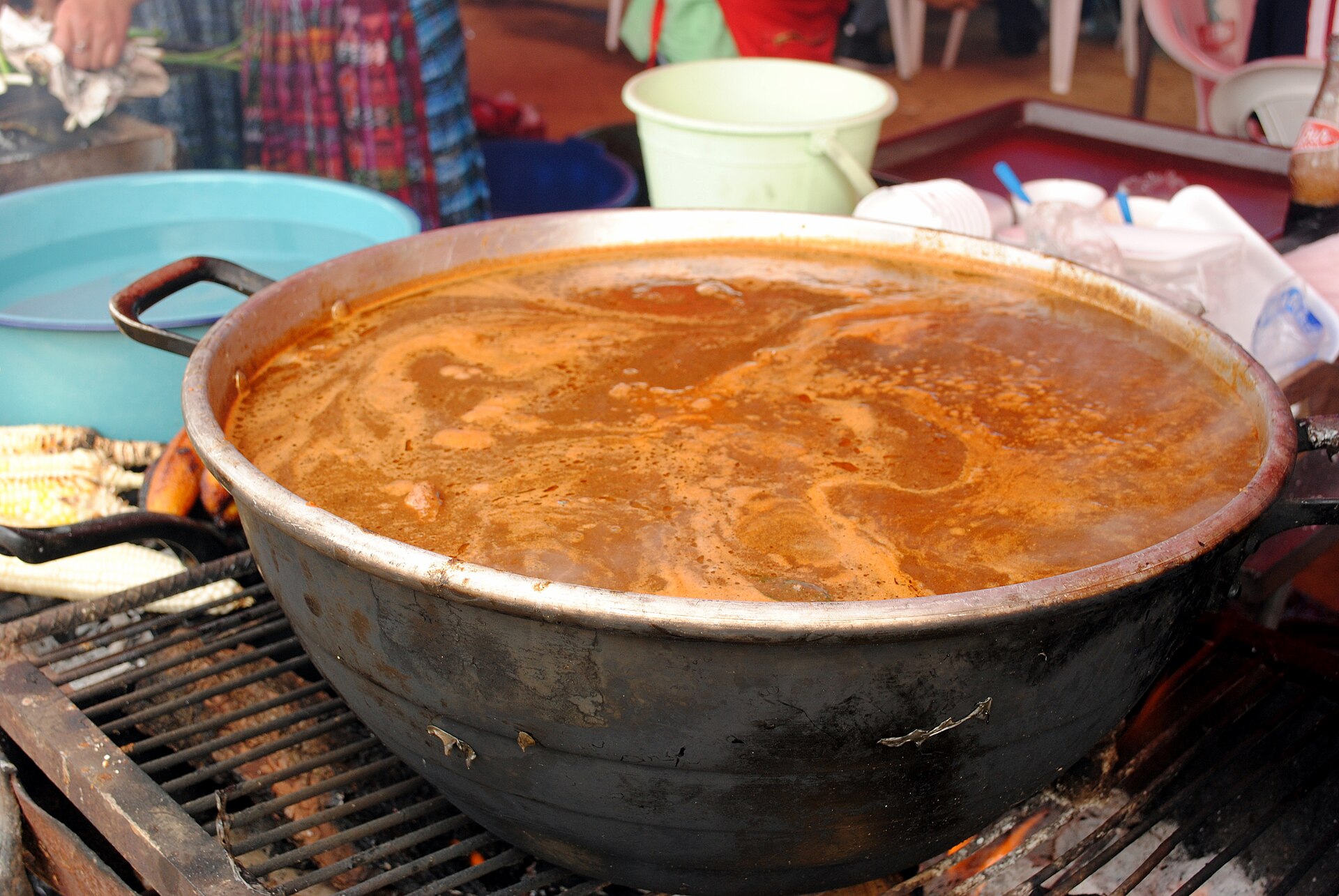
Pulique occupies a special place in Guatemalan cuisine. It is one of the dishes that most directly connects modern cooking to its pre-Columbian Maya roots. The foundation is simple: meat and vegetables in a broth thickened with corn masa. No European bread. No seeds. Just corn – the sacred ingredient of the Maya – used to give the stew its distinctive body and texture.
The dish is common across the highlands, though it goes by slightly different names in different regions. The technique is ancient: meat and vegetables simmered together, with masa stirred in toward the end to create a thick, silky broth that clings to everything it touches.
Fresh herbs define pulique’s character. Cilantro and epazote are added near the end of cooking, so their flavors remain bright and aromatic rather than fading into the background. This gives pulique a freshness that heavier dishes like pepian and revolcado do not have.
Ingredients
For the Meat
- 2 lbs (900g) chicken pieces or beef stew meat (bone-in preferred)
- 2 liters water
- Salt
For the Recado
- 6 large ripe tomatoes
- 1 large white onion, quartered
- 3 cloves garlic, unpeeled
- 1 red bell pepper
- 1 dried chile guaque
For Thickening
- 1/4 cup corn masa dough
Vegetables and Herbs
- 1 chayote (guisquil), peeled and cubed
- 2 medium potatoes, peeled and cubed
- 1/2 lb (225g) green beans (ejotes), trimmed
- 1 small güicoy (summer squash), cubed
- 1 bunch fresh cilantro, chopped
- 2-3 sprigs fresh epazote (or 1 tsp dried)
Step-by-Step Instructions
Step 1: Cook the meat. Place the meat in a large pot with 2 liters of water and a generous pinch of salt. Bring to a boil, skim the foam, then reduce heat to medium-low. Simmer for 40 minutes until the meat is partially tender. Keep the broth – you will use it for everything else.
Step 2: Roast and blend. While the meat simmers, roast the tomatoes, onion quarters, bell pepper, and unpeeled garlic on a hot comal until well charred on all sides. Toast the chile guaque until pliable. Peel the garlic. Blend all the roasted ingredients with 1 cup of the meat broth until completely smooth. Strain through a mesh strainer.
Step 3: Prepare the masa thickener. In a bowl, dissolve the corn masa in 1 cup of broth, mixing thoroughly until smooth with no lumps. This is what gives pulique its distinctive thickness.
Step 4: Build the stew. Pour the strained sauce into the pot with the meat. Add the dissolved masa, stirring constantly as you pour to prevent lumps from forming. The broth should begin to thicken immediately.
Step 5: Add vegetables. Add the chayote, potatoes, green beans, and squash. Stir gently to combine. Simmer for 25-30 minutes until all vegetables are fork-tender.
Step 6: Finish with herbs. In the last 10 minutes, add the chopped cilantro and epazote. These should cook just enough to release their oils but stay bright. The pulique should be thick – noticeably thicker than a soup, coating the vegetables and meat, but still pourable. Season with salt. Serve in deep bowls with corn tortillas or small tamalitos blancos on the side.
Como Lo Hacemos en Guatemala (Local Tips)
The masa is the secret. Without the masa, pulique is just another vegetable stew. The corn adds body, flavor, and a silky texture. Dissolve it completely before adding – lumps of masa in the broth are a sign of rushing.
Use bone-in meat. The bones release gelatin and collagen into the broth, which combines with the masa to create a luscious texture. Boneless meat works for flavor, but the broth will not be as rich.
Epazote is traditional but polarizing. If you have never tried epazote, start with a small amount. Its flavor is strong and distinctive – not everyone loves it. In Guatemala, the younger generation sometimes skips it while the abuelas insist on it.
Serve with tamalitos blancos. The classic accompaniment to pulique is small white tamales made with just corn masa and salt, wrapped in corn husks. They are used to scoop up the thick broth, adding another layer of corn flavor.
Find Ingredients in the US
| Ingredient | Where to Find | Substitute |
|---|---|---|
| Corn masa | Tortillerias, Mexican markets | Maseca (dry masa harina) mixed with water |
| Chile guaque | Latin grocery, Amazon | Guajillo chile |
| Chayote (guisquil) | Latin markets, some supermarkets | Zucchini |
| Epazote | Latin markets (dried or fresh) | Omit (no true substitute) |
| Güicoy (squash) | Latin markets | Yellow squash or zucchini |
Approximate Nutrition (per serving)
| Nutrient | Amount |
|---|---|
| Calories | ~350 |
| Protein | 30g |
| Fat | 12g |
| Carbohydrates | 30g |
| Fiber | 5g |
More Guatemalan recipes: Pepian (National Dish) | Kak’ik (Turkey Soup) | Subanik (Three-Meat Stew)
Related: Guatemala Food Guide | Food Prices | Cost of Living