
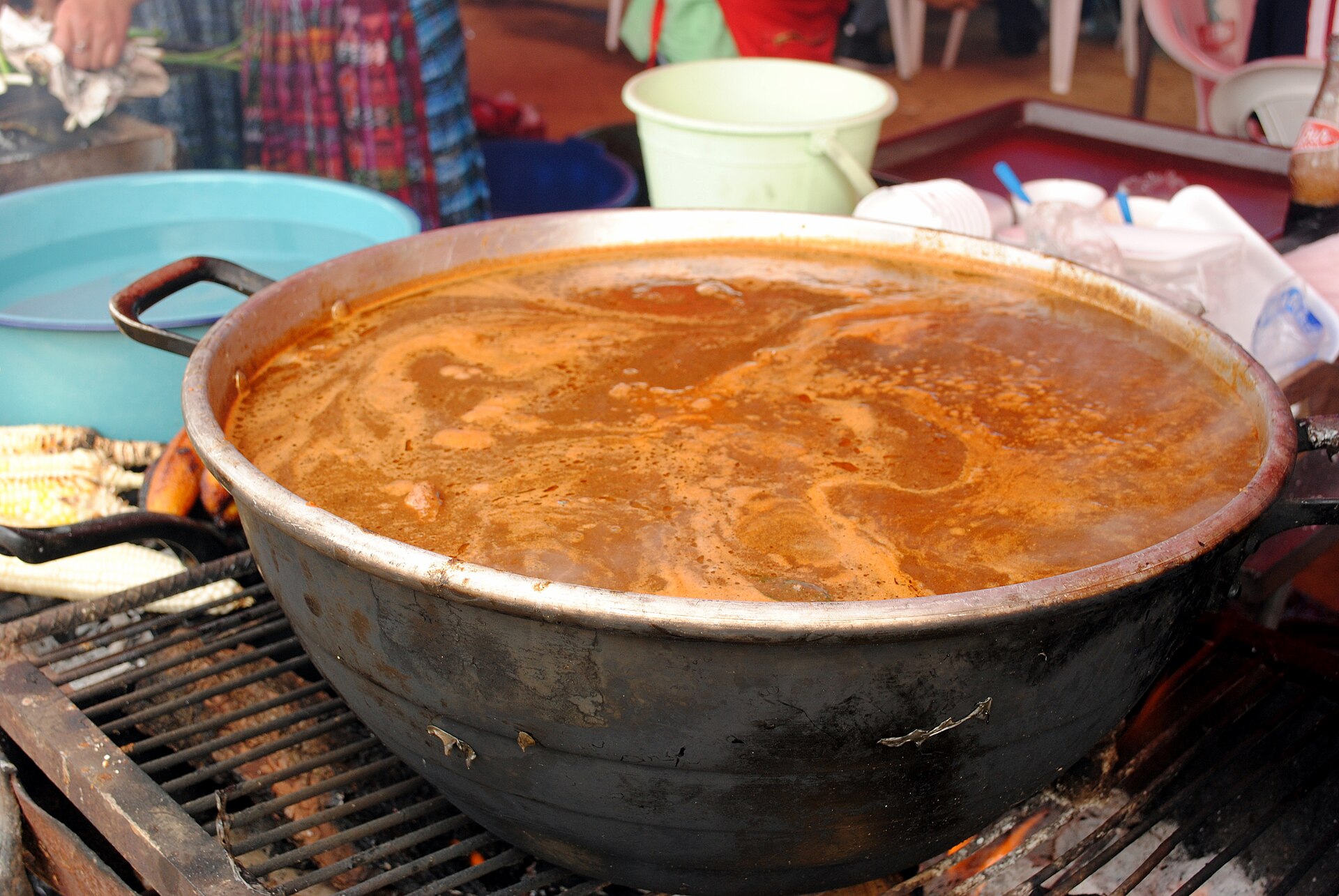
On Christmas Eve in Guatemala, the drink that accompanies the tamales is ponche de frutas. A warm, spiced fruit punch that simmers on the stove all afternoon, filling the house with cinnamon and tropical fruit aromas. By the time the family sits down at midnight, the ponche has been cooking for hours and the fruits have softened into a sweet, fragrant broth.
There is no single recipe for ponche. Every family has their own version – some use more pineapple, some add coconut, some leave out the pears. The constants are: cinnamon, whole spices, and whatever fresh fruit is available at the mercado. The beauty of ponche is that it is forgiving. More fruit? Great. Less sugar? Fine. A splash of rum? If that is your family’s tradition.
The origins trace back to the Indian beverage pac (five), which reached the Americas through Spanish colonial trade routes. In Guatemala, it evolved with local tropical fruits – papaya, pineapple, bananas – into the drink we know today.
Ingredients
Fruits (use what you have – more varieties = better ponche)
- 1 fresh pineapple, peeled and cubed
- 1 medium papaya, peeled and cubed
- 3 apples, cored and diced
- 2 pears, cored and diced
- 1 cup grapes (red or green)
- 2 ripe bananas, sliced
- 1/2 cup raisins (pasas)
- 1/2 cup dried apricots or peaches, chopped
- 1 fresh coconut, grated (or 1 cup dried unsweetened coconut)
Spices & Sweetener
- 8 cups (2 liters) water
- 1 cup sugar (adjust to taste)
- 4 cinnamon sticks
- 6 whole allspice berries (pimienta gorda)
- 4 whole cloves (clavos de olor)
Step-by-Step Instructions
Step 1: Start with the spiced water. Pour 8 cups of water into a large pot. Add cinnamon sticks, allspice berries, and cloves. Bring to a boil and let the spices infuse for 5 minutes.
Step 2: Add hard fruits and dried fruits first. Add the pineapple, apples, pears, raisins, and dried apricots to the pot. These fruits need more cooking time. Reduce heat to low and simmer for 20 minutes, covered.
Step 3: Add soft fruits. Add the papaya, grapes, and grated coconut. These are softer and cook faster. Simmer for 15 more minutes.
Step 4: Sweeten. Add sugar, stirring until dissolved. Taste and adjust – the ponche should be sweet but not cloying. The fruit releases natural sugars as it cooks, so start with less and add more if needed.
Step 5: Add bananas last. Slice the bananas and add them during the last 5 minutes of cooking. They soften and become mushy quickly – you want them warm but still holding their shape.
Step 6: Serve hot. Ladle into mugs, making sure each serving gets a generous mix of fruit pieces and spiced broth. In Guatemala, people eat the fruit with a spoon or fork while sipping the broth. Serve alongside tamales on Nochebuena.
Como Lo Hacemos en Guatemala (Local Tips)
The best ponche simmers all afternoon. Start it around 3pm on Christmas Eve. The slow cooking melds all the flavors together. Keep it on the lowest heat, covered, checking occasionally.
Use whatever fruit is in season. No papaya? Add more pineapple. No pears? Add jocotes (if you can find them) or more apple. Ponche is flexible by design. The key is variety – many different fruits make a complex, layered punch.
Fresh coconut makes a difference. If you can get a fresh coconut, crack it, grate the meat, and add it to the ponche. The coconut pieces absorb the spiced broth and become chewy, sweet bites. Dried coconut works but is not the same.
Some families add a cone of panela instead of white sugar. This gives the ponche a deeper, more caramelized sweetness. Others add a shot of ron Zacapa or Venado. Both are valid Christmas Eve moves.
Find Ingredients in the US
| Ingredient | Where to Find | Substitute |
|---|---|---|
| Papaya | Most supermarkets, Latin markets | Extra pineapple or mango |
| Fresh coconut | Asian/Latin markets | Dried unsweetened coconut |
| Pimienta gorda (allspice) | Spice section, any supermarket | Ground allspice (1/2 tsp) |
| Cinnamon sticks | Any supermarket | No substitute – use sticks |
| Raisins, dried apricots | Any supermarket | Any dried fruit mix |
Approximate Nutrition (per serving)
| Nutrient | Amount |
|---|---|
| Calories | ~120 |
| Protein | 1g |
| Fat | 2g |
| Carbohydrates | 28g |
| Fiber | 3g |
| Sugar | 22g |
More Guatemalan recipes: Tamales Colorados | Tamales Negros | Atol de Elote (Corn Drink)
Related: Guatemala Food Guide | Holidays in Guatemala | Food Prices