
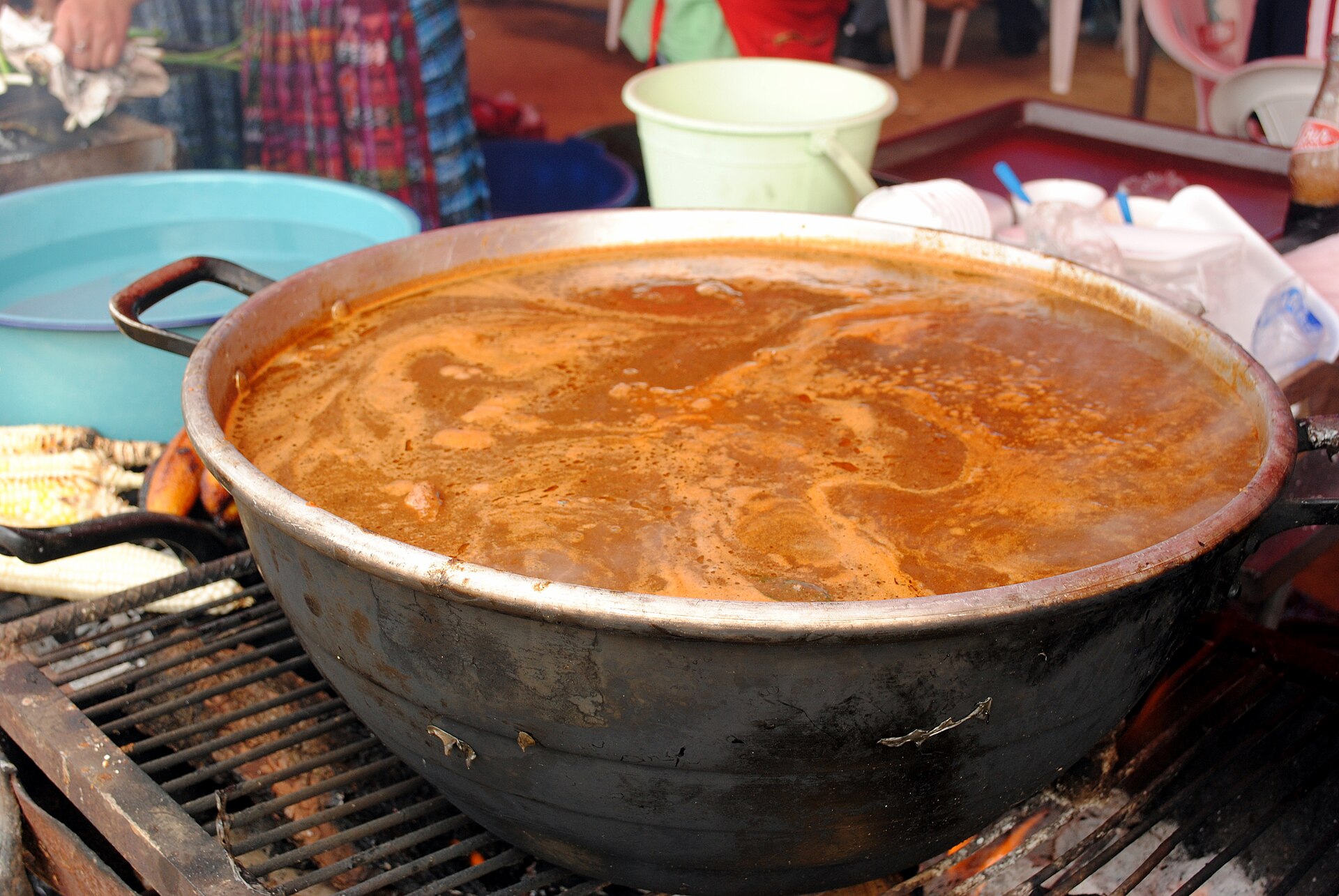
Pepian is the dish that defines Guatemalan cuisine. Walk into any comedor in the highlands on a Sunday and you will smell it – the smoky sweetness of toasted seeds and chiles mixing with slow-simmered chicken.
The name comes from pipian, the word Spanish colonizers used when they saw Maya cooks grinding pepas (seeds) into their sauces. But the dish itself is far older. Pepian originates from Chimaltenango and was already a ceremonial food when the Spanish arrived. In 2007, Guatemala’s Ministry of Culture declared it Patrimonio Cultural Intangible – an intangible cultural heritage of the nation.
There are two main varieties: pepian negro (black) and pepian rojo (red). The black version gets its color from a charred plantain peel and a blackened tortilla added to the sauce. The red version uses more tomato and achiote. Both are spectacular. This recipe covers the black pepian, the more traditional and complex version.
Ingredients
For the Meat
- 1 whole chicken (about 3.5 lbs / 1.6 kg), cut into pieces
- 1 lb (450g) pork spine or ribs (optional – adds depth)
- 2 liters water
- Salt to taste
For the Recado (Sauce)
- 4 large ripe tomatoes
- 10 miltomates (tomatillos)
- 1 large white onion, quartered
- 4 cloves garlic, unpeeled
- 2 dried chile guaque, seeds removed
- 1 dried chile pasa (pasilla)
- 60g (2 oz) sesame seeds (ajonjoli)
- 60g (2 oz) pepitoria (hulled pumpkin seeds)
- 1 cinnamon stick
- 4 whole allspice berries (pimienta gorda)
- 2 whole cloves
- 1 plantain peel (for black pepian)
- 1 stale corn tortilla
- 2 cups bread crumbs or 8 pieces stale French bread
- 1 bunch cilantro criollo
Vegetables
- 1 chayote (guisquil), peeled and cubed
- 1/2 lb (225g) green beans (ejotes), trimmed
- 3 medium potatoes, peeled and quartered
- 2 medium carrots, sliced
Step-by-Step Instructions
Step 1: Cook the meat. Place chicken and pork in a large pot with 2 liters of water. Bring to a boil, skim the foam that rises to the surface, then reduce heat to medium-low. Cook for 30 minutes until partially tender. Reserve the broth – you will need it for the sauce.
Step 2: Toast the chiles. Heat a comal (flat griddle) or dry cast-iron skillet over medium heat. Toast the chile guaque and chile pasa, pressing them flat, until they become fragrant and pliable – about 2 minutes per side. They should darken but not burn. Set aside.
Step 3: Toast the seeds. On the same comal, add the sesame seeds. Stir constantly until golden brown, about 3-4 minutes. Transfer to a bowl. Add the pepitoria seeds – they will puff and pop as they toast, about 2-3 minutes. Transfer to the same bowl.
Step 4: Roast the vegetables. Place tomatoes, miltomates, onion quarters, and unpeeled garlic directly on the comal. Roast, turning occasionally with tongs, until charred on all sides – about 10-15 minutes. The charring is essential for flavor. Peel the garlic once cool enough to handle.
Step 5: Toast the spices. Add the cinnamon stick, allspice berries, and cloves to the comal for about 1 minute until fragrant. For the black pepian, also toast the plantain peel and one corn tortilla until they are nearly black. This gives the sauce its characteristic dark color and smoky complexity.
Step 6: Blend the recado. Combine all the toasted and roasted ingredients in a blender: chiles, seeds, spices, tomatoes, miltomates, onion, garlic, bread crumbs, and the blackened tortilla. Add 2 cups of reserved broth. Blend until very smooth. You may need to do this in two batches.
Step 7: Strain the sauce. Pour the blended sauce through a mesh strainer directly into the pot with the meat. Use the back of a spoon to press the mixture through, extracting as much liquid and flavor as possible. Discard the solids that remain in the strainer.
Step 8: Add vegetables. Add the chayote, green beans, potatoes, and carrots to the pot. Stir to combine with the sauce and meat. Bring to a simmer.
Step 9: Simmer and thicken. Add the chopped cilantro. Cook over medium-low heat for 30-40 minutes, stirring occasionally to prevent sticking. The sauce should thicken enough to coat the back of a spoon. If it gets too thick, add a splash of broth.
Step 10: Season and serve. Taste and adjust salt and pepper. The finished pepian should be thick, rich, deeply aromatic – a dark, complex sauce coating tender meat and vegetables. Serve hot with white rice and fresh corn tortillas.
Como Lo Hacemos en Guatemala (Local Tips)
Use a piedra de moler if you have one. The traditional method is grinding all the toasted ingredients on a stone metate. This produces a slightly grittier, more rustic texture that many Guatemalans prefer. A blender gets you 90% of the way there.
The comal matters. A proper clay comal gives the roasted ingredients a subtly different flavor than a metal skillet. If you have access to one, use it.
Do not rush the toasting. Each ingredient needs individual attention on the comal. The seeds burn easily. The chiles need to be pliable, not crispy. The tomatoes need full charring. This step is where the flavor is built.
Gallina de patio (free-range chicken) is the gold standard. In Guatemala, the best pepian uses gallina criolla – older, tougher, more flavorful birds that need longer cooking. If you can find a stewing hen, use it.
Find Ingredients in the US
| Ingredient | Where to Find | Substitute |
|---|---|---|
| Chile guaque | Latin grocery stores, Amazon | Guajillo chile (similar heat) |
| Pepitoria | Mexican markets (sold as “pepitas”) | Raw pumpkin seeds, hulled |
| Miltomate | Any grocery store (labeled “tomatillos”) | No substitute needed |
| Achiote | Latin aisle of most supermarkets | Annatto paste |
| Cilantro criollo | Latin markets (wider leaf than regular) | Regular cilantro + culantro |
| Chayote (guisquil) | Most supermarkets, Latin markets | Zucchini (different but works) |
Approximate Nutrition (per serving)
| Nutrient | Amount |
|---|---|
| Calories | ~450 |
| Protein | 35g |
| Fat | 22g |
| Carbohydrates | 30g |
| Fiber | 5g |
More Guatemalan recipes: Jocon (Green Chicken Stew) | Kak’ik (Turkey Soup) | Hilachas (Shredded Beef)
Related: Guatemala Food Guide: 30+ Dishes from $3 | Chimaltenango Department | Food Prices in Guatemala