
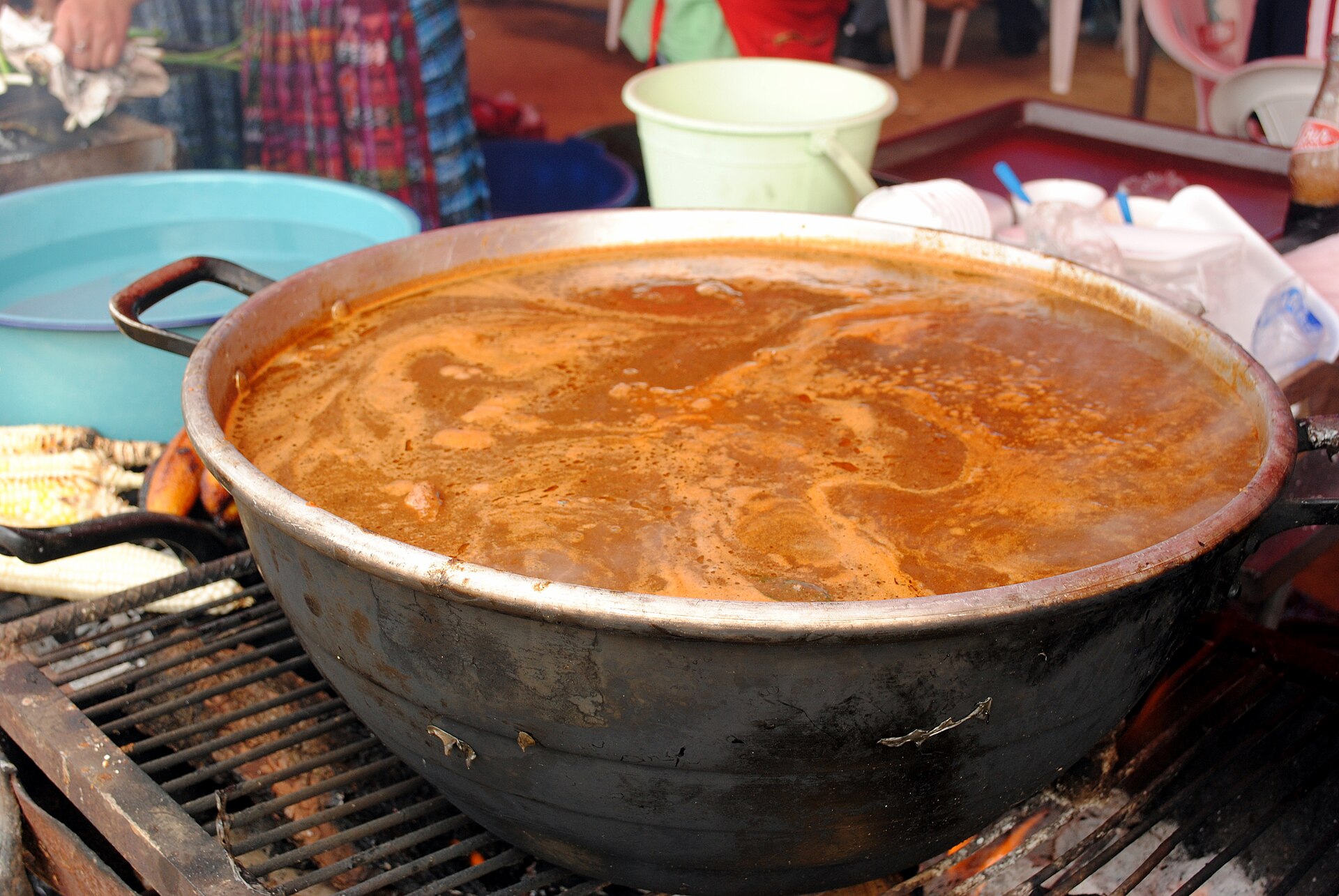
Kak’ik is not just food. In Q’eqchi’ Maya culture, it is ceremony. When a turkey is prepared for kak’ik, it is an offering – to family, to community, to the occasion that brought everyone together.
The name tells you what you are getting: kak (red) and ik (hot). A fiery red soup colored by achiote and heated by chile cobanero, the signature dried chile of Coban, Alta Verapaz. The turkey – always chompipe (a Central American breed, not the Butterball kind) – simmers until tender in a broth infused with fresh mint, cilantro, and the mysterious zamat leaf.
Kak’ik was declared Patrimonio Cultural Intangible in 2007, alongside pepian and jocon. If you travel to Coban, you will find kak’ik on every restaurant menu. The best versions come from small comedores where the recipe has not changed in generations.
Ingredients
For the Turkey
- 1 whole turkey (chompipe), about 8-10 lbs (3.6-4.5 kg), cut into pieces
- 3 liters water
- 1/2 white onion
- 3 cloves garlic
- Salt to taste
For the Recado Rojo
- 4 large ripe tomatoes
- 8 miltomates (tomatillos)
- 1/2 large white onion, quartered
- 4 cloves garlic
- 4 dried chile cobanero (or 3 dried chipotle as substitute)
- 2 oz (60g) achiote paste (annatto)
- 6 whole allspice berries (pimienta gorda)
- 3 whole cloves
- 2 stale corn tortillas
Fresh Herbs
- 1 bunch fresh cilantro
- 1 bunch fresh mint (hierba buena)
- 4 leaves zamat (hierba santa / hoja santa) – if available
Step-by-Step Instructions
Step 1: Cook the turkey. Clean the turkey pieces thoroughly. Place in a large, heavy pot with 3 liters of water, half the onion, 3 garlic cloves, and salt. Bring to a boil, skim the foam, reduce heat to low. Simmer for 1 to 1.5 hours until the turkey is tender. The longer cooking time is necessary – turkey (especially chompipe) is tougher than chicken and needs patience.
Step 2: Roast the vegetables. On a hot comal or cast-iron skillet, roast the tomatoes, miltomates, remaining onion quarters, and 4 garlic cloves. Turn occasionally until charred on all sides – about 15 minutes. The charring adds a smoky depth that is essential.
Step 3: Toast the chiles. Place the dried chile cobanero on the comal, pressing flat. Toast until fragrant and pliable, about 2 minutes per side. Do not let them burn or the sauce will be bitter. Toast the corn tortillas until stiff and dark brown.
Step 4: Prepare the spices. Toast the allspice berries and cloves briefly on the comal, about 1 minute. In a small bowl, dissolve the achiote paste in 1 cup of warm turkey broth, breaking it up with a fork until smooth.
Step 5: Blend the recado. Combine roasted tomatoes, miltomates, onion, garlic, toasted chiles, toasted tortillas, toasted spices, and the dissolved achiote with 2 cups of turkey broth. Blend until completely smooth.
Step 6: Strain and combine. Pour the blended sauce through a mesh strainer directly into the pot with the turkey pieces. Press well to extract all the flavor. Add the fresh cilantro (whole sprigs), mint, and zamat leaves.
Step 7: Final simmer. Bring to a gentle simmer and cook for 30 more minutes, stirring occasionally. The broth should be a deep, vibrant red-orange from the achiote. The consistency should be brothy but with body – not thin like a consomme, not thick like a stew.
Step 8: Serve. Season with salt to taste. Ladle into deep bowls, making sure each serving gets turkey pieces and plenty of broth. Serve with white rice on the side and tamales blancos (pochitos) – small, unfilled corn tamales that are the traditional accompaniment in Alta Verapaz.
Como Lo Hacemos en Guatemala (Local Tips)
Chompipe is not the same as an American turkey. The Central American chompipe is leaner, tougher, and more flavorful. If using a supermarket turkey in the US, reduce cooking time by 30 minutes and expect milder flavor. Adding a turkey neck and giblets to the broth helps compensate.
Chile cobanero is irreplaceable, but you can improvise. The smoky, fruity heat of cobanero is unique. Dried chipotle is the closest substitute. Do not use ancho or guajillo – they are too mild and lack the smokiness.
Zamat (hoja santa) adds a distinctive anise note. If you cannot find it, the dish still works. But if you see hoja santa at a Latin market, grab it. One or two large leaves transform the soup.
In Coban, kak’ik is served with pochitos – small corn tamales made only from masa and salt, steamed in corn husks. They are used to soak up the broth, like bread with soup.
Find Ingredients in the US
| Ingredient | Where to Find | Substitute |
|---|---|---|
| Chile cobanero | Specialty Latin stores, online (MiTienda) | Dried chipotle morita |
| Achiote paste | Latin aisle of most supermarkets | Annatto powder + cumin + oregano |
| Zamat / hoja santa | Mexican grocery stores, farmers markets | Omit or use a tiny pinch of anise |
| Pimienta gorda (allspice) | Spice section of any grocery | Whole allspice berries |
| Turkey | Any supermarket (whole or pieces) | Use legs and thighs for best flavor |
Approximate Nutrition (per serving)
| Nutrient | Amount |
|---|---|
| Calories | ~420 |
| Protein | 45g |
| Fat | 18g |
| Carbohydrates | 15g |
| Fiber | 3g |
More Guatemalan recipes: Pepian (National Dish) | Jocon (Green Chicken Stew) | Tamales Colorados
Related: Guatemala Food Guide | Alta Verapaz Department | Food Prices