
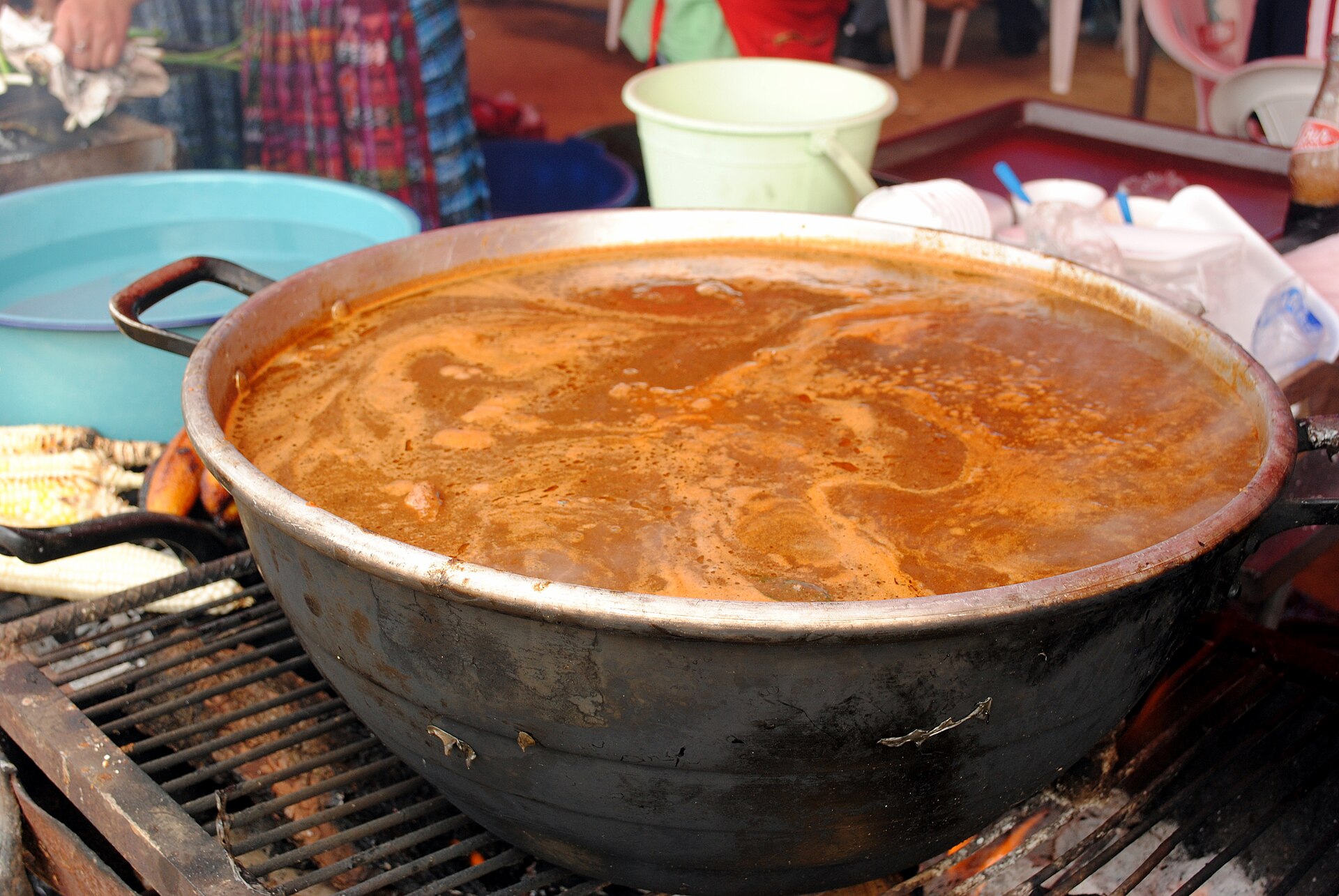
Gallo en chicha is one of Guatemala’s most dramatic dishes. A rooster, slowly braised in chicha – a fermented fruit drink that takes over a week to prepare. This is not everyday food. This is the dish that appears at weddings, patron saint festivals, quinceañeras, and birthday celebrations in Jutiapa and across eastern Guatemala.
The preparation starts eight days before you eat. Pineapple, nance, tamarind, panela, and whole spices go into a vessel of water and are left to ferment. Over the course of a week, natural yeasts transform the sweet fruit water into chicha – a mildly alcoholic, tangy, complex liquid that becomes the braising medium for the rooster. The fermentation creates flavors that no other cooking technique can replicate.
The choice of gallo (rooster) rather than pollo (chicken) is intentional. Rooster meat is firmer, more flavorful, and stands up to the long braising time. In rural Guatemala, a family might raise the rooster specifically for an upcoming celebration. The dish represents abundance and festivity – you do not make gallo en chicha on a Tuesday.
Ingredients
For the Chicha (Start 8 Days Ahead)
- 5 liters water
- 1 dark panela (rapadura), chopped or grated
- 1 fresh pineapple, cut into pieces with peel
- 1 lb (450g) nance fruit (fresh or frozen)
- 1/2 lb (225g) tamarind pods, shelled
- 1 large cinnamon stick
- 10 whole allspice berries (pimienta gorda)
- 10 whole cloves
For the Rooster
- 1 young rooster or large chicken (about 4 lbs / 1.8 kg), cut into pieces
- 3 tablespoons vegetable oil
- 1 sprig fresh thyme
- 6 bay leaves
- Salt and black pepper
For the Sauce
- 10 ripe tomatoes
- 1 large white onion
- 3 cloves garlic
- 1 cup pitted prunes (ciruelas pasas)
Step-by-Step Instructions
Step 1: Start the chicha (8 days before). In a large glass or ceramic vessel, dissolve the chopped panela in 5 liters of water. Add the pineapple pieces (with peel – the natural yeasts on the skin help fermentation), crushed nance, shelled tamarind, cinnamon stick, allspice berries, and cloves. Cover loosely with cloth – the mixture needs air to ferment. Store in a cool, dark place for 8 days, stirring once daily. It will become bubbly and tangy. When ready, strain through cloth, discarding all solids.
Step 2: Brown the rooster. Season the rooster pieces generously with salt and pepper. Heat oil in a large, heavy pot over medium-high heat. Brown the pieces in batches, about 4 minutes per side, until deeply golden. Add the thyme sprig and bay leaves.
Step 3: Make the tomato base. On a hot comal, roast the whole tomatoes, onion, and garlic until well charred on all sides. Transfer to a blender and blend until smooth. Strain through a mesh strainer.
Step 4: Combine and braise. Pour the strained tomato sauce over the browned rooster in the pot. Add about 4 cups of the strained chicha – enough to cover the meat. Bring to a boil, then immediately reduce to the lowest possible simmer. Cover tightly.
Step 5: Slow cook. Simmer for 1.5 hours, checking occasionally. The meat should become very tender. During the last 30 minutes, add the pitted prunes. They will plump up and add sweetness that balances the tang of the chicha.
Step 6: Finish. The sauce should have reduced to a thick, complex, dark gravy. If too thin, simmer uncovered for 15 more minutes. The flavors should be layered – tangy from the chicha, sweet from the prunes and panela, savory from the meat, and aromatic from the spices. Season with salt and pepper. Serve with white rice and corn tortillas.
Como Lo Hacemos en Guatemala (Local Tips)
The chicha is everything. A well-fermented chicha makes the difference between a good dish and an extraordinary one. Taste it before using – it should be tangy, slightly fizzy, and complex. If it tastes flat, let it ferment another day or two.
Nance is key to authentic flavor. Nance is a small, yellow, intensely aromatic fruit common in Guatemala. If you cannot find fresh nance, frozen nance is available at some Latin markets. Without it, the chicha still works but lacks the distinctive fruity complexity.
Use a clay pot if you have one. In Jutiapa, this dish is traditionally cooked in a large clay pot (olla de barro) over firewood. The clay adds a subtle earthiness to the sauce.
This is a community dish. In rural Guatemala, making gallo en chicha is a social event. The chicha is started a week before the celebration. The rooster is butchered that morning. Family members take turns stirring the pot. It is as much about the process as the product.
Find Ingredients in the US
| Ingredient | Where to Find | Substitute |
|---|---|---|
| Panela (rapadura) | Latin markets, Amazon | Piloncillo or dark brown sugar |
| Nance | Frozen at Latin markets | Omit (no true substitute) |
| Tamarind pods | Asian or Latin markets | Tamarind paste |
| Rooster | Specialty butchers, Asian markets | Large free-range chicken |
| Prunes | Any supermarket (dried fruit) | Dried apricots |
Approximate Nutrition (per serving)
| Nutrient | Amount |
|---|---|
| Calories | ~390 |
| Protein | 36g |
| Fat | 14g |
| Carbohydrates | 30g |
| Fiber | 3g |
More Guatemalan recipes: Pepian (National Dish) | Estofado (Olive and Caper Stew) | Carne Guisada (Beef Stew)
Related: Guatemala Food Guide | Holidays in Guatemala | Food Prices