
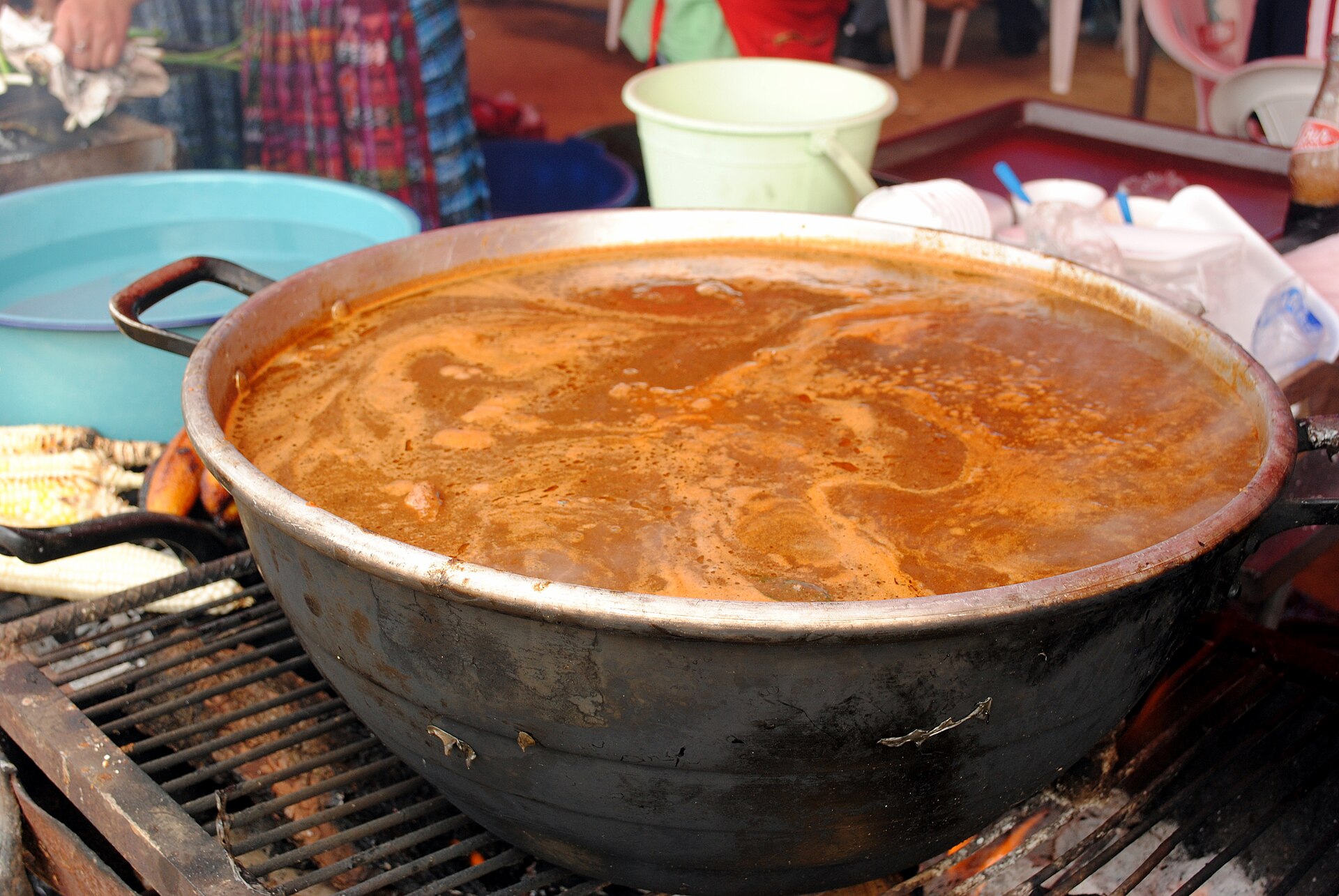
Estofado is where Guatemalan cuisine shows its colonial roots most clearly. Take the Maya tradition of roasting tomatoes and chiles on a comal. Now add Spanish ingredients – green olives, capers, prunes, thyme. Slow-cook them together until the boundaries blur and you cannot tell where one tradition ends and the other begins. That is estofado.
This is a celebration dish. In Quetzaltenango, where estofado is practically a regional symbol, it appears at weddings, quinceañeras, patron saint festivals, and Christmas dinners. It is the kind of dish that takes time and effort, which is exactly why people make it for important occasions. The complexity of flavors – smoky chiles, briny olives, sweet prunes, aromatic spices – rewards every minute of preparation.
The name itself comes from the Spanish estofar (to stew), but the technique and many of the ingredients are firmly rooted in the highlands. The chile guaque, the miltomates, the comal-roasted vegetables – these are Guatemalan elements that transform a European-style stew into something the Spanish would not recognize.
Ingredients
For the Meat
- 3 lbs (1.35 kg) beef or pork, cut into large pieces
- 2 tablespoons vegetable oil
- 2 bay leaves
- Salt and pepper
For the Recado
- 6 large ripe tomatoes
- 6 miltomates (tomatillos)
- 1 large white onion, quartered
- 1 red bell pepper
- 4 cloves garlic, unpeeled
- 2 dried chile guaque, seeds removed
- 1 dried chile pasa
- 1 cinnamon stick
- 4 whole allspice berries (pimienta gorda)
- 3 whole cloves
- 1/2 teaspoon dried thyme
The Colonial Touch
- 1/2 cup green olives (aceitunas)
- 2 tablespoons capers (alcaparras)
- 1/2 cup pitted prunes (ciruelas pasas)
Step-by-Step Instructions
Step 1: Brown the meat. Season meat generously with salt and pepper. Heat oil in a large, heavy pot over medium-high heat. Brown the meat in batches until a dark crust forms on all sides. This step builds the foundation of flavor. Remove and set aside.
Step 2: Roast and toast. On a hot comal, roast the tomatoes, tomatillos, onion quarters, bell pepper, and unpeeled garlic until well charred – about 10-15 minutes, turning occasionally. Separately, toast the chile guaque and chile pasa on the comal until pliable and fragrant, about 2 minutes per side.
Step 3: Blend the recado. Peel the garlic. Combine all roasted vegetables, toasted chiles, cinnamon stick, allspice, cloves, and thyme in a blender with 1 cup of water. Blend until very smooth. Strain through a mesh strainer, pressing well to extract all liquid.
Step 4: Long simmer. Pour the strained sauce into the pot with the browned meat. Add bay leaves and enough water to barely cover the meat. Bring to a boil, then reduce to the lowest simmer possible. Cover and cook for 1.5 hours, checking occasionally and stirring.
Step 5: Add the finishing ingredients. When the meat is nearly tender, add the green olives, capers, and prunes. These ingredients need time to infuse the sauce but should not overcook. Simmer uncovered for 30 more minutes, allowing the sauce to thicken and concentrate.
Step 6: Serve. The sauce should be thick and rich, the meat fork-tender. Season with salt and pepper. Traditionally, estofado is served on a bed of crisp lettuce leaves with white rice and an ensalada rusa (potato salad) on the side. Corn tortillas complete the meal.
Como Lo Hacemos en Guatemala (Local Tips)
The three-meat estofado is the ultimate version. In Quetzaltenango, the most elaborate estofados use beef, pork, and chicken together. Each meat contributes different flavors and textures. If you want the full experience, use 1 lb of each.
Do not skip the prunes. The sweetness of the ciruelas pasas balances the brininess of the olives and capers. Without them, the dish tastes one-dimensional. The contrast of sweet, salty, and smoky is what makes estofado special.
Lettuce bed is traditional. It sounds odd, but serving estofado on a bed of iceberg lettuce is the authentic presentation. The cold, crisp lettuce against the hot, rich stew creates a textural contrast that Guatemalans love.
This is a make-ahead dish. Estofado improves dramatically overnight. Many cooks in Quetzaltenango prepare it the day before a celebration and reheat it the next day.
Find Ingredients in the US
| Ingredient | Where to Find | Substitute |
|---|---|---|
| Chile guaque | Latin grocery stores, Amazon | Guajillo chile |
| Miltomates | Any grocery (labeled “tomatillos”) | No substitute needed |
| Green olives | Any supermarket | Manzanilla or Castelvetrano |
| Capers | Any supermarket (condiment aisle) | No substitute |
| Prunes | Any supermarket (dried fruit section) | Dried cherries |
Approximate Nutrition (per serving)
| Nutrient | Amount |
|---|---|
| Calories | ~410 |
| Protein | 34g |
| Fat | 20g |
| Carbohydrates | 22g |
| Fiber | 4g |
More Guatemalan recipes: Pepian (National Dish) | Hilachas (Shredded Beef) | Carne Guisada (Beef Stew)
Related: Guatemala Food Guide | Quetzaltenango Department | Food Prices