
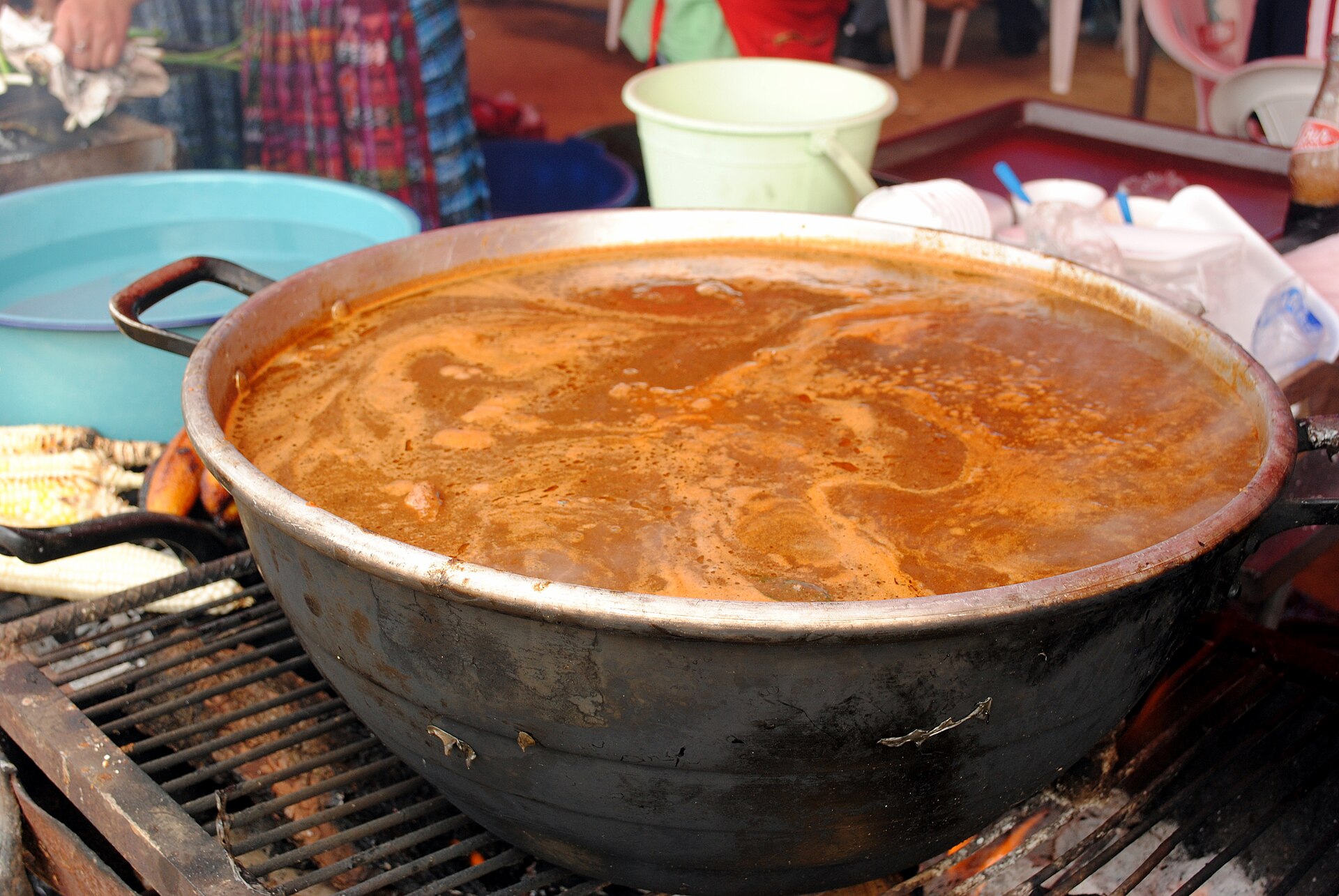
Atol blanco is the oldest drink in Guatemala. Long before the Spanish arrived, Maya people were grinding corn into water and heating it into thick, nourishing beverages. Atol blanco is the most basic version – just corn and water – and it has survived unchanged for thousands of years because it is exactly right.
Unlike sweet atol de elote, atol blanco is savory. It is served in deep bowls, thick enough to eat with a spoon, topped with cooked beans, ground pumpkin seeds, dried chile, and a squeeze of lime. It straddles the line between drink and soup – it is warm, filling, deeply satisfying, and was historically the breakfast of farmers heading to the milpa before dawn.
In the highlands, particularly in Alta Verapaz and Quiche, atol blanco is still a daily staple. Market vendors sell it in the early morning hours, ladling it from enormous pots into plastic cups. The toppings are what make each bowl personal – some people load up on the chile, others prefer extra pepitoria, everyone squeezes lime.
Ingredients
For the Atol
- 1 cup masa harina (corn flour)
- 6 cups water
- Salt to taste
Traditional Toppings
- Cooked frijol piloy (or black-eyed peas)
- Ground pepitoria (toasted pumpkin seeds)
- Ground chile cobanero (or chipotle powder)
- Lime wedges
Step-by-Step Instructions
Step 1: Dissolve the masa. In a bowl, combine the masa harina with 2 cups of cold water. Stir vigorously until completely smooth with no lumps. This step is critical – adding dry masa directly to hot water creates lumps that are impossible to remove.
Step 2: Boil the water. In a large pot, bring the remaining 4 cups of water to a rolling boil.
Step 3: Combine. Slowly pour the dissolved masa mixture into the boiling water while stirring constantly. Stir, stir, stir. The mixture will begin to thicken immediately.
Step 4: Cook. Reduce heat to medium-low. Continue cooking for 15-20 minutes, stirring frequently to prevent the atol from sticking to the bottom of the pot. The atol is ready when it has a smooth, creamy consistency – thick enough to coat the back of a spoon but still pourable.
Step 5: Season. Add salt to taste. Remember, atol blanco is savory, not sweet. The salt should be noticeable but not overwhelming.
Step 6: Serve with toppings. Ladle the hot atol into deep bowls or cups. Each person adds their own toppings: a spoonful of cooked frijol piloy, a sprinkle of ground pepitoria, a pinch of chile cobanero, and a generous squeeze of lime. Stir and eat with a spoon.
Como Lo Hacemos en Guatemala (Local Tips)
Cold water first, always. The masa must be dissolved in cold water before adding to hot water. This prevents lumps. It is the same principle as making gravy – dissolve the starch in cold liquid first.
The toppings are the meal. Plain atol blanco is filling but plain. The beans add protein, the pepitoria adds fat and nuttiness, the chile adds heat, and the lime adds brightness. Together, they transform a simple corn porridge into a complete, balanced meal.
Thickness is personal. Some people prefer their atol thick as porridge. Others like it thinner, almost drinkable. Adjust by adding more water during cooking.
This is breakfast food. In the highlands, atol blanco is consumed in the early morning – it provides sustained energy for physical labor. If you want to eat like a Guatemalan farmer, start your day with a bowl of atol blanco at 5 AM.
Find Ingredients in the US
| Ingredient | Where to Find | Substitute |
|---|---|---|
| Masa harina | Any supermarket (Maseca brand) | No substitute |
| Frijol piloy | Latin markets | Black-eyed peas |
| Pepitoria | Latin/Mexican markets | Raw hulled pumpkin seeds, toasted |
| Chile cobanero | Latin markets (rare) | Chipotle powder or smoked paprika |
Approximate Nutrition (per serving, with toppings)
| Nutrient | Amount |
|---|---|
| Calories | ~150 |
| Protein | 5g |
| Fat | 3g |
| Carbohydrates | 28g |
| Fiber | 3g |
More Guatemalan recipes: Atol de Elote (Sweet Corn Drink) | Atol de Platano | Chocolate Caliente
Related: Guatemala Food Guide | Alta Verapaz Department | Food Prices