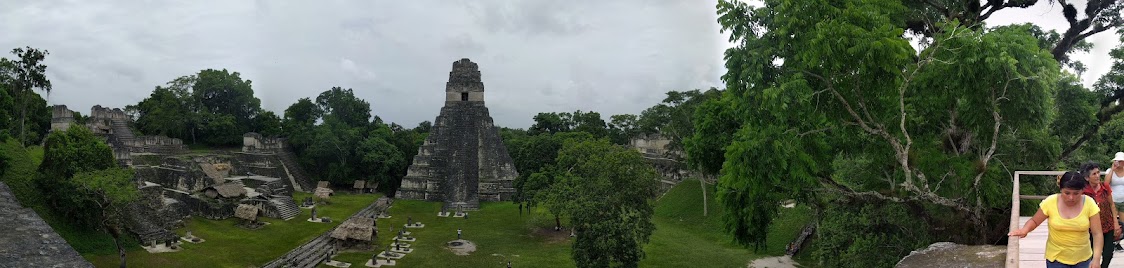
El Mirador is the trek that separates Guatemala’s casual tourists from its serious adventurers. Five to six days of walking through dense Peten jungle to reach La Danta – the largest pyramid by volume ever built in the Maya world – with no roads, no cell service, and no turning back once you start. It is one of the greatest adventure treks in Central America, and it rewards every blister.
The ruins at El Mirador predate Tikal by centuries. This was the capital of a massive Preclassic Maya kingdom that thrived from around 600 BC to 100 AD, long before the Classic Period cities that most people associate with the Maya. La Danta pyramid is estimated at 2.8 million cubic meters of stone – larger than the Great Pyramid of Giza by volume. And unlike Tikal, you’ll likely have it almost to yourself.
Quick Facts
| Detail | Info |
|---|---|
| Duration | 5-6 days round trip |
| Distance | ~80km (50 miles) round trip |
| Difficulty | Very Hard |
| Cost | Q2,000-4,000 (~$260-520 USD) all-inclusive |
| Best Months | February-May (dry season) |
| Start Point | Carmelita village, Peten |
| Guide Required | Yes (mandatory, included in tour price) |
| Max Group Size | Usually 4-12 people |
| Altitude | ~250m (lowland jungle – heat, not altitude, is the challenge) |
Why El Mirador Matters
Most visitors to Guatemala see Tikal and think they’ve seen the biggest Maya ruins. They haven’t. El Mirador was the dominant Maya city centuries before Tikal rose to power, and its structures dwarf anything at Tikal:
- La Danta pyramid: 72 meters tall, 2.8 million cubic meters – the largest pyramid by volume in the ancient Maya world. Standing on top, you look out over an unbroken canopy of jungle stretching to the horizon in every direction.
- El Tigre pyramid: 55 meters tall, the site’s second massive structure with its own triadic architectural design.
- The Preclassic date: El Mirador’s peak was roughly 600 BC to 100 AD, making it one of the earliest major Maya urban centers ever discovered.
- Still mostly unexcavated: Decades of work remain. What you see is largely still jungle-covered mounds, which gives the experience a feeling of genuine exploration rather than a manicured archaeological park.
The site is also at the center of the proposed Mirador Basin National Park, one of the largest remaining blocks of intact tropical forest in Mesoamerica.
Day-by-Day Itinerary
Itineraries vary slightly by operator, but the standard 5-day trek follows this pattern:
Day 1: Carmelita to El Tintal (~20km)
Leave Carmelita village early morning. The trail passes through a mix of farmland, secondary growth, and primary forest. The first major stop is the ruins of El Tintal, a significant but lesser-known Maya site where you camp for the night. The walking is flat but the distance is real – 20km through humid lowland jungle takes 6-8 hours.
Your camp cook prepares dinner while you explore El Tintal’s partially excavated structures. Hammocks are strung between trees, mosquito nets deployed, and you fall asleep to the sounds of the jungle.
Day 2: El Tintal to El Mirador (~20km)
Another full day of walking through increasingly dense, pristine jungle. This section has fewer clearings and the forest canopy closes in overhead. Wildlife sightings pick up – spider monkeys and howler monkeys are common, toucans call from the canopy, and your guide may point out tracks of larger animals.
You arrive at the El Mirador archaeological camp in the late afternoon. The first glimpse of La Danta’s massive mound rising above the jungle canopy is unforgettable.
Day 3: Exploring El Mirador
The full day at the site. Your guide takes you through the main plazas, up La Danta and El Tigre pyramids, and to the various partially excavated structures. The climb up La Danta takes about 20-30 minutes via a steep trail cut through the vegetation. At the top, you stand at the highest point for hundreds of kilometers in any direction, with nothing but jungle canopy below.
This is also a rest day for your legs. Take time to appreciate the silence – no engine noise, no crowds, no modern sounds. Just jungle and ancient stone.
Day 4: El Mirador to El Tintal (~20km)
Begin the return trek. You retrace your route to El Tintal for another night at the campsite. Some groups push harder and make it to a camp closer to Carmelita, but the standard pace is back to El Tintal.
Day 5: El Tintal to Carmelita (~20km)
Final day of walking back to Carmelita. You’ll arrive in the afternoon, tired and muddy but with one of Guatemala’s most extraordinary experiences behind you. Transport back to Flores/Santa Elena is usually included in the package.
Physical Demands – Be Honest With Yourself
This trek is not a casual walk in the woods. Here’s what you’re signing up for:
- 20-25km of walking per day through flat but uneven jungle terrain
- Heat and humidity – Peten lowlands average 30-35C (86-95F) with high humidity. You will sweat constantly.
- Mud – even in dry season, some sections have mud. In shoulder season (May, November), it can be knee-deep.
- Mosquitoes and insects – constant. Bring serious repellent (DEET 30%+ or picaridin).
- No bail-out options – once you’re in the jungle, you’re committed. There are no roads, no vehicles, no shortcuts back.
- Sleeping in hammocks – comfortable once you get used to it, but not for everyone.
You don’t need to be a marathon runner, but you should be comfortable walking 20km in a day with a daypack in hot conditions. If you struggle with a 10km walk on flat ground, this trek will be miserable.
What’s Included in Guided Tours
All-inclusive trek packages from Flores-based operators typically include:
- Experienced bilingual guide (Spanish/English, some speak Itzaj or Q’eqchi')
- Muleteers and mules to carry camping gear, food, and water
- All meals – a camp cook prepares breakfast, lunch, and dinner. Food is simple but hearty: beans, rice, tortillas, eggs, canned tuna, fresh fruit, coffee
- Hammocks and mosquito nets – some operators also provide tents
- Water purification – either filtered or treated water provided at camps
- Entry fees to the archaeological sites
- Transport from Flores/Santa Elena to Carmelita and back
You carry only your daypack with personal items, water for the day, camera, and snacks.
The Helicopter Option
For those who want to see El Mirador but can’t commit to 5-6 days on foot, helicopter flights operate during dry season:
- Flores to El Mirador: Approximately $200-400 per person one way (prices vary by operator and group size)
- Common combo: Trek in (2 days), fly out (saves 2 days of walking)
- Full fly-in/fly-out: Day trips are possible but rushed – you get maybe 3-4 hours at the site
- Availability: Limited to dry season and dependent on weather. Not guaranteed.
The helicopter dramatically changes the experience. Walking in gives you the jungle immersion, wildlife encounters, and sense of earning the destination. Flying in gives you the ruins without the physical ordeal. Both are valid choices.
Getting to Carmelita
From Flores/Santa Elena: Carmelita is about 80km north of Flores, reached by a rough dirt road. The drive takes 3-4 hours depending on road conditions. Tour operators include this transport in their packages. You cannot get there by public bus – it’s either arranged transport or private vehicle.
From Guatemala City: Fly or bus to Flores first. Flights take 45 minutes (TAG Airlines, about Q800-1,200 one way). Buses take 8-10 hours overnight (ADN or Linea Dorada, Q200-350).
From Tikal: Many travelers combine Tikal and El Mirador. Visit Tikal first (it’s on the way), then continue to Flores and arrange the El Mirador trek. Budget 2-3 days for Tikal plus 5-6 days for El Mirador.
What to Bring
Essentials:
- Mosquito repellent (DEET 30%+ or picaridin) – bring more than you think you need
- Long-sleeved shirts and long pants (light, breathable fabric)
- Headlamp with extra batteries
- Hammock mosquito net (most operators provide, but confirm)
- Rain poncho or lightweight rain jacket
- Binoculars – for wildlife spotting from pyramid summits
- Camera with extra batteries (no charging available)
- Sunscreen and hat
Personal items:
- Any medications you need for 6 days (no pharmacies in the jungle)
- Toilet paper and hand sanitizer
- Small towel (quick-dry type)
- Ziploc bags for keeping electronics dry
- Extra snacks – granola bars, trail mix, dried fruit. Camp food is sufficient but you’ll want extras.
- Cash for tips (Q100-200 for guide, Q50-100 for cook and muleteers)
What NOT to bring:
- Heavy hiking boots – lightweight trail shoes or sturdy sneakers are better in the heat
- Cotton clothing – it stays wet and causes chafing
- Large backpack – you only carry a daypack; mules carry the rest
Wildlife
The Mirador Basin is one of the most biodiverse areas in Guatemala. Commonly spotted:
- Howler monkeys – you’ll hear them before you see them. Their calls carry for kilometers through the jungle.
- Spider monkeys – more agile and curious than howlers. Often seen swinging through canopy near camps.
- Toucans – keel-billed toucans with their rainbow beaks are common in the canopy.
- Ocellated turkeys – a stunning, iridescent relative of the wild turkey found only in the Maya lowlands.
- Parrots and macaws – scarlet macaws are rare but present in the basin.
- Jaguar tracks – actual jaguar sightings are extremely rare, but guides frequently spot fresh tracks on the trail. The Mirador Basin is one of the jaguar’s last major strongholds in Central America.
Costs Breakdown
| Item | GTQ | USD (approx) |
|---|---|---|
| All-inclusive 5-day trek | Q2,000-4,000 | $260-520 |
| Helicopter one-way (optional) | Q1,500-3,000 | $200-400 |
| Flight Guate City to Flores | Q800-1,200 | $105-155 |
| Bus Guate City to Flores | Q200-350 | $26-46 |
| Tips (guide + crew) | Q200-400 | $26-52 |
| Extra snacks and supplies | Q100-200 | $13-26 |
Prices as of early 2026. See current exchange rates for up-to-date conversion.
Booking
Book your trek at least 2-4 weeks in advance during peak season (February-April). Operators in Flores and on the island can arrange everything. Some well-known operators run treks weekly during dry season with minimum group sizes of 4 people.
You can also arrange treks directly in Carmelita through community-based tourism cooperatives. These tend to be slightly cheaper and put more money directly into the local community, though English-speaking guides may be harder to find.
Final Thoughts
El Mirador is not for everyone. It’s hot, buggy, physically demanding, and far from any comfort. But if you have the fitness and the time, it’s the most extraordinary archaeological experience in Guatemala – arguably in all of the Americas. Standing on top of La Danta, looking out over pristine jungle in every direction, knowing you walked two days to get there, is a memory that stays with you forever.
For more Peten adventures, see our guide to the region. Browse all trails in our hiking directory or check current exchange rates for cost planning.