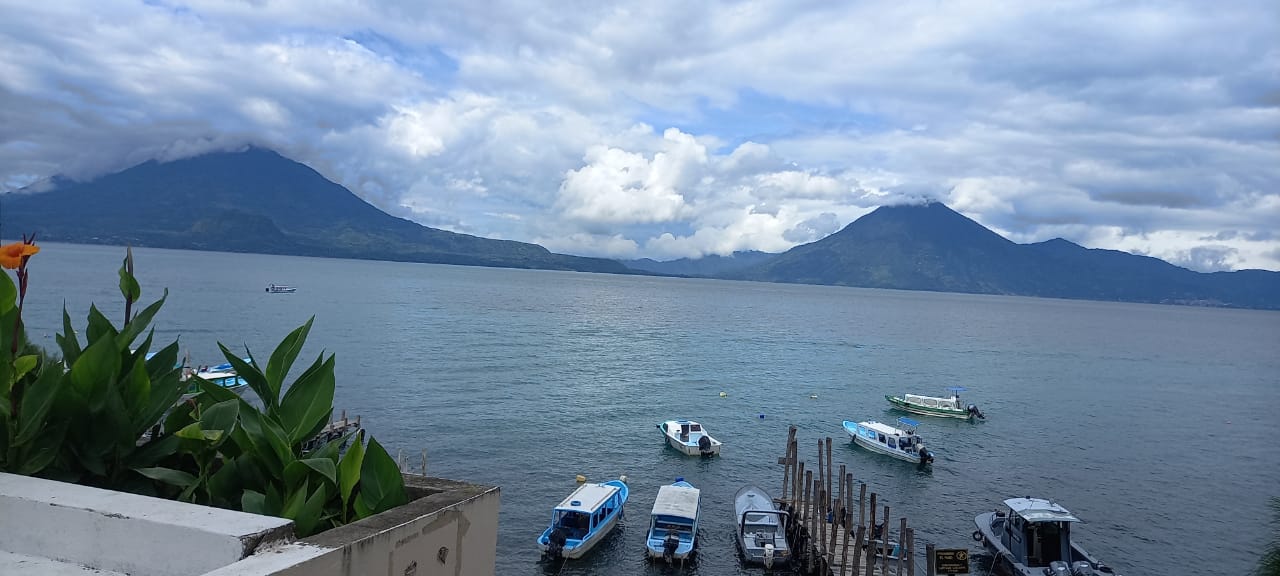
You can live comfortably at Lake Atitlan for $800 to $1,200 a month. In San Pedro La Laguna, $600 covers a furnished room, three meals a day, and lancha rides between towns. In Panajachel, $1,000 gets you a proper apartment with WiFi and lake views. Aldous Huxley called Atitlan the most beautiful lake in the world, and it might also be the cheapest place in the Western Hemisphere where foreigners genuinely want to live.
But Lake Atitlan is not one place. Each town around the lake has its own personality, its own price level, and its own set of tradeoffs. Panajachel has banks and supermarkets. San Pedro has backpacker bars and $2 meals. San Marcos has yoga retreats and Starlink dishes. Santa Cruz has silence and boat-only access. Where you settle changes your budget by 30–50%.
This guide breaks down real costs town by town, updated March 2026, using current exchange rates (approximately 1 USD = 7.7 GTQ) and prices verified on the ground. For the country-wide picture, see our complete cost of living guide.
Monthly Budget by Town
Updated March 2026. All figures monthly, single person, in USD.
Panajachel: The Main Hub ($800–1,200)
Panajachel (“Pana”) is the largest town on the lake and the transport hub. It has banks (Banrural, BAM, Banco Industrial), ATMs, a Despensa Familiar supermarket, pharmacies, and the main lancha dock. It is the most “normal” town on the lake — less bohemian than San Marcos, more infrastructure than San Pedro.
| Expense | Budget | Comfortable | Premium |
|---|---|---|---|
| Rent (1BR furnished) | $200–350 | $400–600 | $700–1,200 |
| Groceries | $100–150 | $150–220 | $250–350 |
| Dining out | $60–100 | $120–200 | $250–400 |
| Transport (lanchas + tuk-tuks) | $20–35 | $35–60 | $60–100 |
| Utilities | $25–40 | $40–70 | $60–100 |
| Internet | $30–45 | $35–55 | $50–70 |
| Healthcare | $15–25 | $30–55 | $60–120 |
| Entertainment | $25–45 | $50–100 | $100–200 |
| Total | $550–800 | $800–1,200 | $1,500–2,500 |
Pana’s advantage: Real infrastructure. You can walk to an ATM, buy groceries at a proper store, and catch a chicken bus to Solola or Los Encuentros. Internet is the best on the lake — Tigo fiber reaches parts of the center at 50 Mbps.
Pana’s tradeoff: It is the most touristy town. Calle Santander is lined with shops selling textiles and jade. It feels more like a transit hub than a home for some people.
San Pedro La Laguna: The Budget Capital ($600–900)
San Pedro is the cheapest town on the lake with a functioning expat community. It draws backpackers, Spanish students, and budget long-termers. The nightlife is the liveliest on the lake (bars stay open late), and the Tz’utujil Maya culture is vibrant and visible.
| Expense | Budget | Comfortable | Premium |
|---|---|---|---|
| Rent (1BR furnished) | $100–200 | $250–400 | $500–800 |
| Groceries | $80–120 | $130–200 | $200–300 |
| Dining out | $50–80 | $100–180 | $200–350 |
| Transport (lanchas) | $15–25 | $25–45 | $40–70 |
| Utilities | $20–35 | $35–60 | $50–80 |
| Internet | $25–40 | $30–50 | $45–70 |
| Healthcare | $10–20 | $25–45 | $50–100 |
| Entertainment | $20–40 | $40–80 | $80–150 |
| Total | $400–600 | $600–900 | $1,200–1,800 |
San Pedro’s advantage: Genuinely affordable. A basic furnished room for $100–150/month exists and is not terrible. Comedores serve full plates for Q15–25 ($2–3.25). Spanish schools are $80–120/week (cheaper than Antigua). The vibe is social and easy to plug into.
San Pedro’s tradeoff: Internet is inconsistent (10–30 Mbps cable, frequent outages). The town is hilly — walking with groceries is a workout. The nightlife scene means noise if you live near the main strip.
San Marcos La Laguna: The Wellness Town ($700–1,000)
San Marcos is the yoga-retreat-Starlink-cacao-ceremony town. It attracts a specific type: health-conscious, spiritually inclined, comfortable with off-grid quirks. It is beautiful, quiet, and slightly more expensive than San Pedro because of the wellness premium.
| Expense | Budget | Comfortable | Premium |
|---|---|---|---|
| Rent (1BR furnished) | $150–250 | $300–500 | $600–1,000 |
| Groceries | $80–130 | $150–220 | $250–350 |
| Dining out | $60–90 | $100–180 | $200–350 |
| Transport (lanchas) | $15–30 | $30–55 | $50–80 |
| Utilities | $20–35 | $35–65 | $50–90 |
| Internet | $30–50 | $45–66 | $50–80 |
| Healthcare | $15–25 | $30–50 | $60–120 |
| Entertainment | $25–45 | $50–100 | $100–180 |
| Total | $500–700 | $700–1,000 | $1,400–2,200 |
San Marcos’s advantage: Peaceful. The village is small enough that you know everyone within a month. Yoga classes, massage, and holistic health services are abundant and affordable ($5–15/class, $15–30/massage). The views are extraordinary.
San Marcos’s tradeoff: Internet is the biggest challenge. No fiber. Most expats use Starlink ($45–66/month) or mobile hotspots. The nearest ATM is in San Pedro or Panajachel (lancha ride away). Grocery options are limited — many people make weekly shopping trips to Pana.
Santa Cruz, Jaibalito & San Juan: The Quiet Towns
These smaller towns offer the lowest rents but the fewest services.
| Town | 1BR Rent | Comfortable Total | Key Feature |
|---|---|---|---|
| Santa Cruz La Laguna | $100–250 | $600–900 | Boat-only access, incredible views |
| Jaibalito | $80–200 | $500–800 | Smallest expat town, very quiet |
| San Juan La Laguna | $120–280 | $600–950 | Artist community, coffee cooperatives |
These towns are for people who want genuine solitude. Santa Cruz and Jaibalito have no road access — everything arrives by lancha. San Juan is connected by road to San Pedro but has very little tourist infrastructure. You need to be comfortable with limited grocery options, no restaurants some days, and a 20–minute boat ride for basic errands.
Rent: The Lake Advantage
Rent at Lake Atitlan is the cheapest in Guatemala for places where expats actually live. The numbers are not a typo.
| Type | San Pedro | Panajachel | San Marcos | Santa Cruz |
|---|---|---|---|---|
| Basic room (shared bath) | $80–150 | $120–200 | $100–180 | $60–120 |
| Furnished room (private bath) | $150–250 | $200–350 | $180–300 | $100–200 |
| 1BR apartment | $200–400 | $350–600 | $300–500 | $150–300 |
| House with lake view | $400–700 | $600–1,000 | $500–800 | $300–600 |
| Luxury lakefront | $700–1,200 | $900–1,500 | $700–1,200 | $500–900 |
Why is it so cheap? No roads to most towns (limits development), indigenous land ownership (limits speculation), limited utilities infrastructure (no sewage systems, inconsistent power). These are features for budget seekers and bugs for comfort seekers.
Finding rentals: Word of mouth is king. Facebook groups (Lake Atitlan Classifieds, Expats at Lake Atitlan) post listings daily. Walking around town and asking at tiendas works better than any website. Many places are not listed online at all.
Seasonal pricing: December–February and Semana Santa see 20–40% price spikes in Panajachel and San Marcos. San Pedro and the quiet towns are less affected. Arriving in May–September (rainy season) gives you the best negotiating power.
Food: Local Prices, Tourist Pockets
The lake towns are surrounded by agricultural communities. Vegetables, fruit, and corn are grown locally and sold at genuinely low prices.
Daily Food Costs by Town
| Meal Type | San Pedro | Panajachel | San Marcos |
|---|---|---|---|
| Comida corriente (set lunch) | Q15–25 ($2–3.25) | Q20–30 ($2.60–3.90) | Q20–35 ($2.60–4.55) |
| Street food (tacos, tostadas) | Q5–15 ($0.65–1.95) | Q10–20 ($1.30–2.60) | Q10–20 ($1.30–2.60) |
| Tourist restaurant (main) | Q60–120 ($7.80–15.60) | Q70–150 ($9.10–19.50) | Q60–130 ($7.80–16.90) |
| Smoothie / juice | Q15–25 ($1.95–3.25) | Q20–35 ($2.60–4.55) | Q25–40 ($3.25–5.20) |
| Coffee (local cafe) | Q10–20 ($1.30–2.60) | Q15–30 ($1.95–3.90) | Q15–35 ($1.95–4.55) |
San Marcos has a “wellness tax” on food — acai bowls, vegan plates, and cacao drinks run Q40–80 ($5.20–10.40). Standard Guatemalan food costs the same as anywhere on the lake.
Grocery Shopping
Each town has tiendas (small shops) with basics, but selection is limited. For serious grocery shopping:
- Panajachel: Despensa Familiar (budget supermarket), plus a Thursday market with regional produce
- San Pedro: Daily market near the dock, good produce variety
- San Marcos: Small tiendas only — most people shop in San Pedro or Pana
- All towns: Fruit and vegetable vendors come through by boat on specific days
Weekly grocery budget: $25–35 (budget, cooking at home), $40–55 (comfortable, mix of cooking and eating out), $65–90 (premium, imported items from Pana).
For current prices across Guatemala, see our food price tracker.
Transportation: Life on the Water
Lake Atitlan’s defining transport feature is the lancha system. Most lakeside towns are connected by boat, not road. This is charming, practical, and sometimes frustrating.
Lancha Costs
| Route | Public Lancha | Private Lancha |
|---|---|---|
| Panajachel to San Pedro | Q25 ($3.25) | Q150–200 ($19.50–26) |
| Panajachel to San Marcos | Q25 ($3.25) | Q150–200 ($19.50–26) |
| Panajachel to Santa Cruz | Q15–20 ($1.95–2.60) | Q100–150 ($13–19.50) |
| San Pedro to San Marcos | Q15–20 ($1.95–2.60) | Q80–120 ($10.40–15.60) |
| San Pedro to San Juan | Q10–15 ($1.30–1.95) | Q50–80 ($6.50–10.40) |
Public lanchas run roughly 6:00 AM to 6:00 PM. After dark, only private lanchas operate (at 5–10x the price). Plan your movements accordingly.
Other Transport
| Transport | Cost | Notes |
|---|---|---|
| Tuk-tuk (within Panajachel) | Q5–15 ($0.65–1.95) | Short distances only |
| Pickup truck (San Pedro hills) | Q5–10 ($0.65–1.30) | Shared rides up steep streets |
| Chicken bus (Pana to Solola) | Q5 ($0.65) | 30 minutes, frequent |
| Chicken bus (Pana to Los Encuentros) | Q10 ($1.30) | Connection to Guatemala City |
| Shuttle (Pana to Antigua) | Q120–180 ($15.60–23.40) | Tourist shuttle, 3 hours |
| Shuttle (Pana to Guatemala City) | Q100–150 ($13–19.50) | Tourist shuttle, 3.5 hours |
Monthly transport budget: $20–40 if staying mostly in one town, $40–70 if traveling between towns regularly. There are no cars in Santa Cruz, Jaibalito, or San Marcos (no roads). San Pedro and Panajachel have roads but most people walk.
Internet: The Lake’s Biggest Challenge
Internet infrastructure at Lake Atitlan ranges from adequate to unreliable. This is the single most important factor for remote workers choosing between Atitlan and Antigua or Guatemala City.
| Town | Best Available | Typical Speed | Reliability |
|---|---|---|---|
| Panajachel | Tigo fiber | 30–50 Mbps | Good (centro) |
| San Pedro | Tigo cable | 10–30 Mbps | Inconsistent |
| San Marcos | Starlink / mobile | 20–80 Mbps (Starlink) | Variable |
| Santa Cruz | Starlink / mobile | 15–50 Mbps (Starlink) | Variable |
| San Juan | Tigo cable | 10–25 Mbps | Inconsistent |
Starlink has become the game-changer at Lake Atitlan. Hardware costs Q1,600 ($208) upfront, and monthly service runs Q345–510 ($45–66). Many guesthouses and rentals now include Starlink in the price. Speeds of 50–150 Mbps are common, though they fluctuate.
Power outages happen 2–4 times per month, lasting 30 minutes to several hours. A UPS (uninterruptible power supply, Q300–600 / $39–78) is essential equipment for remote workers. Some expats invest in small solar panels as backup.
Realistic assessment: If your job requires 100% uptime and consistent video call quality, Panajachel is the only town where wired internet is reliable enough. For async work (writing, design, coding), any town with Starlink works fine. For anything in between, have a backup plan.
For ISP details across the country, see our internet guide.
Healthcare
Healthcare at Lake Atitlan is basic. The towns have pharmacies and small clinics, but anything beyond routine care requires a trip to Solola (30–45 min by road from Pana) or Guatemala City (3–4 hours).
| Service | Cost at Lake | Notes |
|---|---|---|
| Doctor visit (local clinic) | Q100–250 ($13–32) | Basic consultations |
| Pharmacy (common meds) | Q20–80 ($2.60–10.40) | Limited selection in small towns |
| Dental (cleaning) | Q150–300 ($19.50–39) | Available in Pana, limited elsewhere |
| Hospital (Solola) | Varies | 30–45 min from Panajachel |
| Emergency evacuation (lancha) | Q200–500 ($26–65) | From boat-access towns to Pana |
Monthly healthcare budget: $25–50 for routine needs. If you have a chronic condition requiring regular care, the lake is not ideal — consider Antigua or Guatemala City where hospitals are accessible.
Traditional Mayan medicine is practiced widely around the lake. Many expats also use the herbalists and natural healers in San Marcos, though these are complementary to (not replacements for) conventional healthcare.
How Does Lake Atitlan Compare?
Lake Atitlan vs Other Guatemala Destinations
| Expense | Lake Atitlan (Pana) | Antigua | Guatemala City (Z10) | Xela |
|---|---|---|---|---|
| 1BR apartment | $300–500 | $500–800 | $750–1,035 | $300–450 |
| Comida corriente | Q20–30 ($2.60–3.90) | Q25–35 ($3.25–4.55) | Q25–40 ($3.25–5.20) | Q20–30 ($2.60–3.90) |
| Internet (best) | Q350 Starlink ($45) | Q235 fiber ($30) | Q235 fiber ($30) | Q235 fiber ($30) |
| Monthly total | $800–1,200 | $1,200–1,700 | $2,350–3,250 | $900–1,200 |
Lake Atitlan is 35–50% cheaper than Antigua for a similar quality of life, and 65–70% cheaper than Guatemala City’s upscale zones. The tradeoff is infrastructure: slower internet, limited healthcare, and boat-dependent transport.
Lake Atitlan vs International Budget Destinations
| Location | Comfortable Monthly | Internet | Healthcare |
|---|---|---|---|
| Lake Atitlan | $800–1,200 | 10–80 Mbps | Basic |
| Bali, Indonesia | $1,000–1,500 | 20–100 Mbps | Good |
| Chiang Mai, Thailand | $800–1,200 | 50–200 Mbps | Excellent |
| Medellin, Colombia | $1,200–1,800 | 50–200 Mbps | Excellent |
| Tulum, Mexico | $1,500–2,500 | 20–80 Mbps | Good |
Lake Atitlan competes on price with Southeast Asia and beats Latin American popular spots. Where it loses is internet reliability and healthcare infrastructure. For budget seekers who prioritize natural beauty over digital convenience, it is hard to beat.
Living at the Lake: What Nobody Tells You
The altitude matters. Lake Atitlan sits at 1,560 meters (5,120 feet). Days are warm (22–28C / 72–82F) but nights get cool (12–16C / 54–61F). You will want a blanket and possibly a space heater for December–February. Hot water is not guaranteed in budget places.
The rainy season is real. May through October brings afternoon rains, sometimes heavy. Roads around the lake can flood. Landslides occasionally block the road between Solola and Panajachel. October 2005’s Hurricane Stan caused severe damage — the lake level can fluctuate significantly during heavy rains.
Isolation creeps up on you. The first month at the lake feels like paradise. By month six, the boat-access lifestyle can feel limiting. The nearest cinema is in Solola or Guatemala City. Many long-term expats develop a rhythm of 2–3 months at the lake, then a week in Antigua or the capital.
Community is the real draw. Each town has a tight-knit social scene. In San Marcos, it is yoga and wellness. In San Pedro, it is language students and backpackers. In Panajachel, it is longer-term expats and retirees. Find your town and you find your people.
Respect the communities. The lakeside towns are primarily indigenous Tz’utujil and Kaqchikel communities. Dress modestly, learn basic Spanish (and ideally a few words of the local Maya language), and understand that you are a guest. The communities have been welcoming, but tensions around land use and cultural respect are real.
Sample Monthly Budget: Digital Nomad in Panajachel ($1,000)
| Expense | Amount |
|---|---|
| 1BR apartment with lake view (furnished) | $450 |
| Groceries (market + Despensa Familiar) | $170 |
| Dining out (3x/week) | $120 |
| Lanchas + tuk-tuks | $40 |
| Starlink internet (backup to apartment WiFi) | $0 (included) |
| Cell phone (Tigo 15GB) | $10 |
| Utilities | $50 |
| Healthcare (occasional) | $20 |
| Entertainment (bars, events) | $60 |
| Yoga classes (2x/week) | $30 |
| Misc | $50 |
| Total | $1,000 |
Related Resources
- Complete Cost of Living in Guatemala — country-wide breakdown with all 7 cities
- Cost of Living in Antigua Guatemala — Antigua detailed guide
- Cost of Living in Guatemala City — zone-by-zone capital guide
- Lake Atitlan Towns Guide — character and lifestyle by village
- Panajachel Municipality Page — demographics, elevation, safety data
- San Pedro La Laguna — town profile and data
- San Marcos La Laguna — town profile and data
- Best Places to Live in Guatemala — ranked comparison of 10 cities
- Exchange Rates — live USD/GTQ conversion
- Internet in Guatemala — ISP speeds and coverage
- Remittance Rates — compare transfer costs from the US