
I needed 16 solar optimizers and a monitoring gateway for my rooftop system in Antigua. The problem: nobody in Guatemala sells Tigo equipment. The solution: buy used on eBay and ship to my door through Aeropost.
Two shipments, two invoices, one big surprise — solar equipment enters Guatemala with 0% import duty. Here’s the entire process, what I paid, and what you need to know before importing anything to Guatemala from the US.
This is Article 3 in my solar series. If you want the full picture, check out my complete solar installation breakdown and my Tigo optimizer review.
TL;DR: I imported $802 of Tigo solar equipment from eBay to Guatemala via Aeropost for $261 in shipping and taxes (33% overhead). Solar gear gets 0% import duty – you only pay 12% IVA. Total delivery time: 10-14 days from purchase to doorstep.
Currency note: All prices shown in both Guatemalan Quetzales (Q) and US Dollars. USD conversions at ~Q7.75/$1 (Feb 2026 rate). Check the current exchange rate for today’s rate.
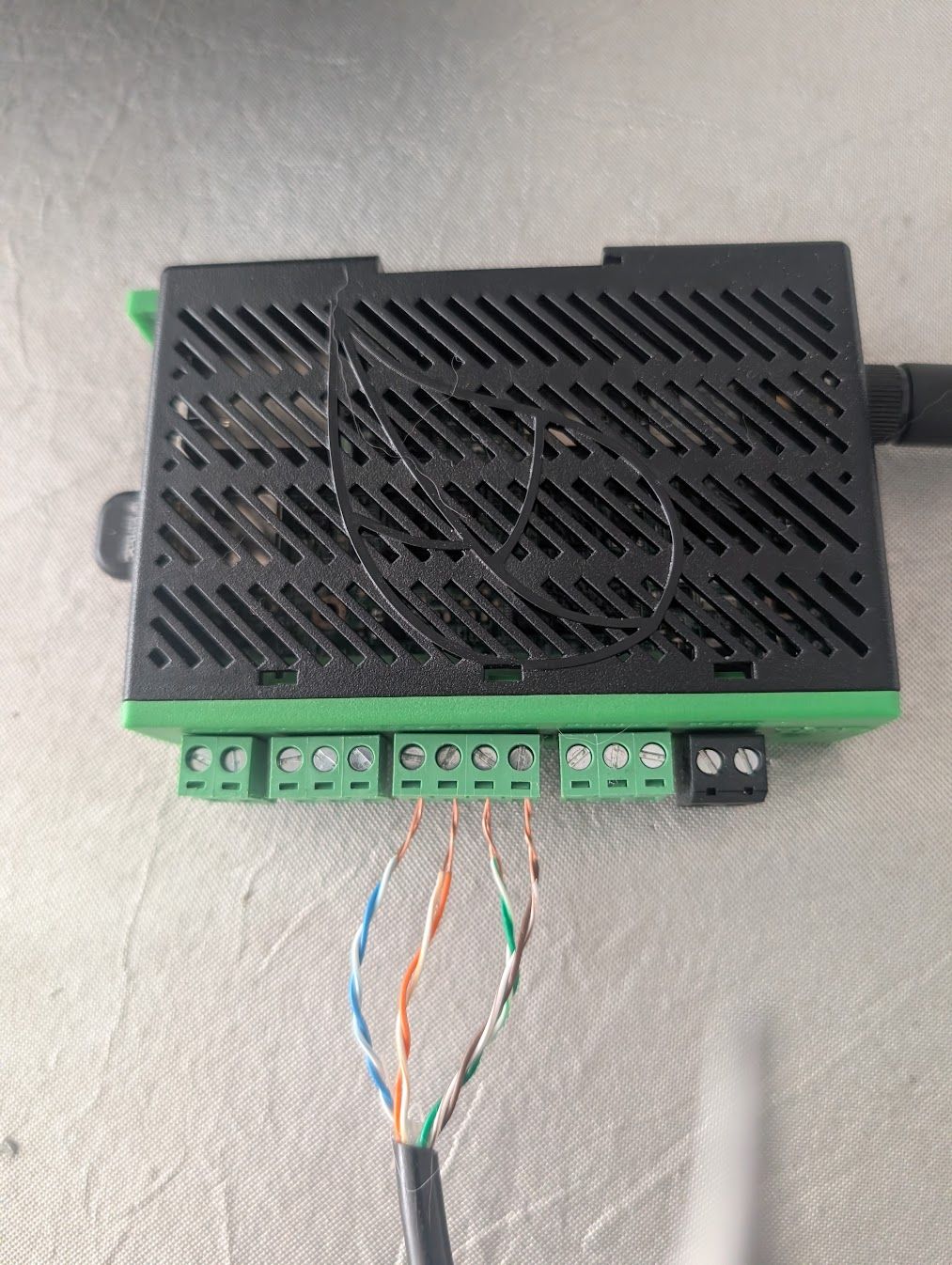
The Tigo CCA gateway kit — bought on eBay for $242, shipped to Guatemala through Aeropost in 2 weeks.
Why Import to Guatemala?
If you’ve lived in Guatemala long enough, you know the drill: local stores either don’t carry what you need, or they charge 2-3x the US price for it. Solar equipment is an extreme version of this.
My local installer Union Solar did a great job with the panels, inverter, and battery — all things they stock regularly (see our full solar guide for local installer details). But Tigo optimizers and CCA gateways? Nobody here carries them. Tigo doesn’t have distribution in Central America.
So my options were:
- Pay a local shop to special-order — they add their markup on top of import costs (usually 40-60% over US retail)
- Import it myself — deal with customs, shipping, and a little paperwork
I went with option 2. Bought used/refurbished from eBay, shipped through Aeropost, and saved hundreds. New Tigo TS4-A-O optimizers retail for $50+ each in the US. I negotiated 16 units for $560 total ($35 each) from an eBay seller who had pulled them from a decommissioned residential install.
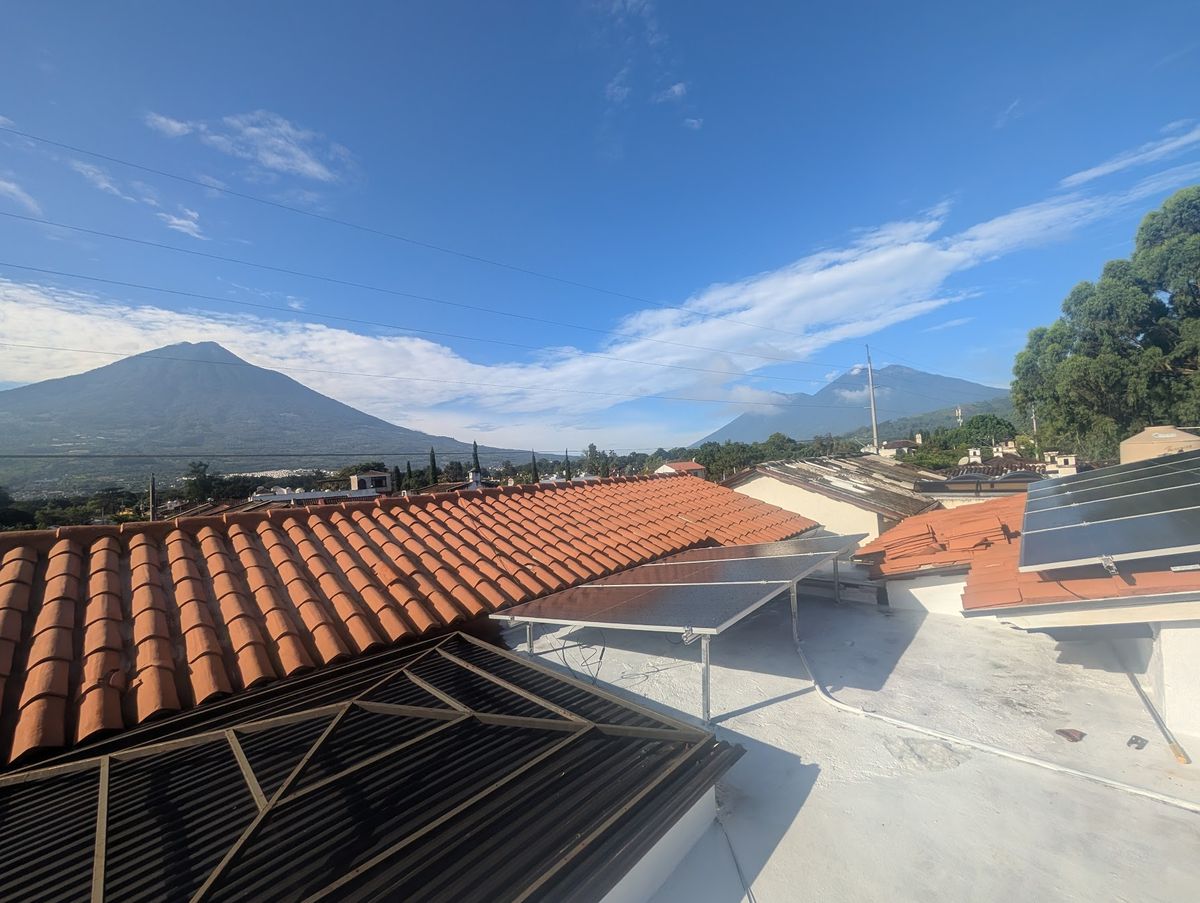
My 9.92 kW system in Antigua — the Tigo optimizers and CCA gateway were imported from the US because nobody in Guatemala carries them.
This guide works for anything you want to import to Guatemala — electronics, parts, tools, whatever. But the solar angle adds an extra benefit that most people don’t know about.
What Is Aeropost?
If you’re new to Guatemala, Aeropost is the most popular mail forwarding service for importing goods from the US. Think of it as your personal warehouse in Miami.
Here’s the concept:
- You sign up at aeropost.com (free, select Guatemala)
- They give you a Miami warehouse address — it looks like a regular US shipping address with your unique account number
- You buy something on eBay, Amazon, Walmart, any US online store
- Ship it to your Aeropost Miami address
- Aeropost receives it, handles all customs paperwork and import declarations, and ships it to Guatemala
- They deliver it to your door (or you pick up from their warehouse near Guatemala City)
- You pay the Aeropost invoice on delivery or through their app
That’s it. No dealing with SAT (Guatemala’s tax authority), no filling out import forms, no standing in line at customs. Aeropost handles all of it.
Most Guatemalans already know Aeropost — it’s been around for years and it’s how people buy things from Amazon. But if you’re an expat just arriving (see our how to move to Guatemala guide for the full checklist), this is the service you need to know about.
Your Aeropost Miami Address
When you sign up, your shipping address will look something like this:
Your Name
8351 NW 21st St, Suite [YOUR ACCOUNT NUMBER]
Doral, FL 33122
When buying on eBay or Amazon, just ship to this address. Include your account number in the address line so Aeropost can match the package to your account.
My account number format is GUA-XXXXXXXXXX — yours will be similar.
The Big Benefit: 0% Import Duty on Solar Equipment
This is the thing most people don’t know, and it saved me serious money on both shipments.
Guatemala has a renewable energy incentive law that eliminates import duty (arancel) on solar and renewable energy equipment. This means:
- Solar panels: 0% arancel
- Inverters: 0% arancel
- Batteries (for solar storage): 0% arancel
- Optimizers, monitoring equipment, charge controllers: 0% arancel
- Cables and mounting hardware for solar: 0% arancel
I confirmed this on both my invoices — the arancel line reads Q0.00 on each one.
What You Still Pay
The 0% arancel does not mean free import. You still pay:
- IVA (Impuesto al Valor Agregado): 12% tax on the declared customs value. This is Guatemala’s equivalent of sales tax/VAT. Everyone pays this on everything. You will need a NIT tax ID for formal purchases in Guatemala.
- Aeropost service fees: Shipping (flete), customs handling (manejo aduanal), delivery (entrega), and their guarantee/return program.
The 0% duty specifically eliminates the arancel — the import tariff that the government charges based on the product category. For regular electronics (laptops, phones, TVs), this arancel is typically 5-15%. For solar equipment, it’s zero.
How Does Aeropost Know It’s Solar Equipment?
This is where it gets interesting. On my customs forms (Declaracion Aduanera de Importacion), the items were classified as:
- Shipment 1 (CCA Gateway): “HERRAMIENTA ELECTRICA” (electrical tool)
- Shipment 2 (16 optimizers): “CABLES”
Neither says “solar optimizer” or “solar monitoring gateway.” Aeropost classifies items for customs using tariff codes, and the SAT customs agent reviews and approves them. The tariff code is what determines whether duty applies — not the plain-text description.
For my solar equipment, the applicable tariff code carried 0% duty. If you’re importing solar gear, the system worked automatically in my case. I didn’t have to request the exemption or file any special paperwork.
Step-by-Step: How I Imported My Solar Optimizers
Here’s the exact process I followed for both shipments:
Step 1: Find What You Need on eBay/Amazon
I searched eBay for “Tigo TS4-A-O optimizer” and found several sellers with used/refurbished units from decommissioned US residential installations. For the CCA gateway kit, same approach.
Pro tip: On eBay, message sellers directly. I negotiated the price for 16 optimizers from the listed price down to $35/unit by buying the full lot. The seller (player1111 / MATHEW STEWART) was happy to move them all at once.
Step 2: Ship to Your Aeropost Miami Address
At checkout on eBay, I entered my Aeropost Miami address as the shipping destination. Standard eBay shipping to a Florida address — nothing unusual.
Both sellers shipped within 1-2 days. Standard ground shipping took about 3-5 days to reach the Aeropost warehouse in Doral, FL.
Step 3: Aeropost Receives and Processes
Once the packages arrive at the Miami warehouse, Aeropost:
- Logs them to your account
- Weighs and measures them
- Classifies the contents for customs
- Prepares the import declaration (póliza)
You’ll get a notification in your Aeropost account/app when they receive the package. At this point, you can see the estimated fees before the package ships to Guatemala.
Step 4: Miami to Guatemala
Aeropost consolidates packages and ships them on their regular freight routes to Guatemala. My packages took about 5-7 business days from Miami arrival to Guatemala.
They go to Aeropost’s Guatemala warehouse in Santa Catarina Pinula, just outside Guatemala City.
Step 5: Customs Clearance
This is the part that scares most people — and it’s the part Aeropost handles entirely for you. They:
- File the Declaracion Aduanera de Importacion with SAT
- Pay the applicable duties and IVA on your behalf
- Clear the package through customs
You don’t do anything. You don’t go anywhere. You just wait.
Step 6: Delivery to Your Door
Aeropost delivers to addresses across Guatemala. My delivery zone is Antigua Guatemala (Zone 0223, Route 061). Both packages were delivered directly to my house.
Delivery fee is roughly flat at about Q47 (~$6) regardless of package size.
Step 7: Pay the Invoice
You pay the total Aeropost invoice — which includes their service fees plus the IVA they advanced on your behalf. Payment options include:
- Cash on delivery
- Credit/debit card through their app
- Bank transfer
The invoice (factura) is detailed — it breaks down every charge so you can see exactly what you’re paying for.
Real Costs: Two Shipments with Actual Invoice Data
Here are the exact numbers from my two Aeropost invoices. No estimates, no rounding — these are the real charges.
Invoices from October 2025. See our exchange rates page for today’s USD/GTQ rate.
Shipment 1: Tigo CCA Gateway Kit
| Detail | Amount |
|---|---|
| eBay purchase price | $227.09 |
| Factura #: 2406369686 | Oct 10, 2025 |
| Weight | 2.03 kg (4.47 lb) |
| Customs declared value | $227.09 |
| Import duty (arancel) | 0% — Q0.00 |
Aeropost charges:
| Fee | Q | USD |
|---|---|---|
| Flete (shipping) | Q159.54 | $20.59 |
| Programa Garantia/Retorno | Q43.03 | $5.55 |
| Manejo Aduanal (customs handling) | Q51.74 | $6.68 |
| Entrega (delivery) | Q47.43 | $6.12 |
| Services subtotal | Q301.74 | $38.93 |
Government charges:
| Tax | Q | USD |
|---|---|---|
| IVA (12% on declared value) | Q216.99 | $28.00 |
| TOTAL Aeropost invoice | Q518.73 | $66.93 |
|---|
Effective overhead: $66.93 on a $227.09 purchase = 29% on top of purchase price.
Shipment 2: 16x Tigo TS4-A-O Optimizers
| Detail | Amount |
|---|---|
| eBay purchase price | $560.00 |
| Factura #: 1345405273 | Oct 12, 2025 |
| Weight | 9.98 kg (22.01 lb) |
| Customs declared value | $560.01 |
| Import duty (arancel) | 0% — Q0.00 |
Aeropost charges:
| Fee | Q | USD |
|---|---|---|
| Flete (shipping) | Q728.18 | $93.96 |
| Programa Garantia/Retorno | Q81.20 | $10.48 |
| Manejo Aduanal (customs handling) | Q102.68 | $13.25 |
| Entrega (delivery) | Q47.06 | $6.07 |
| Services subtotal | Q959.12 | $123.76 |
Government charges:
| Tax | Q | USD |
|---|---|---|
| IVA (12% on declared value) | Q544.24 | $70.23 |
| TOTAL Aeropost invoice | Q1,503.36 | $194.00 |
|---|
Effective overhead: $194.00 on a $560.00 purchase = 35% on top of purchase price.
Combined Totals (Both Shipments)
| Category | Q | USD |
|---|---|---|
| eBay purchases (gateway + 16 optimizers) | ~Q6,100 | $787.10 |
| Aeropost services (flete, manejo, garantia, entrega) | Q1,260.86 | $162.69 |
| IVA (12% government tax) | Q761.23 | $98.23 |
| Total shipping/fees on top of purchase | Q2,022.09 | $260.93 |
| Grand total (purchase + import) | ~Q8,122 | $1,048.03 |
Breaking Down the Aeropost Fees
Each line on the Aeropost invoice means something specific. Here’s what you’re paying for:
Flete (Shipping)
This is the actual freight cost — getting your package from Miami to Guatemala. It’s weight-based, and the difference is dramatic:
- 2 kg package: Q159.54 ($20.59) — about Q79/kg
- 10 kg package: Q728.18 ($93.96) — about Q73/kg
The per-kilo rate is somewhat consistent, but heavier packages obviously cost a lot more in absolute terms. If you’re importing something heavy, this will be your biggest Aeropost charge.
Manejo Aduanal (Customs Handling)
This is Aeropost’s fee for handling all the customs paperwork — filing the import declaration with SAT, classifying your goods under the correct tariff code, and clearing them through customs.
- $227 declared value: Q51.74 ($6.68)
- $560 declared value: Q102.68 ($13.25)
It roughly scales with the declared value of the shipment. Think of it as Aeropost’s customs broker fee.
Programa Garantia/Retorno (Guarantee/Return Program)
This is a semi-optional program that Aeropost includes by default. It covers situations where your package is damaged, lost, or needs to be returned.
- $227 shipment: Q43.03 ($5.55)
- $560 shipment: Q81.20 ($10.48)
Scales with value. You might be able to opt out of this, but Aeropost tends to include it automatically. For imported electronics, having some coverage isn’t a bad idea.
Entrega (Delivery)
The delivery fee to bring the package from Aeropost’s warehouse in Santa Catarina Pinula to your door.
- Shipment 1: Q47.43 ($6.12)
- Shipment 2: Q47.06 ($6.07)
Essentially flat at ~Q47 regardless of package size or weight. If you’re near Guatemala City, you could save this by picking up at their warehouse yourself.
IVA (12% Government Tax)
This isn’t an Aeropost fee — it’s a government tax that applies to all imports (and most purchases in Guatemala). 12% on the declared customs value.
- $227.09 × 12% = Q216.99 (~$28.00)
- $560.01 × 12% = Q544.24 (~$70.23)
There’s no avoiding IVA. It applies to everything. The only question is whether you also pay arancel (import duty) on top of it — and for solar equipment, you don’t.
What Does Importing Actually Cost? The Overhead Math
Let’s be honest about the math. Aeropost isn’t cheap, but it’s predictable. Here’s what to expect:
The Formula
For solar equipment (0% arancel):
Total cost = Purchase price + Flete + Manejo Aduanal + Garantia + Entrega + IVA (12%)
For regular electronics (with arancel):
Total cost = Purchase price + Flete + Manejo + Garantia + Entrega + Arancel (5-15%) + IVA (12%)
Realistic Overhead Ranges
From my two shipments:
| Purchase Price | Overhead % | Extra Cost |
|---|---|---|
| ~$227 (light, 2 kg) | ~29% | ~$67 |
| ~$560 (heavy, 10 kg) | ~35% | ~$194 |
Plan for 25-35% on top of your purchase price. Lighter items trend toward 25%, heavier items toward 35% because flete scales with weight.
For regular electronics with arancel, add another 5-15% on top — meaning total overhead could be 35-50%.
When Importing Makes Sense
Even with 30% overhead, importing often makes sense when:
- The product isn’t available in Guatemala at all (my situation with Tigo)
- Local prices are marked up 50%+ over US prices
- You’re buying used/refurbished at significant savings (I paid $35/unit vs $50+ new)
- You need a specific model, brand, or configuration
When It Doesn’t Make Sense
Don’t bother importing when:
- It’s a commodity item available locally at a fair price
- The item is extremely heavy (flete will eat your savings)
- You need it urgently (10-14 days minimum)
- Local warranty matters to you (imported items have no local warranty)
Timeline: eBay Purchase to Doorstep
Here’s the timeline from my October 2025 shipments:
| Stage | Duration |
|---|---|
| eBay purchase to seller ships | 1-2 days |
| eBay shipping to Aeropost Miami | 3-5 days |
| Aeropost Miami processing | 1-2 days |
| Miami to Guatemala (freight) | 5-7 business days |
| Guatemala customs clearance | 1-2 days |
| Delivery to Antigua | Same day or next day |
| Total: purchase to doorstep | 10-14 days |
Both of my shipments fell within this range. The gateway arrived October 10th and the optimizers arrived October 12th, both purchased in early October.
Don’t expect Amazon Prime speed. Two weeks is normal. Plan accordingly.
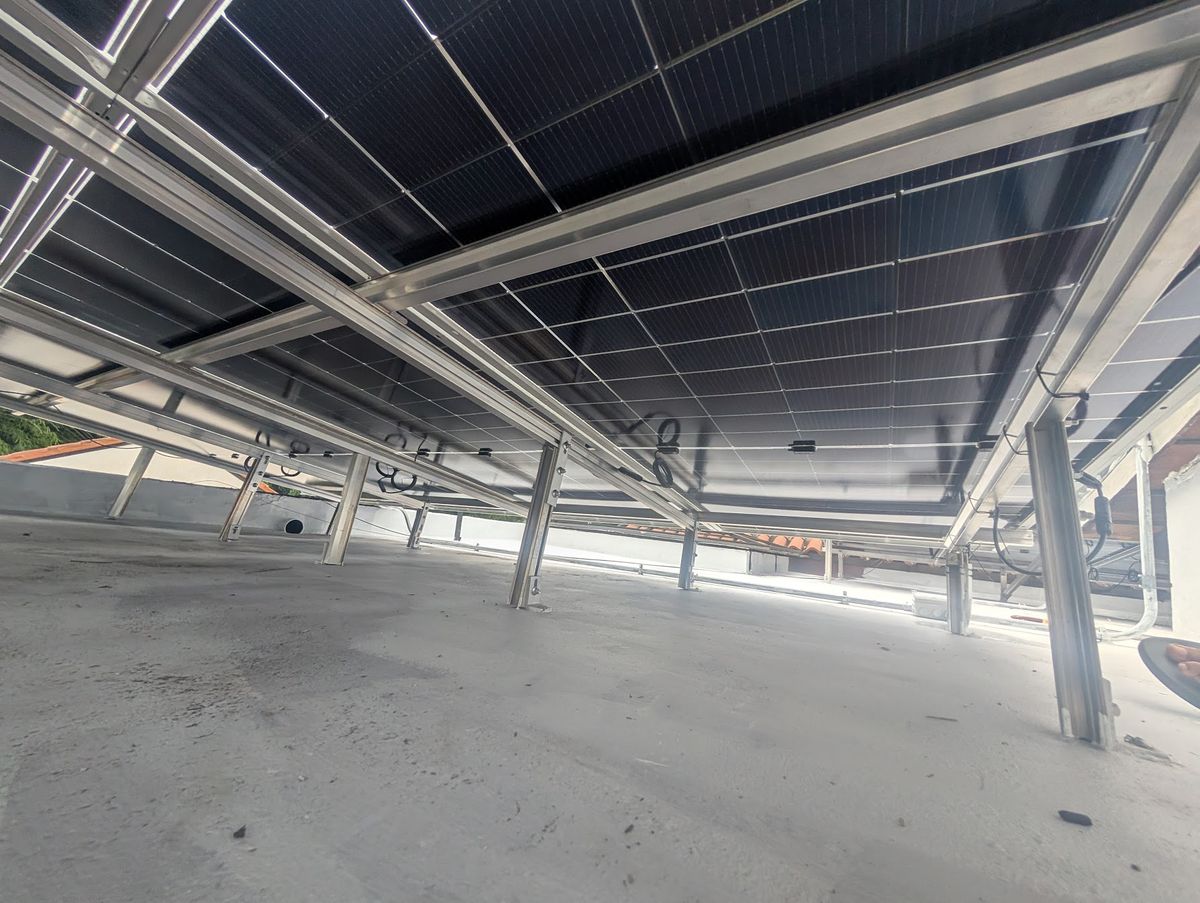
The end result — 16 used Tigo optimizers from eBay, shipped through Aeropost, installed under my panels in Antigua. Total import cost: $261 on top of $802 in eBay purchases.
Tips from My Experience
After going through this process, here’s what I’d tell anyone importing to Guatemala for the first time:
1. Consolidate When Possible
Entrega (delivery) is flat at ~Q47 per shipment. Manejo aduanal has a fixed component too. If you can buy everything from one seller and have it arrive as one package, you’ll save on those per-shipment fees.
I had two shipments because they were from different sellers. If I’d found one seller with both the gateway and optimizers, I’d have saved about Q100 ($13) in duplicate fees.
2. Negotiate on eBay
Don’t just click “Buy It Now.” Message the seller, especially if you’re buying multiple units. I got my 16 optimizers at $35 each by negotiating a lot deal. The seller was happy to move inventory, I was happy to save money.
3. Watch the Weight
Flete is your biggest variable cost. A 2 kg package costs Q160 in shipping. A 10 kg package costs Q728. That scales roughly linearly, so a 20 kg package would be around Q1,400+ in flete alone.
For heavy items (tools, batteries, large equipment), compare Aeropost’s cost against other options like cargo maritimo (sea freight) or even having someone bring it in their luggage.
4. Used/Refurbished Solar Equipment Works Fine
Both my Tigo gateway and all 16 optimizers were used — pulled from decommissioned US residential systems. They’ve worked flawlessly for 5 months straight. Solar electronics are solid-state with no moving parts. Used units at 30-50% off are a smart buy.
5. Keep Your Invoices
Aeropost gives you a detailed factura for each shipment. Keep these. If you ever need to prove the import was legal, show the equipment is duty-exempt, or claim warranty on anything, the factura is your documentation.
6. Know What’s Duty-Free vs Not
Solar equipment: 0% arancel. Regular electronics, household goods, clothing — these all have varying arancel rates. Don’t assume everything is duty-free just because solar is. The 0% is specific to renewable energy equipment under Guatemala’s incentive laws.
7. Consider the Exchange Rate
Aeropost charges in Quetzales, but your eBay purchase is in USD. The exchange rate matters. I’d recommend checking today’s exchange rate and timing larger purchases when the Quetzal is strong. For larger transfers, also check our remittance rate comparison to find the cheapest way to move money between the US and Guatemala.
Alternatives to Aeropost
Aeropost isn’t the only option, though it’s the most popular:
| Service | Best For | Notes |
|---|---|---|
| Aeropost | General importing, ease of use | Most popular, door-to-door, handles everything |
| Trans Express | Alternative to Aeropost | Similar service, compare rates |
| Cargo maritimo | Very heavy/bulky items | Sea freight, much cheaper per kg but takes 4-6 weeks |
| Someone’s suitcase | Small, urgent items | If you know someone traveling from the US, they can bring it |
| PriceSmart shipping | PriceSmart purchases | If you buy from PriceSmart online |
For most imports under 20 kg, Aeropost (or Trans Express) is the simplest option. For larger shipments — say, full solar panels or a pallet of batteries — cargo maritimo or a freight broker would be more cost-effective.
Frequently Asked Questions
Can I import anything through Aeropost?
Most consumer goods, yes. There are restrictions on hazardous materials, weapons, certain chemicals, and items prohibited by Guatemalan law. Lithium batteries have restrictions too — check Aeropost’s prohibited items list. My Tigo optimizers (which don’t contain batteries) shipped without issues.
How does Aeropost classify my items for customs?
Aeropost has a team that reviews incoming packages and assigns customs tariff codes. My solar optimizers were classified as “CABLES” and my gateway as “HERRAMIENTA ELECTRICA” — not exactly what I’d call them, but the tariff codes were correct and carried 0% duty. You don’t get to choose the classification.
What if I disagree with how they classified something?
If Aeropost classifies your item under a tariff code that charges arancel and you believe it should be duty-free (e.g., solar equipment), you can contact their customer service before the shipment clears customs. In practice, I didn’t have to do this — they got it right automatically.
Can I pick up at the warehouse instead of paying for delivery?
Yes. Aeropost’s Guatemala warehouse is in Santa Catarina Pinula, near Guatemala City. You can pick up packages there and save the ~Q47 delivery fee. Useful if you’re in Guatemala City already.
Do I need to show any ID on delivery?
Yes. Have your DPI (Guatemalan ID) or passport ready. The delivery driver may ask for identification to confirm you’re the account holder.
What about warranty on imported items?
There is no local warranty for items imported this way. If your eBay purchase breaks, your recourse is with the eBay seller (and eBay’s buyer protection), not with any local company. For solar equipment, this hasn’t been an issue — the Tigo units have been running perfectly for 5 months.
Is the 0% solar duty always applied automatically?
In my experience, yes. Both shipments received 0% arancel without me requesting anything special. The tariff code determines the duty rate, and Aeropost assigned the correct codes. However, I can’t guarantee every customs agent will classify solar equipment the same way every time. Keep your product descriptions clear on the eBay listing, and if there’s a dispute, you can reference Guatemala’s renewable energy incentive law.
How much would these same items cost with regular import duty?
If my solar equipment had been classified as regular electronics (let’s say 10% arancel), the additional duty charges would have been roughly:
- Shipment 1: ~$22.70 extra (10% of $227.09)
- Shipment 2: ~$56.00 extra (10% of $560.01)
- Total extra: ~$78.70 that I didn’t have to pay
The 0% solar exemption saved me about Q610 (~$79) across both shipments. On larger solar imports (full panel sets, inverters, batteries), the savings would be much bigger.
Is Aeropost available in other Central American countries?
Yes. Aeropost operates across Central America — Costa Rica, Panama, El Salvador, Honduras, and others. The process is similar, though fees and delivery zones vary by country.
The Bottom Line
Importing through Aeropost is straightforward once you’ve done it the first time. Budget 25-35% on top of your purchase price for Aeropost fees and IVA, plan for 10-14 days from purchase to delivery, and if you’re importing solar equipment, enjoy that 0% import duty.
For my solar setup, importing used Tigo equipment from eBay through Aeropost was the only viable option — and it saved me hundreds compared to what a local special-order would have cost (if I could have even found a local supplier).
My two shipments in summary:
| Gateway | 16 Optimizers | Combined | |
|---|---|---|---|
| Purchase price | $227 | $560 | $787 |
| Aeropost + IVA | $67 | $194 | $261 |
| Total delivered | $294 | $754 | $1,048 |
| Overhead % | 29% | 35% | 33% |
Worth it? Absolutely. These components made my solar system smarter, gave me panel-level monitoring, and will pay for themselves in grid savings within a year.
Want to see the full solar project? Check out my complete solar installation breakdown for total costs, EEGSA bill comparisons, and 5 months of production data. Or read my Tigo optimizer review to see what these imported optimizers actually do for system performance.
![Shipping to Guatemala: Compare Costs & Services [2026 Guide]](/images/photos/rt14-volcan-agua-road-2.jpg)