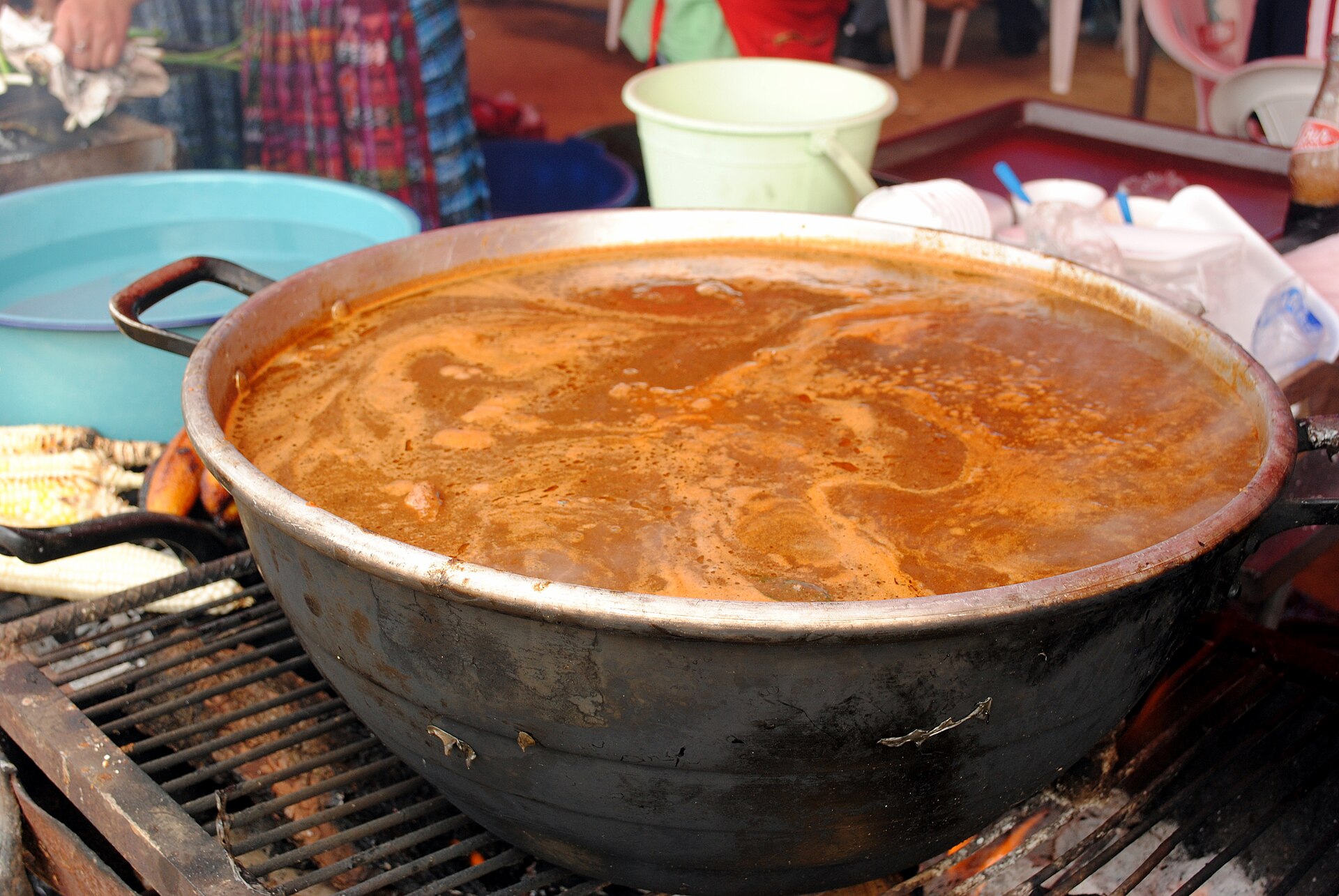
Growing up in Guatemala, food was never just a meal. It was my grandmother’s tamales on Christmas Eve, the tortilla lady on the corner at 6am, and the specific smell of pepian simmering in a clay pot that meant Sunday lunch was almost ready.
This guide covers what you need to know about eating in Guatemala — from the dishes you have to try, to what you’ll pay at the market, to where to find the best street food. Real prices, real dishes, no tourist fluff.
TL;DR: A comida corriente (set lunch) costs Q25-35 ($3.25-$4.55) and includes soup, a main plate, rice, beans, tortillas, and a drink. Street food runs Q5-15. Try pepian (national dish), kak’ik (Maya turkey soup), and tamales colorados.
Must-Try Guatemalan Dishes
These aren’t suggestions — they’re requirements. If you leave Guatemala without trying these, you missed the point.
The Essential 10
1. Pepian — Guatemala’s national dish. A thick, smoky stew of chicken or pork in a sauce made from roasted tomatoes, tomatillos, peppers, pumpkin seeds, and sesame seeds, thickened with toasted tortilla. It predates the Spanish conquest. Served with rice. You’ll find it at comedores (local eateries) everywhere for Q25-35 (~$3.25-4.50).
2. Kak’ik — A Q’eqchi’ Maya turkey soup from Alta Verapaz, colored bright red from achiote and dried chilies. It’s earthy, smoky, and deeply complex. The best versions come from Coban, where it originated. UNESCO recognized Q’eqchi’ cuisine partly because of this dish.
3. Tamales Colorados — The holiday tamale. Pork or chicken in a rich tomato-based recado sauce, wrapped in banana leaves and steamed. Families make them by the hundreds for Christmas and birthdays. Every family has a slightly different recipe, and every family claims theirs is the best.
4. Tamales Negros — The other essential tamale. Same banana leaf wrapping, but the filling is a dark, sweet mole sauce with chicken, prunes, raisins, almonds, and chocolate. It’s the tamale you eat on Christmas Eve at midnight.
5. Chuchitos — Think of them as Guatemala’s everyday tamale. Smaller than formal tamales, wrapped in corn husks instead of banana leaves, filled with chicken or pork in a tomato sauce and topped with cheese. Sold at markets and street corners for Q5-8 each (~$0.65-1.00).
6. Rellenitos — Mashed ripe plantain rolled around a sweetened black bean paste, then fried. Simple, delicious, and sold at every market and street stall. Q3-5 each (~$0.40-0.65). Dipped in sugar. Addictive.
7. Tostadas — Crispy fried tortillas topped with guacamole, black beans, salsa, shredded chicken, or ceviche. Sold at market stalls for Q8-15 (~$1.00-1.95). The tostadas de ceviche along the coast are outstanding.
8. Fiambre — Guatemala’s most elaborate dish, served only on November 1st (Day of the Dead). Up to 50 ingredients: cold cuts, cheeses, pickled vegetables, sausages, beets, pacaya flowers, and a vinegar-mustard dressing. Every family’s recipe is different. It takes days to prepare.
9. Atol de Elote — A warm, sweet corn drink made from fresh kernels blended with milk, cinnamon, and sugar. Sold by street vendors in the morning and evening. Q5-10 a cup (~$0.65-1.30). Other atol varieties include atol de platano (plantain) and atol blanco (white corn).
10. Platanos en Mole — Ripe plantains fried and served in a chocolate-chili mole sauce. It sounds unusual, but the combination of sweet plantain with bitter chocolate and mild heat is one of Guatemala’s most distinctive flavors. Q15-25 at comedores (~$1.95-3.25).
Honorable Mentions
- Hilachas — Shredded beef in a mild tomato-tomatillo sauce. Comfort food at its finest.
- Jocón — Chicken in a green sauce made from tomatillos, cilantro, and green onion. The Antiguan version is legendary.
- Subanik — A K’iche’ Maya ceremonial stew with three types of meat (pork, chicken, beef) in a rich chile sauce, steamed in a banana leaf bundle.
- Caldo de Res — A hearty beef soup with corn on the cob, potatoes, carrots, chayote, and guisquil. Saturday lunch across the country.
- Revolcado — Pork head meat in a spicy tomato sauce. Not for the squeamish, but deeply flavorful.
Market Culture: Where Guatemalans Actually Shop
Supermarkets exist (La Torre, Paiz/Walmart, Despensa Familiar), but the heart of Guatemala’s food economy is the market. Every town has one. Here’s where to go.
The Markets You Need to Know
La Terminal (Guatemala City) — Central America’s largest open-air market. 12,000+ stalls spread across several blocks in Zone 4. You can find literally anything here — produce, meat, spices, electronics, clothing, pirated DVDs, live animals. It’s overwhelming, loud, and authentic. Go with someone local your first time. Prices are the cheapest in the country.
Mercado Central (Antigua) — Located behind the cathedral, this is the main daily market for Antigua residents. Fresh produce on the ground floor, comedores (food stalls) on the second floor where you can eat a full lunch for Q20-30 (~$2.60-3.90). Much more manageable than La Terminal.
Chichicastenango Market (Quiche) — The most famous market in Guatemala, held every Thursday and Sunday. Indigenous Maya vendors from across the highlands sell textiles, wooden masks, jade jewelry, ceramics, and produce. It’s touristic but still authentic — locals do their actual shopping here too. Go early (before 8am) for the best selection and fewer crowds. It is also one of our top free things to do in Guatemala.
Mercado de Xela (Quetzaltenango) — A sprawling daily market near the Minerva bus terminal. Less touristy than Chichicastenango, with better prices on textiles and everyday goods. The food stalls here serve some of the best cheap meals in the highlands.
Santiago Atitlan Market — The daily market in Santiago, across the lake from Panajachel. Tz’utujil Maya women in traditional huipiles sell produce, textiles, and handmade goods. Authentic and relatively untouched by tourism.
Market Prices: What Things Actually Cost
Here are real market prices as of early 2026, sourced from MAGA (Guatemala’s Ministry of Agriculture) and our own data collection across departments. Exchange rate: approximately Q7.7 = $1 USD.
Prices verified February 2026. See our exchange rates page for today’s USD/GTQ rate.
Staple Foods
For live-updated prices across all departments, see our food price tracker.
| Item | Price (GTQ) | Price (USD) | Unit |
|---|---|---|---|
| Black beans (frijol negro) | Q5.00 | $0.65 | per lb |
| Rice (arroz) | Q4.20 | $0.55 | per lb |
| White corn (maiz blanco) | Q2.38 | $0.31 | per lb |
| Tortillas | Q3.00 | $0.39 | per lb |
| Eggs (huevos) | Q30.00 | $3.90 | 30-ct flat |
| Chicken (pollo) | Q20.00 | $2.60 | per lb |
| Beef (carne) | Q35.00 | $4.55 | per lb |
| Tomatoes (tomate) | Q3.00 | $0.39 | per lb |
| Onion (cebolla) | Q3.50 | $0.45 | per lb |
| Potatoes (papa) | Q3.75 | $0.49 | per lb |
Prices shown are Guatemala City averages. Rural and highland markets may be 5-15% cheaper. Tourist areas (Antigua, Panajachel) may be 5-10% higher.
Price Variations by Region
Prices aren’t uniform across Guatemala. Here’s how staples compare:
| Item | Guatemala City | Antigua | Xela | Peten | Izabal |
|---|---|---|---|---|---|
| Black beans/lb | Q5.00 | Q5.25 | Q5.40 | Q4.75 | Q4.75 |
| Rice/lb | Q4.20 | Q4.41 | Q4.54 | Q3.99 | Q3.99 |
| Chicken/lb | Q20.00 | Q21.00 | Q21.60 | Q19.00 | Q19.00 |
| Beef/lb | Q35.00 | Q36.75 | Q37.80 | Q33.25 | Q33.25 |
| Eggs/30ct | Q30.00 | Q31.50 | Q32.40 | Q28.50 | Q28.50 |
| Corn/lb | Q2.38 | Q2.06 | Q2.48 | Q1.89 | Q1.89 |
Key takeaway: Peten and Izabal have the cheapest food prices. Xela and Antigua are slightly more expensive than the capital for most items. Corn prices vary the most — from Q1.89/lb in Peten to Q2.48/lb in Xela.
The Canasta Basica (Basic Basket)
Guatemala’s national statistics institute (INE) tracks the “canasta basica” — the minimum food basket for survival. As of January 2026:
- Urban per capita: Q924/month (~$120)
- Rural per capita: Q713/month (~$93)
- Urban family of 4: Q3,845/month (~$499)
This puts real numbers behind what “affordable” means. A single person can feed themselves on $120/month eating local staples. Add variety, eating out, and imported items, and you’re looking at $150-250/month for a comfortable food budget.
Restaurant Tiers: From Q20 Comedores to Q300 Fine Dining
Eating out in Guatemala covers an enormous range. Here’s the breakdown.
My Personal Picks
I grew up eating in mercados and comedores across Guatemala, from Huehuetenango to Antigua. Here are places I personally go back to again and again. La Familia Pizzeria in Antigua has the best pizza in town – one bite and you’ll agree. For authentic local prices without the tourist markup, Chicharrones La Cindal is a gem. If you’re craving something different, Kombu Ramen Shop makes fresh noodles in-house that rival what I’ve had in the States. And when I’m back in Huehuetenango, I always stop at El Sheriff and order ubre (cow udder) – it’s a local delicacy that most tourists would never think to try, but it’s incredible.
For upscale nights out, Hector’s Bistro in Antigua consistently delivers on quality and freshness, and Indian Accent is the real deal for authentic Indian food – rare to find at that level in Central America.
Comedores (Q20-35 / $2.60-4.55)
The backbone of Guatemalan dining. Comedores are family-run eateries — sometimes just a few plastic tables behind a counter — that serve a set lunch called “almuerzo” or “menu del dia.” It includes:
- Soup (usually chicken or vegetable broth)
- Main plate (grilled chicken, pepian, hilachas, carne asada)
- Rice and beans
- Tortillas (unlimited)
- A drink (fresco — fruit juice, lemonade, or jamaica)
All for Q20-35. This is where 90% of Guatemalans eat lunch. The food is homemade and usually excellent. Look for the ones with the most locals seated inside — that’s your quality indicator.
Where to find them: Every market has a comedor section. In Guatemala City, they line the streets around Zone 1 and near bus terminals. In Antigua, look one block off the main tourist streets.
Mid-Range Restaurants (Q50-100 / $6.50-13.00)
Sit-down restaurants with printed menus, proper seating, and table service. This tier includes:
- Pollolandia / Pollo Campero: Guatemala’s fast-food chicken chains. Pollo Campero is beloved nationally — a meal runs Q40-60.
- Local restaurants: Family-owned places with cloth napkins and a wider menu. A full meal with drink: Q50-80.
- Pizza and pasta: Guatemala has a surprising number of good Italian places, especially in Antigua. Q60-100 for a meal.
- Asian food: Chinese-Guatemalan (chifa) restaurants are everywhere. Q40-70 for a generous plate.
Upscale Restaurants (Q150-400+ / $19.50-52.00+)
Concentrated in Guatemala City Zones 10 and 14, and in Antigua’s center:
- Fine dining in Zone 10: International cuisine — Japanese, Peruvian, Italian, steakhouses. Q200-400 per person with drinks.
- Antigua upscale: Hector’s Bistro, Caoba Farms, Mesón Panza Verde. Q150-300 per person.
- Cayala (Zone 16): Guatemala’s newest dining scene with trendy restaurants, rooftop bars, and brunch spots. Q100-250.
Quick Price Reference
| Meal Type | Price Range (GTQ) | Price Range (USD) |
|---|---|---|
| Comedor almuerzo | Q20-35 | $2.60-4.55 |
| Pollo Campero combo | Q40-60 | $5.20-7.80 |
| Mid-range restaurant meal | Q50-100 | $6.50-13.00 |
| Pizza (whole) | Q60-120 | $7.80-15.60 |
| Upscale dinner | Q150-300 | $19.50-39.00 |
| Fine dining (Zone 10) | Q250-400+ | $32.50-52.00+ |
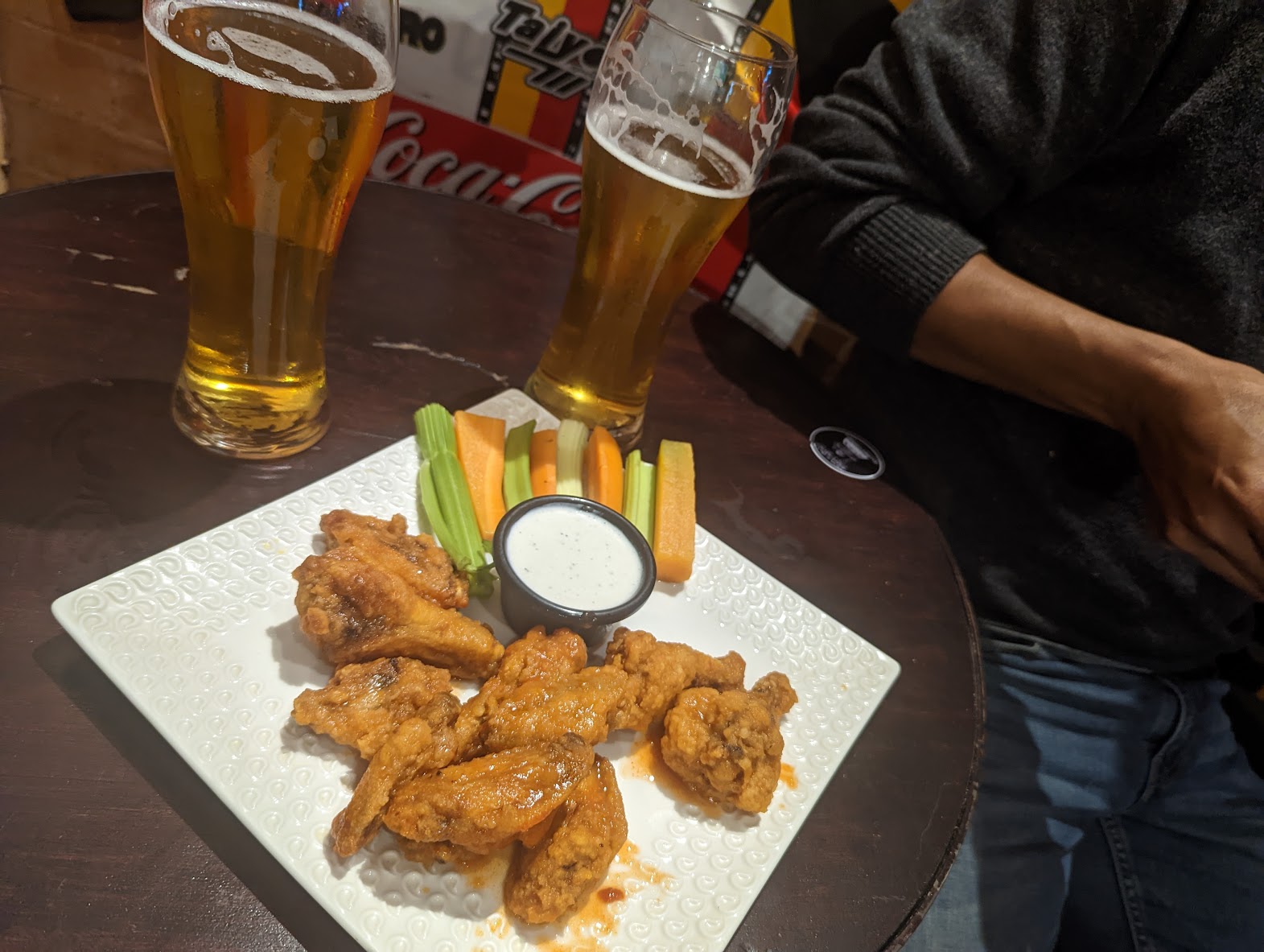
| Beer (domestic, restaurant) | Q15-30 | $1.95-3.90 |
| Beer (craft, bar) | Q35-60 | $4.55-7.80 |
| Coffee (cafe) | Q15-35 | $1.95-4.55 |
| Fresh juice (market) | Q5-10 | $0.65-1.30 |
Street Food: The Best Eating in Guatemala
Some of the best food in Guatemala never sees the inside of a restaurant. Street vendors and market stalls serve food that’s been perfected over generations.
Must-Try Street Food
Churrasquitos — Small cuts of grilled beef on a stick, served with tortillas, guacamole, and charred spring onions. Found at weekend barbecue carts and market exits. Q15-25 for a generous serving.
Elote Loco — Corn on the cob smothered in mayonnaise, ketchup, mustard, hot sauce, and grated cheese. It sounds like chaos. It’s delicious. Q10-15 from pushcart vendors, especially in parks and outside markets.
Shucos — Guatemala’s answer to the hot dog. A long bun with a grilled sausage, guacamole, cabbage slaw, mustard, and mayonnaise. The best shucos come from the late-night stands in Zona 1, Guatemala City, where the tradition started. Q10-20.
Garnachas — Small, thick tortillas topped with seasoned ground beef, tomato sauce, and a sprinkling of cheese. Crispy on the outside, soft inside. Q3-5 each. Found at market stalls and street corners, especially in the highlands.
Dobladas — Fried tortillas folded over a filling of chicken, cheese, or beans. Crunchy, simple, and sold at markets for Q5-8.
Empanadas de leche — Sweet pastry turnovers filled with custard or milk cream. Q5-8 from bakery stalls and market vendors. Perfect with morning coffee.
Atol (all varieties) — Warm corn-based drinks sold from large pots by street vendors. Atol de elote (sweet corn), atol blanco (white corn, less sweet), atol de platano (plantain). Q5-10 per cup. Best on cold highland mornings.
Rellenitos — Fried plantain balls stuffed with sweet black beans, rolled in sugar. Q3-5. Found at every market and most street stalls.
Street Food Safety
The standard advice is “eat where locals eat, avoid anything that’s been sitting out.” I grew up eating street food and rarely had issues. That said:
- Look for high turnover. If the vendor has a line, the food is fresh.
- Avoid pre-made items sitting in the sun. Fried items to order are safer than things in a warming tray.
- Peel fruit yourself. Pre-cut fruit from carts can be washed with tap water.
- Start slow. If you’re new to Guatemala, give your stomach a few days to adjust before going full street food mode.
Coffee Culture: Guatemala’s World-Class Bean
Guatemala produces some of the best coffee on the planet. The Antigua, Huehuetenango, and Atitlan regions are especially prized — volcanic soil, altitude, and climate create beans with chocolate and citrus notes that are exported worldwide.
The irony? For decades, the best beans were exported and Guatemalans drank instant coffee (Incasa, the red bottle — you’ll see it everywhere). That’s changing.
The Cafe Scene
Antigua is ground zero for Guatemala’s specialty coffee movement. Within a few blocks of the central park, you’ll find:
- De La Gente — Direct-trade cafe supporting local farmers. Excellent pour-overs.
- Fat Cat Coffee House — Roastery and cafe with beans from their own farms.
- Cafe Sky — Rooftop cafe with volcano views. Tourist-friendly but genuinely good coffee.
- Fernando’s Kaffee — Popular with remote workers for both the wifi and the espresso.
Expect to pay Q15-35 (~$1.95-4.55) for a specialty coffee in a cafe. That’s a fraction of US specialty cafe prices for the same (or better) quality.
Guatemala City’s cafe scene is growing fast, especially in Zone 10 and Cayala (Zone 16). San Martin Bakery, a Guatemalan chain, has excellent espresso and pastries at every mall and major intersection.
Coffee Farm Visits
Several working fincas (farms) around Antigua offer tours:
- Finca Filadelfia — Full bean-to-cup tour including picking, washing, drying, and roasting. Q200-300 (~$26-39).
- De La Gente farm visits — Community-focused tours to smallholder farms.
- Finca La Azotea — Coffee, macadamia, and music museum combined.
If you’re a coffee enthusiast, budgeting one farm visit during your time here is well worth it.
Regional Specialties by Department
Guatemala isn’t one cuisine — it’s a patchwork of regional traditions.
| Region | Specialty Dishes | Known For |
|---|---|---|
| Guatemala City | Shucos, tacos al pastor, international | Street food carts, global dining |
| Antigua (Sacatepequez) | Jocon, pepian, revolcado | Colonial-era recipes, cafe culture |
| Lake Atitlan (Solola) | Patín (dried fish), pepian local style | Lake fish, Maya home cooking |
| Quetzaltenango | Tamales de chipilín, caldo de frutas | Highland comfort food, rompopo liquor |
| Coban (Alta Verapaz) | Kak’ik, boxbol, saquic | Q’eqchi’ Maya cuisine, turkey dishes |
| Peten | Wild game, cochinita, tortillas de maiz nuevo | Jungle ingredients, venison |
| Izabal (Caribbean) | Tapado, rice and beans, coconut everything | Garifuna cuisine, seafood stews |
| Pacific Coast | Ceviche, fried fish, cocteles de mariscos | Fresh seafood, beach-side cooking |
| Huehuetenango | Tamales de arroz, chojín | Highland highland, coffee-region cuisine |
Garifuna Cuisine (Caribbean Coast)
If you make it to Livingston, the Garifuna food is unlike anything else in Guatemala:
- Tapado — A rich coconut milk seafood stew with fish, shrimp, crab, plantains, and yuca. Guatemala’s greatest soup. Q60-100 in Livingston.
- Rice and beans (cooked in coconut milk) — The Caribbean staple. Served with fried plantains and fish.
- Machuca — Mashed green plantains with fried fish in coconut sauce.
- Pan de coco — Coconut bread, baked fresh daily. Q5-10.
Tipping Etiquette
Tipping in Guatemala follows straightforward rules:
| Situation | Tipping Practice |
|---|---|
| Restaurants (sit-down) | 10% is standard. Check if “propina” is already included on the bill (some tourist-area restaurants add it automatically). |
| Comedores | Not expected. Rounding up or leaving Q5 is appreciated but not required. |
| Street food vendors | Not expected. |
| Bar / coffee shop | Not expected for counter service. Q5-10 for table service. |
| Delivery (PedidosYa, Hugo) | Q5-10 is appreciated. |
| Taxi / Uber | Not expected for Uber. Q5-10 appreciated for taxis on longer rides. |
| Tour guides | Q50-100 per person for full-day tours. |
| Hotel housekeeping | Q10-20 per day. |
The key rule: Tipping is always appreciated but rarely demanded. Guatemala doesn’t have the mandatory tipping culture of the United States. At comedores and markets, nobody expects a tip. At sit-down restaurants, 10% is the norm.
Practical Tips for Eating in Guatemala
-
Learn the meal schedule. Breakfast (desayuno) 6-9am, lunch (almuerzo) 12-2pm, dinner (cena) 6-8pm. Comedores often close after the lunch rush — don’t show up at 3pm expecting a menu del dia.
-
Ask for “sin picante” if you can’t handle heat. Most Guatemalan food is actually mild. The heat comes from salsa served on the side. But some dishes (pepian, revolcado) have built-in spice. Knowing a few food-related Spanish phrases helps a lot at comedores.
-
Tortillas are unlimited. At comedores and most restaurants, tortillas come with the meal and are refilled as needed. They’re served warm from the comal (griddle).
-
“Refaccion” is a thing. Guatemala has a mid-morning and mid-afternoon snack culture. Around 10am and 4pm, you’ll see people at bakeries, market stalls, and street vendors grabbing tamales, chuchitos, or pan dulce with coffee.
-
Supermarket vs market prices. Supermarkets (La Torre, Paiz) are 20-40% more expensive than the market for produce and meat. They’re convenient and consistent, but the market is where your money goes furthest. Our grocery shopping guide has tips for navigating both.
-
Water is not safe to drink from the tap. Buy garrafones (5-gallon jugs) for Q15-20 each. All restaurants use purified water for cooking. Ice in restaurants is safe (it’s made from purified water). Street ice is a gamble. See our water safety guide for more detail.
-
Pollo Campero is a cultural institution. It’s technically fast food, but Guatemalans love it the way Americans love In-N-Out. When Guatemalans living abroad come home, Pollo Campero is often the first stop from the airport.
-
Market haggling is minimal for food. Unlike textiles and crafts, food prices at the market are largely fixed. You might get a small discount for buying in bulk, but don’t expect to negotiate the price of tomatoes.
For the full breakdown of living costs including food budgets, see our cost of living calculator or the comprehensive cost of living guide. Check the current exchange rate for up-to-date quetzal-to-dollar conversion. If you’re sending money from the US to cover expenses, check our remittance comparison for the best rates.
Explore food, markets, and restaurants on our interactive map — click any department to see local specialties and market recommendations.