Every December 7 at 6:00 PM, Guatemala lights up. Not with Christmas lights – with fire. Thousands of bonfires erupt simultaneously across every neighborhood, town, and village in the country. Families drag old furniture, broken appliances, piles of trash, and devil-shaped pinatas into the street and set them ablaze.
This is La Quema del Diablo – the Burning of the Devil – and it is one of the most intense, chaotic, and uniquely Guatemalan traditions you will ever witness. It is equal parts folk religion, community ritual, spring cleaning, and controlled chaos.
Quick summary: December 7, 2026 falls on a Monday. Fires start at 6:00 PM nationwide. The tradition marks the start of Guatemala’s Christmas season, the night before the feast of the Virgen de la Inmaculada Concepcion (December 8). Best places to watch: Antigua Guatemala and residential neighborhoods in Guatemala City.
The History Behind the Fire
The Quema del Diablo traces its origins to colonial-era Guatemala, though the exact starting date is debated. The most widely accepted explanation connects it to the Catholic feast of the Immaculate Conception on December 8.
The logic goes like this: before celebrating the Virgin Mary’s purity, you need to drive out evil. The devil – represented by a pinata or effigy – is burned to purify the home and the neighborhood. By the morning of December 8, the streets are clean (in theory), the devil is vanquished, and the Christmas season can begin properly.
Over the centuries, the tradition evolved. People started adding old belongings, broken items, and accumulated junk to the bonfire. The Quema became part symbolic purification, part practical decluttering. Some historians also link the tradition to pre-Columbian Maya fire ceremonies that the Spanish colonizers absorbed into Catholic practice.
What started as burning a simple straw figure has grown into something much bigger – and in some cases, much more controversial.
What Happens on December 7
Here is the typical sequence of events across Guatemala:
| Time | What Happens |
|---|---|
| Morning | Families buy devil pinatas from street vendors (Q15-50) |
| Afternoon | Piles of old belongings, trash, and combustible materials are gathered in the street |
| 5:00 PM | Neighborhoods begin assembling their bonfires |
| 5:30-6:00 PM | Final preparations; children play with the devil pinatas |
| 6:00 PM | Fires are lit simultaneously across the country |
| 6:00-7:00 PM | Peak burning period; streets fill with smoke, light, and noise |
| 7:00-8:00 PM | Fires die down; families socialize, eat street food |
| 8:00 PM onward | Cleanup begins (in well-organized neighborhoods) |
The Devil Pinatas
The centerpiece is the diablo – a devil-shaped pinata made of paper, cardboard, and sawdust, painted red with horns and a tail. These are sold by street vendors throughout the first week of December. Sizes range from small desktop figures (Q15) to large effigies over a meter tall (Q50-100).
Some families buy pre-made devils. Others build their own, sometimes creating elaborate custom figures that satirize politicians, unpopular public figures, or personal grievances. The burning becomes a symbolic release – whatever the devil represents goes up in smoke.
The Neighborhood Bonfires
The scale varies enormously:
- Small burns: A family sets a devil pinata on fire in front of their house with some old newspapers and cardboard
- Medium burns: A group of neighbors pools together old furniture, broken appliances, and several devil pinatas into a street-corner bonfire
- Large burns: Entire blocks coordinate massive bonfires with piles of material 2-3 meters high, sometimes blocking the street entirely
The largest bonfires can be genuinely impressive – and genuinely dangerous.
Where to Watch the Quema del Diablo
Antigua Guatemala
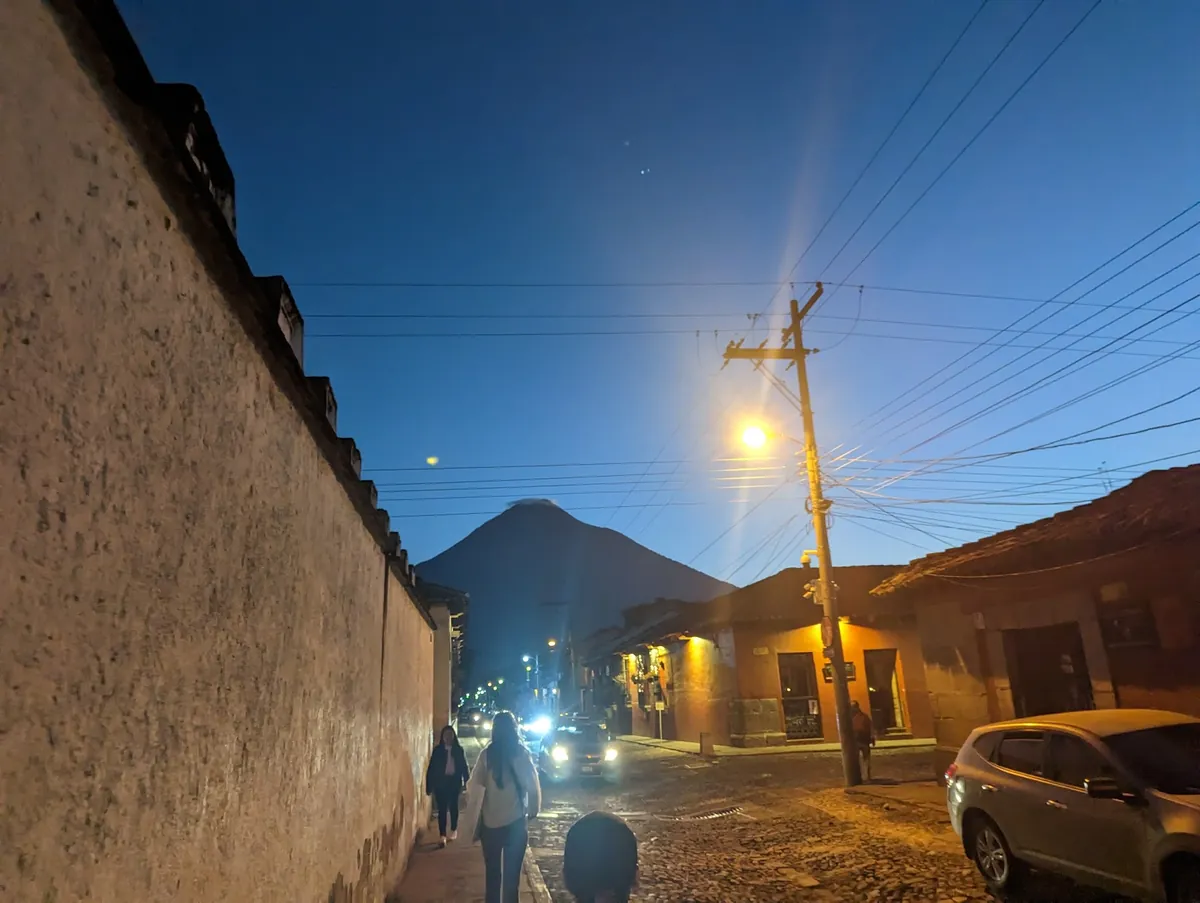
Antigua offers the most photogenic Quema del Diablo experience. The colonial cobblestone streets, the volcanoes in the background, and the warm glow of dozens of fires create an atmosphere that is hard to match. The fires here tend to be smaller and more controlled than in Guatemala City, making it a better option for first-time visitors.
Best spots in Antigua:
- Walk the residential streets around La Merced church
- The areas south of Parque Central toward the Santa Ana neighborhood
- Streets near the Tanque de la Union
Guatemala City
The capital has the most intense celebrations. Residential neighborhoods light up simultaneously at 6:00 PM, and in some areas the smoke can be thick enough to reduce visibility. Key areas:
- Zona 1 (Centro Historico): Active street-level burns, dense atmosphere
- Zona 7 and Zona 12: Large residential neighborhoods with enthusiastic participation
- Mixco and Villa Nueva: Suburban communities with big community fires
- Zona 10 and Zona 14: More subdued; some buildings prohibit fires
Small Towns
Every town in Guatemala participates. If you are in a smaller community, the experience is more intimate. In highland towns like Chichicastenango or Solola, indigenous traditions sometimes blend with the Catholic custom, adding unique local elements.
The Environmental Debate
La Quema del Diablo is controversial, and the controversy has grown significantly in recent years.
The Problems
Air quality: On December 7 evening, air quality in Guatemala City drops to hazardous levels. The simultaneous burning of trash, plastics, tires, old furniture with chemical finishes, and other materials creates a toxic cloud that hangs over the city. Hospitals report increased respiratory emergencies in the following days.
Fires: Every year, the Bomberos Voluntarios (volunteer fire department) responds to hundreds of calls. Fires jump from bonfires to homes, cars, and businesses. Burns are common, especially among children.
Waste: Not everything burned is biodegradable. Plastics, electronics, and treated materials release harmful chemicals. The tradition has become, in some neighborhoods, an excuse to burn literal garbage.
Modern Changes
In response, several changes have emerged:
- Municipal bans: Some municipalities have banned uncontrolled street burning, though enforcement is inconsistent
- Controlled community burns: Some neighborhoods now organize a single supervised bonfire instead of dozens of individual ones
- Eco-friendly alternatives: Environmental organizations promote burning only natural materials (paper, untreated wood) or symbolic small fires
- CONRED advisories: Guatemala’s disaster agency issues annual safety bulletins and deploys monitoring teams
- School campaigns: Environmental education programs teach children about air pollution from the burns
Despite the pushback, the tradition remains deeply popular. Most Guatemalans see it as an essential part of the Christmas season, and attempts to ban it outright have been politically unpopular.
Safety Tips
- Stay upwind. Position yourself where smoke blows away from you. The smoke from mixed-material fires can be genuinely harmful.
- Keep distance from large bonfires. Fires can spread unpredictably, especially when aerosol cans, plastic containers, or unknown materials are in the pile.
- Watch children closely. Kids are drawn to the fire, and every year there are burn injuries involving minors.
- Protect your car. If parked on the street, move your vehicle before 5:00 PM. Embers and heat can damage paint, tires, and interiors.
- People with respiratory conditions should stay indoors with windows closed during peak burning hours (6:00-8:00 PM).
- Wear closed-toe shoes and avoid synthetic clothing that can melt near heat.
- Have water nearby. If participating, keep buckets of water or a hose accessible.
For general safety information by region, see our safety page.
What to Eat
The Quema del Diablo is not primarily a food event, but street vendors appear wherever crowds gather:
| Food | Description | Price |
|---|---|---|
| Ponche | Hot fruit punch with cinnamon and dried fruits – the classic December drink | Q5-15 |
| Bunuelos | Fried dough balls with honey and cinnamon | Q5-10 |
| Tamales | Red or black tamales wrapped in banana leaves (the Christmas variety) | Q10-20 |
| Tostadas | Fried tortillas with toppings | Q5-10 |
| Churros | Fried dough sticks with sugar | Q5-10 |
December 7 is often the first day that ponche and Christmas tamales appear. For many families, the Quema del Diablo is when the holiday season officially begins.
The Bigger Picture: Guatemala’s Christmas Season
The Quema del Diablo is not an isolated event. It kicks off a full month of celebrations:
| Date | Event |
|---|---|
| December 7 | Quema del Diablo |
| December 8 | Dia de la Inmaculada Concepcion (public holiday – processions, masses) |
| December 12 | Dia de la Virgen de Guadalupe |
| December 15-24 | Posadas (neighborhood processions reenacting Mary and Joseph’s journey) |
| December 24 | Nochebuena – the main celebration night (midnight fireworks, tamales, ponche) |
| December 25 | Navidad – family day, quieter than the 24th |
| December 31 | Ano Nuevo – fireworks at midnight |
By burning the devil on December 7, Guatemalans are not just following a tradition – they are opening the door to the most festive month of the year.
Practical Information Summary
| Detail | Information |
|---|---|
| Date | December 7, 2026 (Monday) |
| Time fires start | 6:00 PM |
| Official holiday | No (December 8 is the holiday) |
| Duration | 1-2 hours of active burning |
| Best city for visitors | Antigua Guatemala (scenic, manageable) |
| Most intense | Guatemala City residential zones |
| What to bring | Nothing special – just be aware of smoke and fire |
| Air quality warning | Hazardous levels 6:00-10:00 PM in urban areas |
| Fire department hotline | 122 (Bomberos Voluntarios) |
The Quema del Diablo is raw, unpolished, and impossible to stage for tourists. It is Guatemala at its most authentic – a tradition that blends Catholic ritual, Maya fire symbolism, neighborhood solidarity, and a healthy dose of creative destruction. Whether you love it or find it alarming, there is nothing else quite like watching an entire country set fire to the devil at the same time.
Check our weather page for December conditions, and browse activities for more things to do during Guatemala’s holiday season.