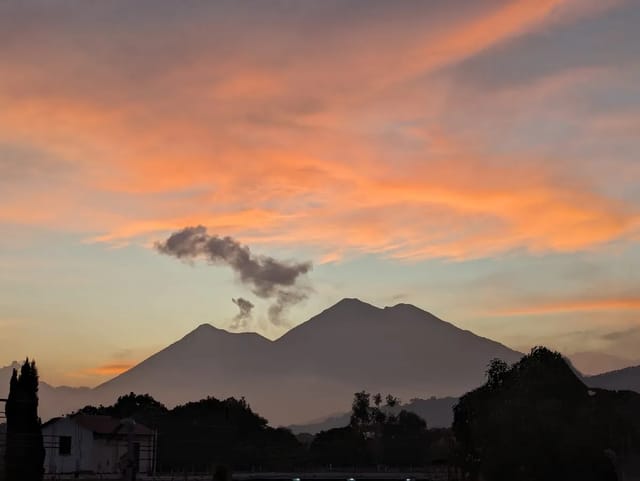
The Pacaya day hike is the easiest and most family-friendly volcano experience in Guatemala. Unlike its bigger sibling Acatenango — a 2-day overnight with a base camp high on the volcano, too physical for kids — Pacaya is a half-day outing on gentle terrain at modest altitude (2,552m summit, ~2,400m viewpoint) with a marshmallow roast on lava-warmed rocks. Younger kids can ride a horse for the climb. This guide covers ages, difficulty, costs, packing, safety, and how Pacaya fits into a multi-day Antigua itinerary.
For live alert levels before you book, see the Guatemala volcano tracker. For the harder overnight right for teens 14+ and adults, see the Acatenango overnight hike guide.
Book a kid-friendly Pacaya tour
Affiliate links — we earn a commission if you book, at no extra cost to you. We only recommend operators with consistent 4.5+ star ratings and verified safety records.
TL;DR: Pacaya (2,552m) is the active volcano near Antigua you can hike in a day. Adrenalina Tours’ shared tour leaves Antigua at 06:00 or 14:00, lists the trip at 6 hours and the climb at about 1 h 45 min, and costs USD 20; its listing puts the entrance at USD 14 (operator figure, not included) and says horses can carry you on the first stretch (read 25 September 2026). Pack water, sunscreen, hat, layers, real hiking shoes, and bring your own marshmallows + sticks. Pacaya is monitored by INSIVUMEH; trails close when the alert level rises.
Why Pacaya is the perfect first-volcano hike for families
Three things make Pacaya stand out as a kid hike:
- It is genuinely short and gentle. About 2 km up with 300-400 meters of elevation gain on a dirt and gravel path through pine forest. No scrambling, no overnight gear.
- The altitude is mild. The trailhead sits around 2,150m and the typical viewpoint where tours stop is roughly 2,400m — well below the 3,000m threshold where altitude sickness becomes common.
- There is a built-in reward. The marshmallow roast on lava-warmed rocks is the moment kids talk about for months afterward.
Age recommendations
No single age cutoff, but here is what works in practice:
| Age | Recommendation |
|---|---|
| Under 4 | Skip the hike. Stay at the village base area. Uneven footing is too risky for toddlers. |
| 4-5 | Doable with horse rental up and a parent prepared to carry on the descent. Small-group tour only. |
| 6-8 | Walk it on their own at a relaxed pace. Rest every 15-20 minutes; keep a horse as backup. |
| 9-12 | Full hike easily, love the marshmallow part. They can carry their own water and snacks. |
| Teens 13+ | A launching pad — once they have done Pacaya, Acatenango becomes realistic at 14-15+ for fit teens. |
The biggest predictor of success is not age but walking endurance. A 5-year-old who routinely walks 2 km will do better than an 8-year-old who never walks.
Difficulty for kids
The trail is a gentle to moderate uphill on dirt and volcanic gravel through pine forest, then opens onto exposed black volcanic rock near the viewpoint. No technical climbing, no scrambling, no chains. Think of it as walking up a long hill rather than climbing a mountain.
Three physical challenges for kids:
- Loose gravel on the descent. Coming down is harder than going up because the gravel slides under shoes. Hold small kids’ hands, especially the last 500m where the trail steepens.
- Sun exposure. Above the tree line there is no shade. Sunscreen, hats, and water matter more than parents expect.
- Pace mismatch. Large 15-person van tours move faster than most kids can sustain. Small-group (4-8) or private tours solve this entirely.
The altitude (2,400-2,500m) is mild — most kids feel nothing.
Tour operators that are kid-friendly
Viator, GetYourGuide, and Klook carry the same handful of Antigua-based operators that run Pacaya day trips. Operator lineups change month to month, so rather than naming specific ones, here is what to filter for when comparing listings:
| Filter | What to look for |
|---|---|
| Group size | Small group (4-8 people) or private. Large 15-person vans don’t accommodate kid pacing. |
| Rating | 4.5+ stars with at least 50 reviews. |
| Cancellation | Free cancellation up to 24 hours before — essential when traveling with kids. |
| Horse availability | Confirmed by operator that horses are available at trailhead. |
| Pick-up location | Antigua hotel pick-up if you are staying in Antigua; Guatemala City pick-up if you are based in the capital. |
| Departure time | Earlier is better: Adrenalina Tours’ shared tour offers 06:00 or 14:00 (read 25 September 2026); pick the morning one. |
| Child pricing | Some listings have reduced rates for kids under 12. Always ask. |
When you find a listing that ticks these boxes, message the operator directly through the platform before booking and ask: “We have a 6 and 9 year old — what is your pace, and can we rent horses if needed?” The reply tells you whether they actually handle families.
Cost breakdown for a family of 4
What the one published listing we read gives for a family of 4 (2 adults, 2 kids):
| Item | Cost (USD) | Notes |
|---|---|---|
| Tour, 4 people | USD 80 | USD 20 each on Adrenalina’s shared tour; no child rate published |
| Entrance, 4 people | USD 56 | USD 14 each per Adrenalina’s listing (operator figure); no child rate published |
| Horse, snacks, tips | Not published | Agree horse prices before mounting |
| Total before extras | USD 136 | If everyone pays the listed rate |
Other sellers’ prices are on our Pacaya day tours page.
The marshmallow roast
This is the moment kids remember. Pacaya’s surface still holds residual heat from recent eruptions — most notably the 2021 effusive phase — and the rocks near the upper viewpoint have pockets where ground temperatures stay high enough to toast a marshmallow in under a minute.
How it works: the guide leads you to a designated warm-rock zone; you hold a long stick (60-90 cm) with marshmallows on the end just above the rock surface; after 30-60 seconds the marshmallow caramelizes (it will ignite if you leave it too long); kids assemble s’mores with crackers and chocolate brought from home.
Bring your own kit: a bag of marshmallows, a small bar of chocolate, galletas María or graham crackers, and 4-6 long thin sticks (a long bamboo skewer doubled up works).
This is real geothermal heat, not a tourist gimmick. Keep kids from touching rocks with bare hands — light gloves are useful in this zone.
Packing list for kids
The family-specific list — adults have the basics covered, these are what parents most often forget:
| Item | Why it matters |
|---|---|
| Water — 1.5L per kid, 2L per adult | #1 cause of kid meltdowns on the trail. |
| Wide-brim hat & SPF 30+ sunscreen | Above the tree line there is no shade; UV at 2,400m is ~30% stronger than at sea level. |
| Light layers (fleece/hoodie) | The summit can be 10°C / 50°F with wind even on a sunny day. |
| Real hiking shoes — closed toe | Not sandals, flip-flops, or Crocs. Sneakers with good tread are the minimum. |
| Light gloves | For the warm-rock zone and marshmallow roast. Cheap garden gloves work. |
| Snacks kids actually eat | Granola bars, crackers, dried fruit, banana. Avoid melting chocolate. |
| Small first-aid kit | Band-aids, antibiotic ointment, kid-strength ibuprofen, electrolyte powder. |
| Wet wipes & small towel | Volcanic dust gets everywhere. |
| Cash (Q300-500) | Park fee, horse rental, tips, marshmallows. Cards don’t work on the mountain. |
Skip cotton clothing — it absorbs sweat and stays cold. Quick-dry synthetics or merino are better even for kids.
Altitude sickness in kids
At 2,400-2,500m, altitude sickness is uncommon but possible. Mild symptoms can include headache, fatigue, slight nausea and irritability; stop, drink water and rest, and turn back if they do not ease.
What works: spend at least one night in Antigua (1,530m) first; hydrate aggressively starting the night before (kids should drink until pee runs clear); eat a real breakfast with protein, not just sugar; stop every 15-20 minutes on the ascent for water + a snack; have acetaminophen or ibuprofen ready for the first sign of headache.
Red flags to descend immediately: persistent vomiting, severe headache that doesn’t respond to water + medicine, confusion, or any breathing difficulty. These are not characteristic of 2,500m but if they appear, descend and symptoms will resolve. Save serious altitude-sickness concerns for Acatenango.
Bathroom and meal logistics
There is no bathroom on the trail. Toilets exist only at the trailhead (basic, paid Q2-5) and back at the village. Have everyone use the bathroom before starting, and pack tissue/wipes for emergency stops behind a tree. The road from Antigua to San Vicente Pacaya village has tight switchbacks — for kids who get carsick, Dramamine the morning of or a chewable ginger tablet helps.
Meals: most tours include nothing (budget) or a light snack (mid-range) on the volcano; some Guatemala City departures include lunch. Eat breakfast before an early pickup (06:00 on Adrenalina’s shared tour), pack 2-3 snacks per person for the hike, and plan a late lunch back in Antigua. See things to do in Antigua for restaurants.
Safety with children
Pacaya is safe for kid hikes when you follow the basics. The three real risks:
- Wandering near vents and caves. Some sections of the upper viewpoint pass near steam vents and small lava caves. Hold small kids’ hands and keep them within arm’s reach.
- Hot rocks at the marshmallow zone. Use the light gloves you packed. Don’t let kids touch rocks bare-handed.
- Loose footing on the descent. Volcanic gravel slides. Walk behind your child — if they slip, you can catch them.
The certified guide enforces the safe-distance zone from active vents, watches for ground temperature changes, and knows which routes are stable that day. Hiring a tour (vs going solo, which is also illegal) is non-negotiable with kids. Monitor live alert levels at the Guatemala volcano tracker — at Orange or Red, tours are suspended.
Pacaya vs Acatenango vs Fuego — pick by age
| Volcano | Difficulty | Right age | Why |
|---|---|---|---|
| Pacaya | Easy | 6+ (4-5 with horse) | Half-day, gentle, mild altitude, marshmallow reward. The starter volcano. |
| Acatenango overnight | Hard | 14+ (fit teens & adults) | 1,500m climb to a high base camp, freezing nights, brutal summit push. Not a kid hike. |
| Fuego | Off-limits | Adults only | Active eruptive volcano. The optional summit add-on from Acatenango base camp is for fit adults only. See Fuego eruption status. |
For mixed-age families (e.g. a 7-year-old and a 14-year-old), Pacaya works for everyone — the teen will still love the marshmallow part. Save Acatenango as a separate trip the teen does later, possibly with one parent.
How Pacaya is monitored
Pacaya’s activity is tracked 24/7 by INSIVUMEH (Instituto Nacional de Sismología, Vulcanología, Meteorología e Hidrología), which publishes daily bulletins covering seismic activity, gas emissions, and visible activity. The four-level alert system runs Green / Yellow / Orange / Red: Green = full access; Yellow (current as of May 2026) = tours run with safe-distance enforcement; Orange = trail closes; Red = full exclusion zone.
Pacaya’s most recent eruptive phase was in 2021, an effusive phase that produced extensive lava flows. Since then it has been at Yellow with brief Orange spikes — none of which produced casualties or trail incidents because the monitoring and closure system worked. The 2021 eruption left the warm-rock zone that powers the marshmallow tradition. Cross-reference the Guatemala volcano tracker the morning of your hike.
Combining with other Antigua activities
Pacaya is a half-day. On Adrenalina’s 6-hour shared tour, the 06:00 pickup gets you back to Antigua around midday with the afternoon open. A kid-friendly combo:
Pacaya morning + Antigua afternoon market + early dinner — early hotel pickup, back in Antigua around midday, late lunch on Calle del Arco, 4:00pm Mercado de Artesanías (kids love the textiles, masks, miniatures), 5:30pm early dinner.
If you have a second day, the obvious kid-friendly add-ons are a cooking class (most welcome kids 8+; pepián, tamales, or chocolate-from-the-bean workshops), a coffee tour (better for kids 10+; some farms have animal interactions for younger ones), or a chocolate workshop at ChocoMuseo (2 hours, $30 per adult / $21 per child under 12, per ChocoMuseo on 24 September 2026).
Multi-day Antigua itinerary with kids
A solid 4-day Antigua plan with kids ages 6-12:
| Day | Morning | Afternoon |
|---|---|---|
| Day 1 (arrival) | Arrive Guatemala City, transfer to Antigua | Settle in, walk Parque Central, early dinner |
| Day 2 | Pacaya day hike | Late lunch, Mercado de Artesanías, pool time |
| Day 3 | Cooking class or chocolate workshop | Museo del Hermano Pedro, Calle del Arco evening stroll |
| Day 4 | Coffee tour (kids 10+) or relaxed morning | Pack, transfer onward (Lake Atitlán) |
Antigua at 1,530m is a comfortable base for kids — warm days (22-26°C), cool nights, walkable, safe in the historic core. Pacaya slots into Day 2 because Day 1 airport arrivals are exhausting and you want kids well-rested.
Related guides
- Acatenango overnight hike — for teens 14+ and adults
- Pacaya day tours — operator comparison and pricing
- Guatemala volcano tracker — live alert levels
- Things to do in Antigua
- Antigua cooking classes — kid-friendly options
- Antigua coffee tours
- Antigua to Lake Atitlán transport
- Methodology — how we research and verify activity pages
Correction (30 September 2026): this page put the Acatenango base camp at 3,600 m. We found no source for that figure, and camps differ by operator: OX Expeditions states its base camp is at 3,400 m (operator’s tour page, read 30 September 2026); Wicho & Charlie’s does not publish its camp’s height. The summit figure (3,976 m) is unchanged.
Frequently Asked Questions
What is the best age to hike Pacaya with kids?
The trail is a gentle, well-graded uphill on dirt and gravel, no scrambling, and altitude (2,400-2,500m at the viewpoint) is mild. Ages 4-5 are doable with a horse rental for the way up and a parent willing to carry on the descent. Under 4 we recommend skipping the hike portion and exploring the village and base area instead — there is still volcanic landscape to see without committing to the climb.
Will my 5-year-old make it to the top?
Realistically, with breaks and snacks, yes — most 5-year-olds do fine if they are used to walking a kilometer or two at home. The trail is about 2 km up with a gentle to moderate incline; Adrenalina Tours calculates about 1 hour 45 minutes up, depending on the group. Keep a horse rental in your back pocket as a safety net — guides will summon a horse mid-trail if a child is fading. Plan rest stops every 15-20 minutes and pack snacks they actually want to eat.
Can we hike Pacaya with a stroller?
No. The trail is dirt and volcanic gravel with loose footing in places, and there are tree roots and rocks that make wheels unworkable. If you are traveling with a toddler under 3, use a soft-structured carrier or a framed backpack carrier. From age 4 onward, kids should walk (or ride a horse) — strollers are not viable on any part of the trail.
Is Pacaya dangerous for kids?
Pacaya is monitored 24/7 by INSIVUMEH and CONRED, and the trail closes automatically when alert levels rise to Orange or Red. As of May 2026 the volcano sits at Yellow (normal activity) and tours run daily. The real risks with kids are mundane — sun exposure, dehydration, ankle twists on loose rocks, and burns near the warm-rock area. With a certified guide, sensible footwear, water, and gloves at the rock zone, families do this hike without incident every day.
What happens if it rains or the volcano closes the day we booked?
In dry season (Nov-Apr) closures are rare. In rainy season (May-Oct) afternoon storms can make the trail slippery, so a morning departure fits better: Adrenalina Tours’ shared tour, for example, leaves Antigua at 06:00 and lists the trip at 6 hours (read 25 September 2026). If INSIVUMEH raises the alert level or weather makes the trail unsafe, your tour operator will reschedule or refund — confirm the cancellation policy before booking.
Do kids pay the park entrance fee?
We found no official Pacaya tariff (checked 25 September 2026). Adrenalina Tours’ listing puts the entrance fees at USD 14 (operator figure) and does not say whether children pay less. Ask your operator whether the fee is bundled and what children pay before you book.
How does Pacaya with kids compare to Acatenango?
Pacaya is the family option. Adrenalina Tours calculates about 1 hour 45 minutes to go up, on a trail at modest altitude (2,500m), with no overnight commitment and a marshmallow roast at the top. Acatenango is a 2-day expedition with 1,500m of climbing on steep volcanic sand to a base camp high on the volcano, then a 3am summit push to 3,976m. Acatenango is not suitable for children under teenage years and even most teens find it physically brutal.
Can we still roast marshmallows on Pacaya?
Yes. The 2021 eruption left a network of lava-warmed rocks near the upper viewpoint where ground temperatures are still high enough to toast marshmallows on a stick in 30-60 seconds. This is real geothermal heat from the volcano, not a tourist setup. Bring your own bag of marshmallows and a few long sticks. Kids universally remember this part more than the hike itself.