TL;DR for Kiwi travellers
- Visa-free 90 days on arrival for New Zealand passports — just a stamp, no paperwork.
- Flights take 22-30 hours total from Auckland via LAX or SFO. No direct route exists.
- NZD ~Q5 (1 New Zealand dollar buys roughly 4.5 to 5 quetzales).
- Best months: November to April (dry season, lines up with NZ summer holidays).
Why Kiwis Are Heading to Guatemala
Guatemala isn’t a default New Zealand holiday destination — but it’s increasingly common as part of one of three trip types:
- Latin America bucket-list. Kiwis combining Guatemala with Mexico, Cuba or Costa Rica in one big trip-of-a-lifetime, often 4-8 weeks.
- Gringo trail extension from South America. Travellers ending a Peru/Bolivia/Colombia loop in Cartagena, then jumping north to do Central America rather than flying straight home.
- Post-OE recalibration. Kiwis returning from the UK/Europe who want one more cultural-immersion stop before settling back into NZ life. Antigua’s Spanish schools are a popular landing pad.
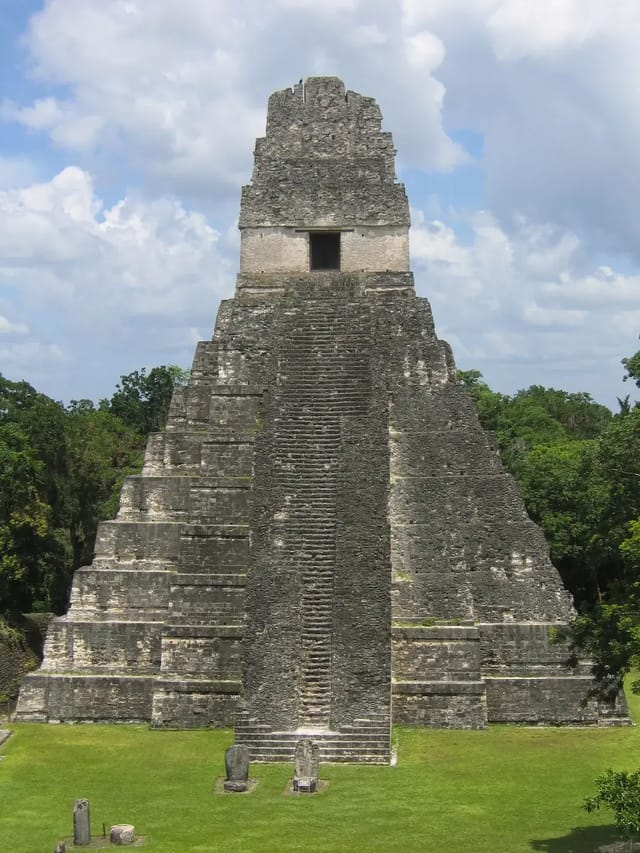
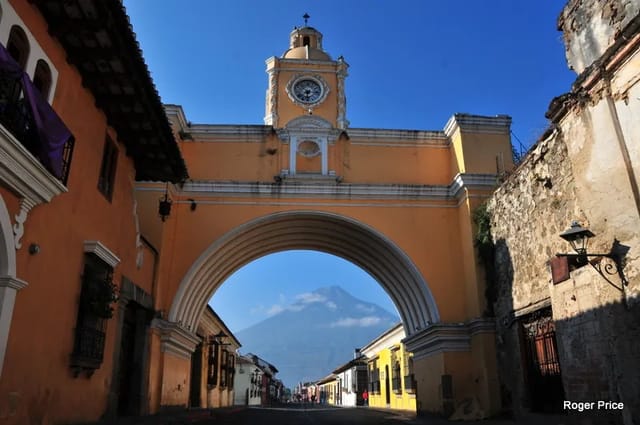
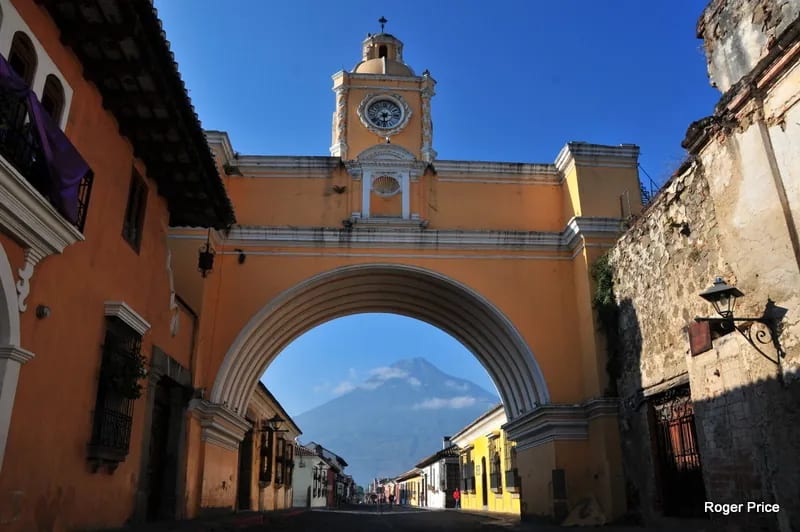
What Kiwi travellers tend to love: the volcano landscapes (familiar but more dramatic than Tongariro), the colonial architecture in Antigua, the Mayan ruins at Tikal (Indiana Jones territory, genuinely awe-inspiring), Lake Atitlán (think Wanaka if Wanaka were ringed by active volcanoes and Mayan villages), and the food (proper street tortillas, real coffee, freshly-pressed sugar cane juice).
What’s harder: the flight distance (it’s a serious commitment from NZ), the Spanish-only environment outside Antigua, and the genuine need to plan around safety basics — not paranoid, but more attention required than a week in Queenstown.
How to Get from New Zealand to Guatemala
There are no direct flights from any New Zealand city to Guatemala. Every route involves at least one stop, usually in the United States. Your passport will need at least 6 months validity beyond arrival, and you’ll need ESTA approval for any US layover (US$21, online, takes 1-3 days).
The three main routes
Route 1 — Auckland → Los Angeles → Guatemala City (standard)
- AKL → LAX on Air New Zealand (~12 hours)
- LAX → GUA on American Airlines or United (~5.5 hours)
- Layover usually 2-6 hours
- Total door-to-door: 22-26 hours
Route 2 — Auckland → San Francisco → Guatemala City (cleaner SFO terminal)
- AKL → SFO on United or Air New Zealand (~13 hours)
- SFO → GUA on United (~5 hours, often via Houston with second layover)
- Sometimes a smoother connection than LAX
- Total: 24-28 hours
Route 3 — Auckland → Sydney → Los Angeles → Guatemala City (cheapest, longest)
- AKL → SYD on Air NZ/Qantas (~3.5 hours)
- SYD → LAX on Qantas/American/United (~13 hours)
- LAX → GUA (~5.5 hours)
- Often $300-600 cheaper but adds 6-10 hours total
- Total: 28-32 hours
From Wellington or Christchurch: connect via Auckland first. AKL is the only NZ city with direct flights to the Americas. Add 1-2 hours to all numbers above.
Typical pricing
| Class | Return cost (NZ$) | Best booking window |
|---|---|---|
| Economy (off-peak) | NZ$2,400-3,000 | 4-6 months ahead |
| Economy (peak: Dec-Feb, Easter) | NZ$3,200-4,000 | 6-8 months ahead |
| Premium Economy | NZ$4,500-6,500 | 4-6 months ahead |
| Business | NZ$6,500-12,000 | Use Air NZ Airpoints |
Cheapest months to fly: May, June, September, October.
US ESTA — don’t skip this
Every Kiwi traveller transiting through the US (LAX, SFO, Houston, Dallas, Miami) needs an ESTA in their passport before boarding their flight from NZ. Apply at esta.cbp.dhs.gov for US$21, allow 72 hours, valid for 2 years. Airlines will not let you board without it.
The 90-Day Visa-Free Entry for New Zealand Passports
New Zealand citizens get 90 days visa-free on arrival in Guatemala. There’s no application, no fee, no advance paperwork — just present your passport at immigration and you’ll get a stamp. The CIQS/DGM immigration officer may briefly ask where you’re staying and how long; have your first night’s hotel name handy.
What you need at the airport
- Passport valid for at least 6 months beyond arrival
- Onward or return flight booked (occasionally checked at check-in in Auckland, rarely checked at GUA)
- Proof of accommodation for at least the first few nights
- Yellow fever certificate ONLY if you are arriving from a WHO-listed yellow-fever-risk country, or have transited more than 12 hours through an airport in one (the full routing rule). Direct from New Zealand, it does not apply.
Extending past 90 days
If you want to stay longer, you can extend once at Instituto Guatemalteco de Migración (IGM) in Guatemala City. The process:
- Pay a Q150 fee (roughly NZ$32)
- Submit passport + application form
- Wait 1-3 weeks for the new stamp
- Get another 90 days, total 180 days per 12-month rolling window
After your 180 days are used, you must leave for a meaningful period (the rule is 90+ days outside the CA-4 zone) before re-entering.
The CA-4 visa zone — important for circuit travellers
Your 90-day stamp is shared across four countries: Guatemala, Honduras, El Salvador, and Nicaragua. This is the CA-4 visa zone (Convenio Centroamericano-4). Practical consequences:
- Crossing from Guatemala to Honduras overland: no new stamp, your existing 90 days keeps counting
- Crossing from Guatemala to Belize: fresh stamp (Belize is NOT in CA-4)
- Crossing from Guatemala to Mexico: fresh stamp (Mexico is its own system, 180 days for NZ passports)
- Crossing from Honduras to Costa Rica: fresh Costa Rica stamp (Costa Rica is NOT in CA-4)
For a 4-country Central America trip, the CA-4 rule is helpful — it lets you move freely without border headaches.
NZ travel insurance — verify Guatemala coverage
Not every NZ travel insurer covers Guatemala under standard policies, and some require a Central America rider. Check before you book — Southern Cross Travel Insurance, Tower Insurance, AA Travel Insurance, and Cover-More all sell policies that include Guatemala, but always confirm the policy document covers Central America specifically. Worth checking: medical evacuation coverage (Guatemala to US or NZ flights are expensive), adventure activity coverage if you plan to hike Acatenango, and cover for civil unrest evacuation.
For more on visa types beyond the tourist stamp, see our Visas to Guatemala guide.
Best Time of Year for New Zealanders
Guatemala has two seasons: dry (November-April) and rainy (May-October). For Kiwi travellers, the timing question is usually about lining up with school or work breaks back home.
NZ Summer (December-February) — peak GT dry season
- Pros: Best weather of the year — sunny, dry, cool nights. Lines up with NZ school summer holidays.
- Cons: Highest prices, Antigua books out for Christmas/New Year weeks, Tikal flights expensive.
- Tip: Book accommodation 3-6 months ahead for late December, especially Antigua.
NZ Autumn (March-May) — Semana Santa & shoulder
- Pros: Semana Santa (Easter) is the biggest cultural event in Latin America — Antigua’s processions are extraordinary. Late March and April are still dry-season weather.
- Cons: Easter week itself sees Antigua hotel prices triple. Book 6+ months out or stay in Guatemala City and day-trip.
NZ Winter (June-August) — rainy season, cheaper
- Pros: Half the tourists, half the prices, lush green landscapes. Mornings typically clear and sunny.
- Cons: Reliable afternoon rain (3pm-6pm tropical downpours), some rural roads become muddy, occasional hurricane season weather warnings on the Caribbean coast.
- Tip: Plan morning hikes and tours; afternoons for cafes, museums, Spanish classes.
NZ Spring (September-November) — transition
- Pros: Quiet, green, transitional weather. Late October-November weather often beautiful.
- Cons: September-October can still bring heavy rain and the tail end of Atlantic hurricane season.
For climate detail by region, see our Guatemala weather guide.
NZD to GTQ — Money for Kiwi Travellers
The Guatemalan currency is the quetzal (GTQ), named after the country’s national bird. Current rates fluctuate but as a rough guide:
- 1 NZD ≈ Q4.5-5.0
- 1 USD ≈ Q7.63 (Banguat, 5 August 2026)
- NZ$100 ≈ Q450-500
Always check the current Banco de Guatemala rate before exchanging. We track daily exchange-rate data on our exchange rates page and there’s a historical rate chart for context.
Best way to access cash
| Method | Real cost vs mid-market | Notes |
|---|---|---|
| Wise multi-currency card | ~0.5-1% | Best option. Load NZD, spend in GTQ at near-mid-market rate. |
| NZ credit card (no FX fee) | 0-1% | Travel-specific cards beat normal cards. |
| ANZ/Westpac/BNZ standard card | 2.5-3.5% | Avoid for any meaningful spend. |
| Cash USD → exchange in Guatemala | 1-3% | Carry small USD bills; widely accepted. |
| ATM withdrawal in Guatemala | 1-2% + fees | Look for Cirrus/Maestro logo. NZ$5-8 per withdrawal. |
| NZ Eftpos card | Doesn’t work | Eftpos is NZ-only. |
Practical advice for Kiwis:
- Order a Wise debit card before leaving NZ (free, takes 1-2 weeks to arrive). Load NZD when the rate is good, spend GTQ on arrival.
- Bring US$200-500 cash in small bills (US$1, US$5, US$10, US$20) as backup. USD is accepted in most tourist areas at hotels and shuttle counters.
- Bring one Visa or Mastercard credit card in case of emergency.
- Don’t bring NZ Eftpos cards as your primary payment method — they don’t work outside NZ.
- Notify your NZ bank of travel dates before you leave to avoid card blocks.
For per-currency conversion guides, see our currencies hub, the CAD to quetzal page, and the best day to exchange USD-GTQ analysis.
Safety for Kiwi Travellers
Guatemala’s reputation worries first-time visitors more than the reality warrants. Tourist areas see millions of visitors annually with very low incident rates. The country’s homicide statistics are concentrated in specific neighbourhoods and gang-control areas that tourists have no reason to enter.
For a deeper data-led look, see our safety guide. Practical rules:
Where to actually be careful
- Guatemala City Zones 18, 7, 6, 24, 21 and parts of 1 — gang territory or known robbery zones. There’s no tourist reason to be in any of these.
- Border crossings at dusk or after dark — always cross borders during daylight, especially the Mexico-Guatemala and Honduras-Guatemala overland routes.
- Public chicken buses with luggage — fine for locals, target-rich for tourists. Use registered shuttles between tourist cities.
Where it’s genuinely safe (with normal care)
- Antigua Guatemala — the most tourist-policed town in the country
- Lake Atitlán towns (Panajachel, San Marcos, San Pedro, Santa Cruz)
- Tikal and Flores in Petén
- Cobán and Semuc Champey area
- Guatemala City Zones 10, 14, 15, 16 — business/embassy zones, safe walking by day
Common-sense rules for the whole trip
- No flashy electronics or jewellery in public — leave the expensive watch home.
- Day travel between cities — book early-morning shuttles, not overnight buses.
- Hotel-arranged transport for first-time visitors, especially to/from airport.
- Don’t withdraw large ATM amounts at night.
- Take photos of your passport + ESTA and store in your phone/email.
- Tell your hotel your day plans — most do this casually anyway.
Compared to other Central American countries: safer than Honduras or El Salvador in tourist areas, comparable to Mexico, slightly more attention required than Costa Rica or Panama. The tourist circuit operates as a well-worn loop — if you stay on it, you’re fine.
Must-Do Destinations for First-Time Kiwi Visitors
A realistic 2-3 week first visit covers four or five of these.
Antigua Guatemala — 3 to 5 days
Colonial UNESCO city ringed by three volcanoes, 1 hour from the airport. Cobblestone streets, baroque ruins, Mayan textile markets, Spanish schools, world-class coffee, hundreds of restaurants. Most travellers’ favourite Guatemala stop. Use it as your base for Acatenango overnight hike (the one with the active Fuego volcano view) and Pacaya day hikes. See our Antigua hub, coffee tours, cooking classes, and the Acatenango overnight hike guide.
Lake Atitlán — 3 to 5 days
A volcanic crater lake at 1,560m surrounded by three volcanoes and 12 Mayan villages, each with its own personality. Panajachel is the main hub and transport gateway. San Marcos for the yoga/wellness crowd. San Pedro for backpackers and Spanish schools. Santa Cruz for the most beautiful boutique hotels. Travel between villages is by lancha (boat). Use our Panajachel guide and the related things-to-do page.
Tikal (Petén) — 2 to 3 days
The single most impressive Mayan ruin site in the Americas. Pyramids rising above the jungle canopy, howler monkeys, toucans, and several genuinely good sunrise/sunset tours. Critical tip: FLY. The bus from Guatemala City to Flores takes 8-10 hours each way. The flight (GUA → FRS on TAG or Avianca) takes 1 hour and often costs only US$120-180 each way — saving you two full days of travel. From Flores it’s a 1-hour shuttle to Tikal. See our Tikal sunrise tour guide.
Semuc Champey — 2 to 3 days
Turquoise limestone pools in the highland jungle of Alta Verapaz. Stunning, but the access is rough — 6-8 hours of winding mountain road from Antigua or Lanquín, with the last 11km on rocky 4WD-only tracks. Worth it for adventure travellers, skip if you’re tight on time. The logistics guide covers shuttle vs private transport options.
Optional add-ons
- Livingston / Río Dulce — Caribbean coast, Garifuna culture, river boat trips. 2-3 days.
- Quetzaltenango (Xela) — highland city for Spanish schools and authentic non-touristy Guatemala. 2-4 days.
- Chichicastenango market (Thursdays and Sundays) — the largest indigenous market in Central America. Day trip from Antigua or Atitlán.
Combining Guatemala with Other Latin America Stops
Many Kiwi travellers fold Guatemala into a wider Central or Latin America trip.
Mexico → Guatemala (popular)
Overland: Tulum or Palenque → bus to Frontera Corozal or Tapachula → cross at La Mesilla or El Carmen → bus to Quetzaltenango or Huehuetenango → connect to Antigua. 1-2 travel days from southern Mexico to Antigua. Or simply fly Cancún or Mexico City → GUA (1.5-2 hours, often US$100-200).
Guatemala → Belize
Water taxi from Puerto Barrios or Livingston (Guatemala Caribbean coast) to Punta Gorda (Belize) — about 1 hour, runs daily. Or fly GUA → BZE (~1 hour). Belize uses English (former British Honduras) — a nice break from Spanish if you’re language-fatigued.
Guatemala ↔ Honduras / El Salvador / Nicaragua
CA-4 zone — no new stamps, free movement. Popular overland routes: Antigua → Copán Ruins (Honduras, ~5 hours, day trip possible). Antigua → Suchitoto or San Salvador (~6-7 hours). Antigua → León (Nicaragua) — bus through El Salvador, 18-24 hours, do it in legs.
Guatemala ↔ Costa Rica
Costa Rica is NOT CA-4 — fresh entry stamp. Fly GUA → SJO (~2 hours) is the easy option. Overland through Honduras and Nicaragua is possible but takes 4-5 days of pure travel.
Classic Central America gringo trail (6-8 weeks)
A common itinerary for travellers with time:
Mexico (1-2 weeks) → Guatemala (2-3 weeks) → Belize (1 week) → Honduras (1 week) → Nicaragua (2 weeks) → Costa Rica (2 weeks). Fly home from San José or fly back to Guatemala/Mexico for the cheaper outbound.
Practical Tips for Kiwis on the Ground
Phone and data
Spark, 2degrees and One NZ all offer roaming but at painful prices (NZ$10-15/day) and patchy coverage in Guatemala. Better:
- Tigo SIM — buy at the airport or any corner store, Q100-150 for 5-10GB. Best coverage in Guatemala.
- Claro SIM — second option, similar pricing, better in Petén/Tikal.
- Airalo eSIM — works straight off the plane if your phone supports eSIM, US$10-20 for 5GB. Convenient but more expensive per GB than a local SIM.
- Holafly eSIM — unlimited data plans, useful for heavier users.
Power adapters
New Zealand uses Type I (the slanted three-pin Australasian plug). Guatemala uses Type A and Type B (the US flat two- or three-pin plug). You’ll need a NZ-to-US adapter. Voltage in Guatemala is 120V/60Hz vs NZ 230V/50Hz (IEC World Plugs). Whether a given device also needs a voltage converter is decided by that device: the rating plate on the charger or appliance prints the input voltage range it accepts, and if 120 V falls inside that printed range, only the plug adapter is needed. Check each item rather than going by category — full decision table by origin country: do I need an adapter or converter in Guatemala.
Driving in Guatemala
- Your NZ driver licence is valid while your immigration authorisation is in force (Reglamento de Tránsito art. 24 — there is no 30-day limit), but rental companies may ask for an International Driving Permit (IDP). Get one from AA before you leave NZ (NZ$20-25, valid 12 months, instant issue).
- Driving in Guatemala City is intense; Antigua and rural areas are more manageable — our Guatemala driving hub breaks the decision down by route.
- For most trips, shuttles and Uber make more sense than renting a car. Roads are narrow, signage is limited, and parking in Antigua is non-existent.
- If you do drive: never drive at night between cities — unmarked speed bumps and stray livestock are real hazards.
Vaccinations and health
Talk to your GP or a travel clinic 4-6 weeks before departure. Standard recommendations for Guatemala:
- Hepatitis A (water/food)
- Typhoid (water/food)
- Tetanus (general)
- MMR booster if not up-to-date (there’s been measles activity in 2026 — see our measles bulletin)
- Hepatitis B, Rabies, Yellow Fever — discuss with your GP based on itinerary
- Anti-malarials — only needed for very specific lowland border regions; most tourists skip
- Dengue — no vaccine widely available; use repellent. See our 2026 dengue update.
Travel insurance providers worth comparing
- Southern Cross Travel Insurance — solid medical evacuation coverage
- Tower Insurance — competitive on premiums
- AA Travel Insurance — bundled with AA membership
- Cover-More NZ — adventure-activity friendly
- 1Cover NZ — budget option
Always confirm medical evacuation back to NZ is covered (this can run NZ$80,000-150,000 in worst cases), and that adventure activities (Acatenango, Pacaya hikes, ziplining, jungle treks) are explicitly included.
Common Mistakes Kiwi Travellers Make
Underestimating altitude. Antigua at about 1,530m and Lake Atitlán towns at 1,560-2,100m are higher than most Kiwis realise. Take it easy on day one — book a coffee tour, not a volcano hike.
Not flying to Tikal. The bus is brutal (8-10 hours each way). The flight (~1 hour) often costs less than two nights’ accommodation saved. Book early.
Bringing too many NZ bank cards. One good travel card (Wise) + one backup credit card is plenty. Bringing five different ANZ/Westpac/BNZ debit cards just means five different sets of fees.
Trying to do too many countries. Two weeks in Guatemala alone is genuinely better than two weeks split across Guatemala, Belize and Honduras. The distances are larger than they look on a map.
Overpacking. Laundry is universally available at NZ$3-5 per load. Pack for 5-7 days and wash on the road. Antigua and Atitlán both have countless lavanderías with same-day or next-day service.
Booking only chain hotels. Some of Guatemala’s best accommodation is small Mayan-owned guesthouses, lake-front eco-lodges, or restored colonial casitas that don’t show up on Booking.com. Look at TripAdvisor and Instagram for the genuine gems.
Skipping travel insurance with adventure cover. Standard NZ travel insurance often EXCLUDES volcano hiking, jungle trekking, and ziplining. Read the policy.
Trying to use NZ Eftpos. It doesn’t work overseas. Switch to credit cards or Wise from day one.
Related Reading
Other country-specific tourism guides
- Visiting Guatemala from Australia — closest parallel for flight routes and pricing
- Visiting Guatemala from Ireland — European equivalent
Currency and money
- Currencies hub — all currency conversion guides
- AUD to GTQ exchange rate — useful if you’re connecting via Sydney
- CAD to quetzal exchange rate — useful for any Canadian leg of a wider trip
- Banks vs exchange houses in Guatemala — where to actually change money on arrival
Destinations
- Antigua Guatemala — your most likely base
- Panajachel and Lake Atitlán — the lake hub
- Acatenango overnight hike — the must-do volcano trek
- Tikal sunrise tour — the Mayan headline event
- Semuc Champey logistics — for adventurous travellers
- Antigua coffee tours and Antigua cooking classes
Visas and legal entry
- Visas to Guatemala — full visa options if you want to stay longer than tourist allowance
- Digital nomad visa Guatemala — for remote workers
Practical
- NZ driving licence in Guatemala — driving as a Kiwi tourist, the AA IDP, and getting a local licence
- Guatemala weather — month-by-month climate
- Guatemala safety — data-led safety guide
- Exchange rates and historical exchange rate chart
This page provides general guidance for New Zealand passport holders visiting Guatemala as tourists. Visa rules, flight routes and prices change — confirm current requirements with the Guatemalan Embassy (nearest one accredited to NZ is in Canberra, Australia, or Tokyo, Japan), check your travel insurer’s policy for Central America coverage, and consult Safetravel.govt.nz for current MFAT advisories before booking.
Frequently Asked Questions
Do New Zealand citizens need a visa to visit Guatemala?
No. New Zealand passport holders get 90 days visa-free on arrival as tourists. Just a stamp in your passport — no application, no fee. You can extend once inside Guatemala at Instituto Guatemalteco de Migración (IGM) for another 90 days (Q150 fee, roughly NZ$32), for a total of 180 days per 12-month period. Your passport must have at least 6 months validity remaining beyond your arrival date.
How long does it take to fly from Auckland to Guatemala City?
There are no direct flights. Total journey time is 22-30 hours depending on routing and layover length. The standard route is AKL → LAX (Air New Zealand, ~12 hours) → GUA (American Airlines or United, ~5.5 hours), with a 2-6 hour layover in Los Angeles. Alternative: AKL → SFO (United) → GUA, or the cheaper but longer AKL → SYD → LAX → GUA via Sydney.
How much does a return flight from New Zealand to Guatemala cost?
Economy return flights typically run NZ$2,400-4,000 depending on season and how far in advance you book. Best fares are usually 4-6 months out. NZ summer holidays (Dec-Feb) and Semana Santa (Easter) push prices to the top of the range. The cheapest windows are usually May-June and September-October. Business class runs NZ$6,000-12,000.
What is the CA-4 visa zone and why does it matter for Kiwi travellers?
The CA-4 is a shared visa zone covering Guatemala, Honduras, El Salvador and Nicaragua. Your 90-day stamp is valid across all four countries combined, not per country. If you fly into Guatemala then bus to Honduras for two weeks, that’s still inside your original 90-day window — there’s no fresh stamp at the Honduras border. This matters if you’re planning a Central America circuit. Costa Rica and Belize are NOT part of CA-4 and reset the clock.
When is the best time of year for New Zealanders to visit Guatemala?
November to April is the dry season — sunny days, cool nights, ideal for hiking volcanoes and exploring ruins. This coincides with NZ summer holidays, which is convenient but means peak prices. May to October is the rainy season — mornings are usually clear, afternoons get tropical downpours that last 1-3 hours, then clear again. Rainy season is significantly cheaper and Guatemala is greener and less crowded. Semana Santa (Easter week) is the biggest cultural event of the year in Antigua.
Can I use my New Zealand bank card in Guatemala?
Yes, but with caveats. Most NZ-issued Visa and Mastercard credit cards work at ATMs (look for the Cirrus or Maestro logo) and at hotels, restaurants, and tour operators. NZ Eftpos cards do NOT work — Eftpos is a NZ-only network. Bring at least one credit card with no foreign transaction fees (cards like the Wise debit card or a low-fee travel credit card beat standard ANZ/Westpac/BNZ cards by 2-4% on every transaction). Carry some cash USD as backup; small USD bills are widely accepted in tourist areas.
Is Guatemala safe for New Zealand tourists?
Yes, for tourists following normal common-sense precautions. The country’s homicide statistics are skewed by gang activity in specific Guatemala City zones and certain rural areas you have no reason to visit. The tourist circuit — Antigua, Lake Atitlán, Tikal, Semuc Champey — is well-policed and sees millions of visitors a year without incident. Real rules: avoid GC Zones 18, 7, 6, and 24 unless you have local guidance; use registered shuttles between cities (not public chicken buses if you’re carrying luggage); don’t flash expensive electronics; arrange airport transfers through your hotel.
Do I need a yellow fever vaccination to enter Guatemala?
Not for direct entry from New Zealand. Guatemala only requires a yellow fever certificate if you’re arriving from a country with active yellow fever transmission (parts of South America and Africa). If your itinerary includes Brazil, Peru, Bolivia, Colombia or Ecuador BEFORE Guatemala, you’ll need the certificate. Recommended vaccinations regardless: Hepatitis A, Typhoid, Tetanus, and MMR up-to-date. Talk to your GP or a travel clinic 4-6 weeks before departure.
Will my NZ mobile phone work in Guatemala?
Spark, 2degrees and One NZ all have roaming agreements with Guatemalan carriers, but coverage is patchy and rates are expensive (often NZ$10-15/day). Better plan: arrive, buy a Tigo or Claro tourist SIM at the airport or at any OXXO/corner store for roughly Q100-150 (NZ$22-32) including 5-10 GB of data. You’ll need an unlocked phone. eSIMs work too — Airalo and Holafly sell Guatemala-specific eSIMs that work straight off the plane.
How do I get from Guatemala City airport to Antigua?
Three options. (1) Pre-booked shuttle through your hotel — roughly Q100-150 per person (NZ$22-32), about 1 hour, the safest and easiest option for first-time visitors. (2) Uber from the airport to Antigua — app-quoted with no fixed fare (a May 2026 fare check ran ~Q320 / NZ$~68 one-way for the whole car), available 24/7. (3) Public bus — cheap (Q15) but requires changing buses in Guatemala City and is not recommended with luggage. Book a shuttle in advance through your accommodation if you’re arriving after dark.
Can I combine Guatemala with Mexico, Belize or Costa Rica?
Yes — this is the classic Central America ‘gringo trail’ that many Kiwi travellers do as an extension of South America or as a standalone trip. Common routings: Mexico (Tulum/Palenque) → overland to Tapachula → Guatemala. Or fly into Guatemala, explore for 2-3 weeks, then water taxi or fly to Belize. Honduras and Nicaragua are free overland movement under CA-4. Costa Rica requires a fresh entry stamp. Total Central America circuit takes 4-8 weeks comfortably.
How does altitude affect visitors in Antigua?
Antigua sits at about 1,530m (5,020 ft) and Lake Atitlán towns range 1,560-2,100m. Most visitors feel nothing more than mild breathlessness on stairs the first day or two. Acatenango (3,976m) and the active volcano Fuego viewpoint cause real altitude effects — drink water, ascend slowly, and budget a rest day at altitude before any volcano climb. Coming from sea-level NZ, take it easy on day one rather than booking a volcano hike for day two.