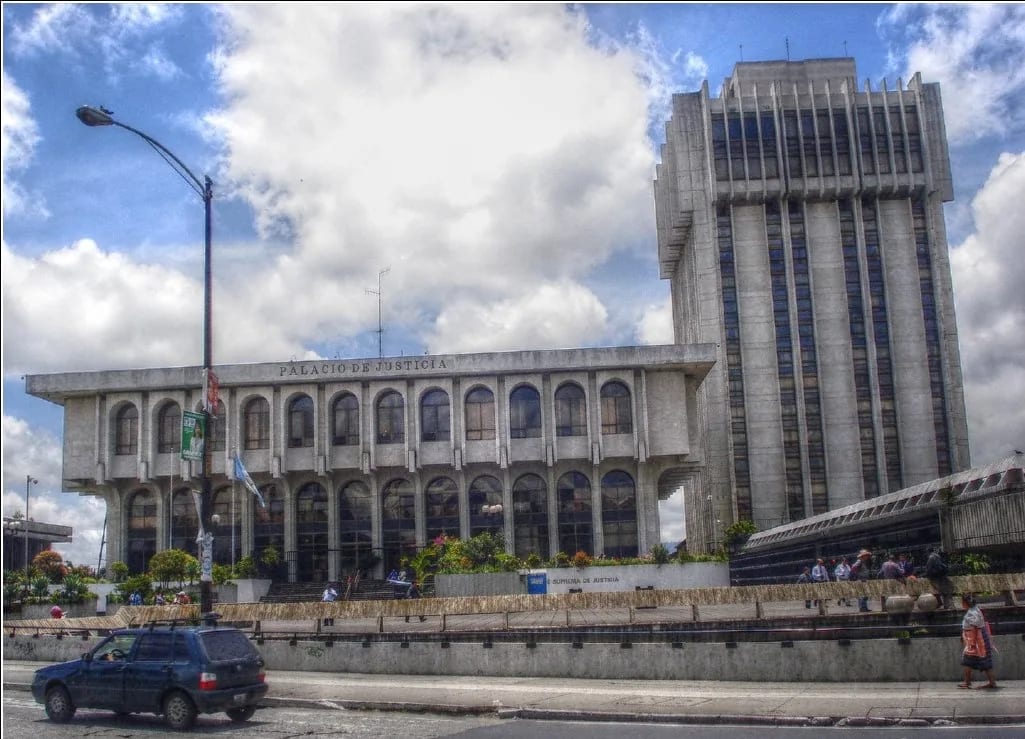
Need to protocolize a document in Guatemala? Whether it’s a US-issued power of attorney, a real-estate purchase, a corporate formation, a will, or a private agreement you want to upgrade into a public instrument — the process, the fees, the deadlines, and the actors are the same. This guide explains what “protocolizar” means, when it’s mandatory, what it costs, and what the notary must do after.
In short: Protocolization is the notarial act by which a Guatemalan notario incorporates a document (foreign power of attorney, deed, court order, private contract) into his protocolo — the official register regulated by the Código de Notariado, Decreto 314 of 1946. Once protocolized, the document acquires public-instrument force and a permanent record is filed with the Archivo General de Protocolos (AGP) of the Judicial Branch. Base costs: Q10 notarial stamp + Q0.50 fiscal stamp per page + Q10 per sheet of special protocol paper. The notario must file a testimonio especial with the AGP within 25 working days. For foreign documents the chain is: apostille → certified Guatemalan translation if needed → protocolization → 10-day filing notice to AGP. A US notary public is NOT equivalent to a Guatemalan notario. Verified May 2026.
Diaspora — read this first: A US notary public is NOT the same as a Guatemalan notario. The US notary only verifies signatures; they are not a lawyer and cannot draft contracts. The Guatemalan notario is a fully credentialed lawyer with public faith (Latin-notary system), regulated by the Código de Notariado, Decreto 314 of 1946. A power of attorney signed in front of a US notary public does NOT have legal effect in Guatemala until it has been apostilled, translated if needed, and protocolized before a Guatemalan notario. The full chain is explained below.
What Does “Protocolizar” a Document Mean?
Legal definition
Protocolization is the notarial act by which a notario incorporates or intercalates into the protocolo —the official register under his custody— a public or private document, at a party’s request or by operation of law. The incorporation has two dimensions:
- Material: the document physically becomes part of one or more folios of the notario’s protocolo
- Juridical: the incorporation happens through an acta de protocolización drafted in the protocolo, which precedes the incorporated document
Once protocolized, the document and the acta form a single unit: when the notario later issues testimonios (certified copies), both must be reproduced together.
Plain-language explanation
“Protocolizar” means the notario takes your document —a private contract, a foreign-issued power of attorney, a court order, a will— and glues it into his official numbered ledger (the protocolo), so that it acquires the force of a public instrument and a permanent legal record exists. Eventually, the original ends up at the Archivo General de Protocolos (AGP), the Judicial Branch agency that custodies every notarial protocolo in the country.
The notarial protocolo
The protocolo is the “ordered collection of matrix writings, actas de protocolización, and signature/document legalizations that the notario registers per law.” Key facts:
- Written on special protocol paper (watermarked and numbered)
- Costs Q10.00 per sheet
- SAT sells it to active notarios in lots of no less than 55 sheets
- Opens each calendar year with the first instrument the notario authorizes
- Closes December 31 (or earlier if the notario stops cartulating)
- The closing statement must list place, date, number of authorized/cancelled instruments, total folios, and the notario’s stamped signature
Types of Notarial Documents in Guatemala
Not every notarial document goes into the protocolo. The distinction matters:
| Document | What it is | Goes in protocolo? | Who signs? |
|---|---|---|---|
| Escritura pública | Contains contracts/acts requiring solemnity (sale, mortgage, mandate, corporate formation, open will) | Yes | Grantors + notario |
| Acta notarial | The notario witnesses and certifies a fact (presence, requirement, statement, lottery) | No (plain paper) | Notario only (public faith is sufficient) |
| Acta de protocolización | Incorporates a document into the protocolo | Yes | Requesters + notario (depends on type) |
| Razón de legalización de firmas | Authenticates a signature or copy | No (on the margin of the document) | Notario |
| Testimonio | Certified copy of the protocolized instrument, for the client | No | Notario |
| Testimonio especial | Mandatory copy sent to AGP within 25 working days | No | Notario |
Key principle: Guatemala’s Código de Notariado treats the escritura pública as the public instrument par excellence. The acta notarial is a separate figure —it does not go into the protocolo and is used to certify facts, not to formalize value-bearing legal acts.
When Is Protocolization MANDATORY?
Cases the law requires
- Documents that a law or competent judge orders to protocolize (judgments, voluntary jurisdiction proceedings)
- Documents that must be inscribed in public registries:
- Real-estate sales → Registro General de la Propiedad (RGP)
- Mandates and general powers of attorney → Registro Electrónico de Poderes
- Corporate formation, modification, or dissolution → Registro Mercantil
- Wills → Registro de Procesos Sucesorios and RGP
- All foreign documents that will produce legal effects in Guatemala (more below)
Optional cases
- Private documents the parties want to upgrade into public instruments for evidentiary strength, even when registration is not required (e.g., a private loan agreement the parties want shielded against future disputes).
The 3 pathways of protocolization
The Código de Notariado and notarial practice recognize three paths, depending on the document’s origin and prior formality:
Pathway 1 — Documents whose protocolization is ordered by law or a judge: The notario acts “por sí y ante sí” (on his own authority). No party needs to appear. Applies to judgments, voluntary jurisdiction proceedings, apostilled foreign documents, etc.
Pathway 2 — Private documents with previously legalized signatures: Only the beneficiary or requester must appear. The signatures were already authenticated previously by another notario or by the same one in a separate act.
Pathway 3 — Private documents WITHOUT signature recognition or legalization: All signatories must appear before the notario the day of protocolization, identify themselves with valid DPI/passport, and ratify the content and signature. This is the most logistically demanding pathway.
Where Does Protocolization Happen?
Protocolization happens at the notario’s office —not at the AGP. The AGP does not protocolize documents; the AGP receives, custodies, and certifies protocolos already formed.
Physical flow:
- Client brings the document to the notario
- Notario drafts the acta de protocolización in his protocolo (special protocol paper)
- Parties (if applicable) appear and sign
- Notario folios and incorporates the document into the protocolo
- Notario issues a testimonio to the client (certified paper copy for use at registries)
- Notario sends a testimonio especial to AGP within 25 working days
- If the document is foreign, the notario also files an aviso de protocolización to AGP within 10 working days
- The protocolo stays with the notario until his death, impediment, or absence, at which point it passes to AGP
Cost of Protocolization in Guatemala 2026
Note: these line items are taxes and special paper required by the cited decrees. The notario’s professional fees are a separate component —see our detailed guide on how much a notary charges in Guatemala 2026 for current pricing by service type.
Notarial stamp tax (Decreto 82-96, Timbre Forense y Timbre Notarial)
| Item | Rate |
|---|---|
| Protocolization | Q10.00 |
| Act of determined value | 2 per thousand (value × 0.002), max Q300.00 |
| Act of indeterminate value | Q10.00 |
| Will or causa-mortis donation | Q25.00 |
| Acta notarial (first page) | Q10.00 |
| Razón de legalización (signature or document) | Q10.00 |
Fiscal stamp tax (Decreto 37-92, Timbres Fiscales y Papel Sellado Especial)
| Item | Rate |
|---|---|
| Testimonio especial (per page) | Q0.50 |
| Simple or legalized copy (per page) | Q0.50 |
| Índice del protocolo (per page) | Q0.50 |
| Razón registral | Q0.50 |
| General power of attorney (first page) | Q10.00 |
| Special power of attorney (first page) | Q2.00 |
| Closed-will cover | Q200.00 |
| Corporate formation testimonio | Q250.00 |
Special protocol paper
- Q10.00 per sheet
- SAT sells it to active notarios in minimum 55-sheet lots
- Legal basis: Decreto 37-92, Art. 6 (“diez Quetzales (Q.10.00) por cada hoja”, as reformed by Decreto 4-2012)
Notario’s professional fees
The Código de Notariado’s fee schedule is outdated, and virtually all notarios charge market rates. For ranges by service type (POA Q300–2,500; sale 1–3% of value; will Q800–3,500; corporate formation Q1,500–5,000), see our complete guide on notary fees in Guatemala 2026.
AGP fees (if you later need a certification)
| Item | Rate |
|---|---|
| Certification or certified copy | Q75 + Q5 per sheet |
| Report or constancia | Q50 + Q5 per sheet |
Supreme Court Acuerdo 24-2011, Art. 1 letters a) and c), and Art. 2 (Q5 per sheet), which the AGP publishes as its fee schedule.
Calculator
Calculate your total protocolization cost
Statutory stamps plus negotiated notario fees. For foreign documents, the calculator adds an estimate for apostille and sworn translation (Q300).
Source: Decreto 82-96 (Notarial Stamp Tax — Q10 flat), Decreto 37-92 (Fiscal Stamp — Q0.50/page), Decreto 37-92 Art. 6 (Special Protocol Paper — Q10/sheet). Last verified 2026-05-15.
The Notario’s Obligations After Protocolizing
Once protocolization is done, the notario has several strict-deadline obligations toward the AGP. Non-compliance leads to fines and, in serious cases, suspension.
| Obligation | Deadline | Legal basis |
|---|---|---|
| Testimonio especial for each public instrument | 25 working days from authorization | CN Art. 37 lit. a |
| Quarterly notice (instruments authorized/cancelled, or “none”) | 25 working days from quarter close | CN Art. 37 lit. c |
| Protocolo index | 25 working days from annual protocolo close | CN Arts. 12, 15, 37 lit. a, 92 |
| Cancellation notice for cancelled instruments | 25 working days from cancellation | CN Art. 37 lit. b |
| Foreign-document protocolization notice | 10 working days from protocolization | LOJ Art. 40 |
| Protocolo opening payment | Early January, before first instrument | CN Arts. 11, 12 |
| Will notice to the Property Registry | 15 days from authorization | Código de Notariado Art. 45 (Q25 fine if missed) |
Foreign Documents: the Full Chain
This is the critical section for the Guatemalan diaspora in the United States and for foreigners who need a document from their home country to have legal effect in Guatemala (powers of attorney to sell property, marriage certificates, divorce decrees, academic transcripts).
The 6 steps, no shortcuts
- Document issued in the home country (state, county, ministry).
- Apostille if the home country is a Hague Convention signatory. Since April 9, 2024, every apostille request in or from Guatemala goes through the MINEX system. See our guides on MINEX online apostille and apostille from the United States.
- Pases de Ley if the home country is NOT a Hague signatory. This is the legacy legalization chain: home-country foreign ministry → Guatemalan consulate in that country → MINEX in Guatemala.
- Sworn translation if the document is not in Spanish, done by a traductor jurado authorized in Guatemala (translations done abroad are usually rejected).
- Protocolization before a Guatemalan notario — the notario drafts the acta, incorporates the apostilled document and the translation into the protocolo, and issues a testimonio.
- Notice to AGP within 10 working days (LOJ Art. 40). Without this notice, Registro Mercantil or RGP will reject the subsequent inscription.
- Inscription in the relevant registry (RGP, Registro Mercantil, Registro Electrónico de Poderes, etc.).
Specific application — marriage abroad
If you married outside Guatemala and want the marriage to have legal effect in the country (for inheritance, divorce, pension, registration of children), the foreign marriage certificate must go through this same chain. See our specialized guide on recognition of marriage celebrated abroad.
Common rejection reasons at RGP or Registro Mercantil
- Missing apostille or expired authentication
- Translation done abroad instead of by a traductor jurado in Guatemala
- AGP protocolization notice never filed within 10 working days
- Foreign document references legal figures (LLC, corporation, trust) with no exact Guatemalan equivalent
- Incomplete or inconsistent DPI/passport data for the protocolizing party
- Notario with outstanding AGP fines from late prior testimonios (blocks new filings)
How to Find an Old Protocol at AGP
The AGP is publicly accessible: anyone can consult protocolized instruments without charge (except wills and causa-mortis donations while the testator is alive, which only the grantor and the authorizing notario can view).
Steps to obtain certification of an old instrument
- Gather basic facts: authorizing notario’s name, date, instrument number (if known).
- Access the Organismo Judicial portal.
- Reload balance (“Recargar saldo portal OJ”).
- Request the certification —in person at the AGP headquarters or by email to the AGP electronic-services account.
- Receive the certified copy (fiscal stamp Q0.50/pg + AGP fee).
Headquarters and departmental delegations
The AGP main office is at 7 avenida 9-20 zona 9, Edificio Jade, Guatemala City. Its delegations page (checked 24 September 2026) lists a delegation in each of the other 21 departments, plus Santa Eulalia and La Democracia (Huehuetenango), Malacatán (San Marcos), San Juan Ostuncalco and a special window in Coatepeque (Quetzaltenango). Some of them:
| Department | Phone |
|---|---|
| Alta Verapaz (Cobán) | 2290-4444 ext. 83771 / 83772 |
| Quetzaltenango | 2290-4444 ext. 81201, 81202 |
| Chiquimula | 2290-4444 ext. 85373 / 85374 |
| Huehuetenango | 7768-2823 to 28, ext. 136 and 138 |
| Escuintla | 2290-5402 and 2290-4444 ext. 89409 / 89410 |
| Sacatepéquez (Antigua Guatemala) | 2290-4444 ext. 88786 |
| Petén (San Benito) | 2290-4444 ext. 85797 |
| Izabal (Puerto Barrios) | 2290-4444 ext. 87306 / 87307 |
Headquarters contacts (Guatemala City)
- AGP general contact: 2290-4444, extensions 92051 and 92052
- Registro Electrónico de Poderes: notary desk 2290-5130 · power-of-attorney certifications 2290-5133 · head of department 2290-5145 · email regpoderes.agp@oj.gob.gt
Contacts taken from the AGP’s “Contáctenos” and “Registro Electrónico de Poderes” pages on 24 September 2026.
Common Errors and Rejection Causes
Beyond foreign-document rejections, these are the most typical failures in domestic protocolizations:
- Acta missing required content (CN Art. 64): missing order number, place and date, requester ID, document page count, location in the protocolo (start and end folio).
- Misplaced protocolization clause: it must be the penúltima (next-to-last) clause of the acta, before the acceptance clause.
- Mis-calculated or missing stamps: especially the Q10 notarial stamp that most clients forget.
- Out-of-sequence protocol paper in the protocolo.
- Testimonio especial delivered late to AGP (more than 25 working days): generates a fine for the notario, although the registry inscription can still proceed.
- Document protocolized in a language other than Spanish without sworn translation.
Frequently Asked Questions
How long does protocolization take?
If the signatories are available and the document is complete (apostilled and translated if foreign), protocolization can happen the same day at the notario’s office. The testimonio for registry inscription is usually ready in 24–72 hours. The testimonio especial to AGP has a 25-working-day deadline, but it does not affect the client’s use of the document.
Can I protocolize a document with any notario in the country?
Yes. Any active colegiated notario can protocolize. The choice usually depends on proximity, specialization (some focus on corporate, others on family or real estate), and fees.
What if the notario dies before delivering my testimonio?
AGP receives the deceased notario’s protocolo. You can request a certified copy from AGP following the process described above (Q75 + Q5/pg). Your instrument remains valid —it does not vanish with the notario.
Is a US power of attorney signed before a notary public directly valid in Guatemala?
No. It must go through the full chain: apostille in the issuing state → sworn translation in Guatemala (if in English) → protocolization before Guatemalan notario → AGP notice within 10 working days → inscription in the Registro Electrónico de Poderes. Without this chain, no Guatemalan registry will accept it.
Can I send someone with a POA to do the protocolization for me?
Yes, but that POA itself must be protocolized if granted abroad, or be a special POA granted inside Guatemala. This creates the classic “chicken-and-egg”: the first POA is the slowest step. After that, everything else flows.
Does protocolization automatically inscribe my document in the Property or Commercial Registry?
No. Protocolization creates the public instrument. Registry inscription is a separate step: the client or gestor takes the notario-signed testimonio to the relevant registry, pays registry fees, and waits for qualification. They are two distinct steps with distinct costs.
Resources and Primary Sources
- Código de Notariado, Decreto 314 (1946): PDF (Congreso)
- Ley del Organismo Judicial (LOJ) Arts. 37, 38 and 40 — CENADOJ edition updated to 31 July 2025; Art. 40 is the basis of the foreign-document protocolization notice.
- Decreto 37-92 — Fiscal Stamp Tax and Special Sealed Paper: PDF (SAT consolidated text)
- Decreto 82-96 — Forense and Notarial Stamp Tax — Congreso PDF — an image-only scan with no text layer, so it is not searchable
- Código de Notariado Art. 45 — will notice to the Property Registry within 15 days
- Archivo General de Protocolos: Archivo General de Protocolos (Organismo Judicial)
- MINEX Apostilla: apostilla.minex.gob.gt
- SAT Especies Fiscales: portal.sat.gob.gt/portal/especies-fiscales
- Colegio de Abogados y Notarios de Guatemala (CANG): cang.gt
Related guides on this site:
- How much a notary charges in Guatemala 2026
- MINEX online apostille
- Apostille from the United States
- Recognition of marriage celebrated abroad
- RENAP online: DPI and certifications
Legal notice: This guide is informational and based on laws and fee schedules in force as of the publication date. Rates can change; items flagged require verification against the official text of the Código de Notariado, Decreto 82-96, Decreto 37-92, and the current SAT/AGP arancel. For specific cases, consult an active colegiated notario or refer to the official sources cited above.