Guatemala has become an increasingly attractive retirement destination for Americans, Canadians, and Europeans seeking a lower cost of living, warm climate, and proximity to the United States. The residencia de rentista o pensionado is designed specifically for foreigners who live on income from abroad, including pensions, Social Security payments, retirement fund distributions, investment dividends, or rental income from properties outside Guatemala. Unlike what many blogs repeat, in IGM’s official catalog this is a permanent residency with a one-time fee — not an annually-renewed temporary permit.
The retiree residency is one of the most straightforward immigration categories because it does not require a local employer, a Guatemalan business investment, or a guarantor. You need to prove permanent foreign income of at least $1,250 USD/month for the principal applicant, plus $300 USD/month per dependent — the officially published minimum under the 2025 residency regulation (Acuerdo IGM-016-2025).
Living costs in Guatemala are remarkably low compared to the US or Canada. Many retirees live comfortably on $1,500-$2,500 USD per month, including rent, food, healthcare, and entertainment. Popular retirement destinations include Antigua Guatemala, Lake Atitlan, and parts of Guatemala City like Zones 10 and 14. The country offers excellent private healthcare at a fraction of US prices, year-round mild weather at higher elevations, and a rich cultural environment.
Quick summary: Retiree residency requires proof of $1,250 USD/month in permanent foreign income (+$300/month per dependent), costs $25 application + $400 one-time fee, takes 2-4 months to process, and is permanent from day one — no guarantor, no annual renewals, income re-verified every 5 years.
Information verified June 2026 directly from IGM’s residency catalog (igm.gob.gt).
Requirements
Per IGM’s official general requirements for all residencies:
- Application form (principal + dependent forms as needed) from igm.gob.gt, filed in a legal-size folder of the color indicated for the category
- Valid original passport + full notarized copy
- Criminal and police background check from your home country, apostilled (Hague Convention) or consular-legalized
- Migration movement certificate of your last entry (issued by IGM)
- $25 USD application payment
Specific to rentista/pensionado:
- Proof of permanent foreign income of $1,250+/month:
- Social Security benefit letter
- Pension statement from employer or government
- Retirement fund distribution records
- Rental income documentation
- Investment dividend statements
- No guarantor required for this category
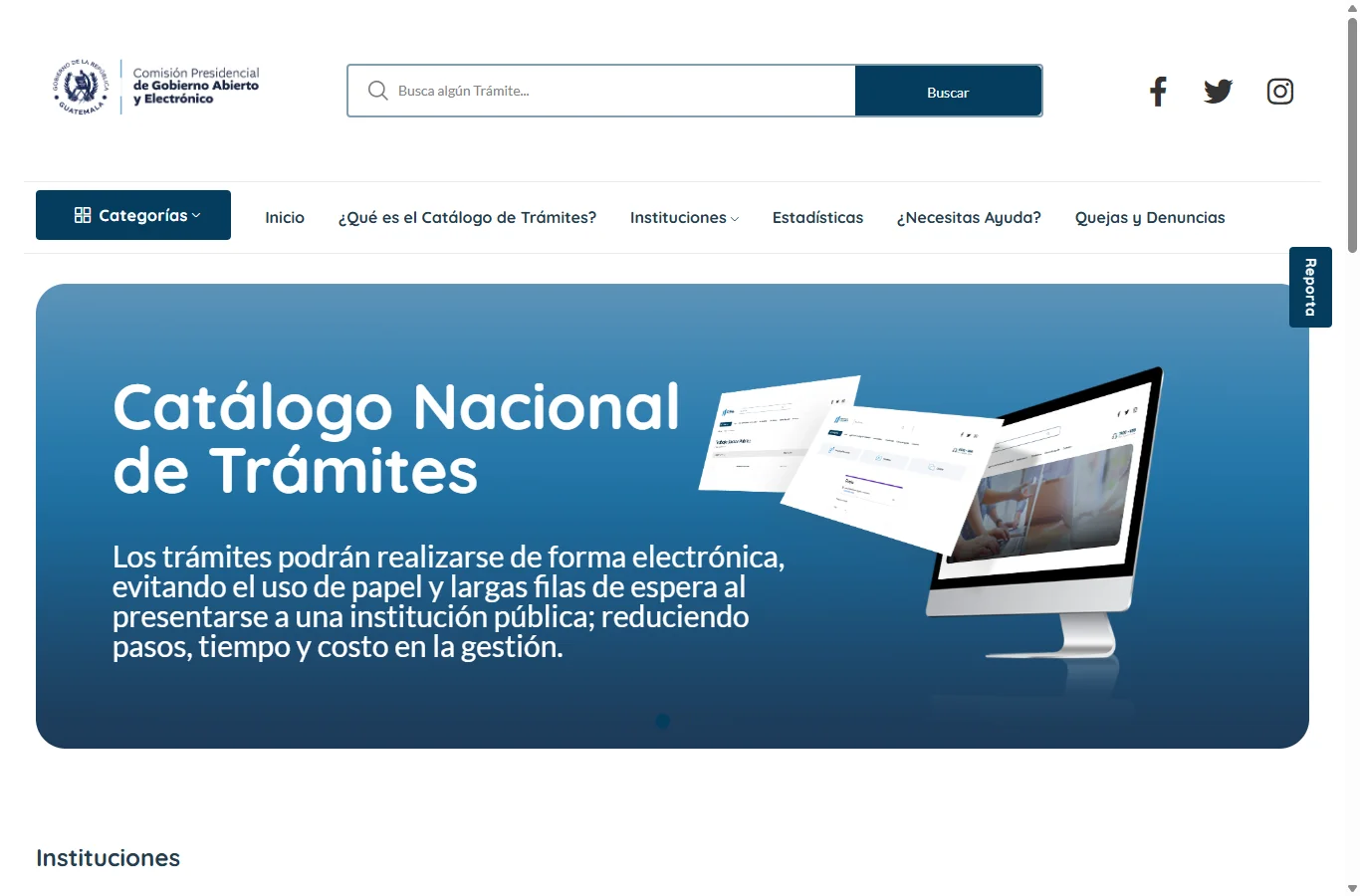
tramites.gob.gt is the Guatemalan government’s open catalog. If you do not know which institution handles a trámite, search here first.
Step-by-Step Process
- Gather income documentation — get official letters from your pension provider, Social Security Administration, or financial institutions confirming regular payments
- Apostille your criminal background check in your country of residence (in the US, this goes through the Secretary of State or Department of State)
- Enter Guatemala — most retirees arrive on a 90-day tourist visa and apply for residency in-country
- Complete IGM application forms from igm.gob.gt and book a web appointment (“Cita para ingreso de solicitud de residencia”) — walk-ins are served by queue number
- Submit application at IGM (2nd floor, Subdireccion de Extranjeria, 6a Avenida 3-11, Zona 4, Guatemala City) — pre-review at the information window, full review at windows 1-3
- Pay the $25 USD application fee at the Banrural branch on the 1st floor of the IGM building and return with the receipt to get your case number (Hoja de Ingreso)
- Track your case via the email access key and SMS alerts IGM sends. If IGM issues a previo (correction request), the notification costs $5 and you have 30 calendar days to fix it or the case is archived. You’ll then be called to an interview by SMS
- Pay the $400 permanent-residency fee — the payment order arrives 24 hours before your final appointment
- Attend the biometrics appointment (windows 12-13) with your payment receipts and a proof of address (utility bill or lease), get registered, then go to RENAP for your DPI as a domiciled foreigner
Costs
| Item | Cost |
|---|---|
| IGM application fee | $25 USD |
| One-time permanent-residency fee (rentista) | $400 USD |
| Previo notification (only if corrections requested) | $5 USD |
| Registry certification (optional) | $15 USD |
| Criminal background apostille | $20 - $100 (varies by country) |
| Document translations (if needed) | Q200 - Q500 |
| Notarial fees (if needed) | Q300 - Q1,000 |
| Total estimated (DIY) | ~$550 - $700 USD |
Payments are made only in quetzales at the day’s exchange rate at the authorized bank inside the IGM building (Banrural). IGM never asks for deposits to personal accounts; its only official phone numbers are 2411-2411 and 5515-5327.
Why Retirees Choose Guatemala
| Factor | Guatemala | Costa Rica | Mexico |
|---|---|---|---|
| Monthly cost of living | $1,500 - $2,500 | $2,000 - $3,500 | $1,800 - $3,000 |
| Healthcare (private doctor visit) | $15 - $40 | $50 - $100 | $30 - $60 |
| Flight to US (hours) | 3-4 | 4-5 | 2-5 |
| Residency cost | $425 one-time | ~$300+ | ~$350+ |
| Climate | Spring-like year-round | Tropical/varied | Varies widely |
Long-Term Path
| Milestone | Timeframe |
|---|---|
| Permanent residency (rentista) granted | From approval — no temporary stage |
| Re-demonstrate income continuity | Every 5 years |
| Eligible for citizenship (optional) | After 5 years as a domiciled foreigner |
Income Source Documentation
| Income Source | Required Documentation | Apostille Needed? |
|---|---|---|
| US Social Security | SSA benefit verification letter (SSA-1099) | Yes |
| Military pension | DFAS pension statement | Yes |
| Employer pension | Annual pension statement from plan administrator | Yes (if government) |
| 401(k)/IRA distributions | Account statement showing regular distributions | No (bank document) |
| Rental income | Lease agreements + bank deposit records | No |
| Investment dividends | Brokerage statements showing dividend payments | No |
| Annuity payments | Insurance company statement | Varies |
Key rule: The income must be regular and verifiable. One-time lump sums do not qualify unless they represent an ongoing income stream.
Rentista Residency: Country Comparison
| Country | Minimum Income | Residency Type | Healthcare Included | Path to Citizenship |
|---|---|---|---|---|
| Guatemala | $1,250/mo (official) | Permanent (direct) | No | 10+ years |
| Costa Rica (Pensionado) | $1,000/mo | Temporary | CAJA access | 7 years |
| Panama (Pensionado) | $1,000/mo | Permanent | Discounts only | 5 years |
| Mexico (Residente Temporal) | ~$2,500/mo | Temporary | IMSS optional | 5 years |
| Ecuador (Rentista) | $1,325/mo | Temporary | IESS access | 3 years |
Guatemala’s lower cost of living means your $1,250/month goes further than in most competing countries.
Edge Cases & Special Situations
Details
Not all retirees have straightforward pension income. Here is how to handle less common situations:
- Cryptocurrency income: Not accepted as a sole income source. If you convert crypto to fiat regularly, show the bank deposits from your exchange (Coinbase, Kraken) as the income trail, not the crypto itself.
- Rental income from US properties: Provide lease agreements and bank statements showing monthly rent deposits. A property management company statement is ideal.
- Multiple income streams: If no single source meets the practical threshold, you can combine multiple sources. Present a summary showing total monthly income from all documented sources.
- Spousal income: If your spouse is the primary income earner, they should be the principal applicant and you apply as a dependent.
- Trust income: Distributions from a trust can qualify. Provide the trust agreement and bank statements showing regular distributions.
- Windfall income (inheritance, lottery): A one-time large deposit does not qualify as “regular income.” However, if you place the funds in an interest-bearing account and show monthly interest/dividend income, that can work.
Details
These three residency categories are the most popular for foreigners who do not have a Guatemalan employer:
- Rentista: Best for retirees and those with passive income who do NOT want to work in Guatemala. Direct PERMANENT residency ($400 one-time) with the $1,250/month income threshold.
- Digital nomad / remote worker: Best for active workers with foreign employers or clients. Temporary residency ($200/1yr, $300/2yr, $500/3-5yr) with an official income requirement of $2,000/month ($3,000 with dependents) plus international health insurance.
- Investor: Best for those buying property or starting a business. Requires $100,000+ investment. Temporary residency, allows working in your own business.
- Key difference: Rentistas get permanent residency from day one, while digital nomads and investors start with temporary and must wait 5 years (then pay $700) for permanent.
- Can you switch? Yes. If your situation changes (e.g., you retire from remote work), you can apply to change residency categories at IGM.
Details
Residency does not include healthcare benefits. Here is what retirees need to know:
- IGSS (public healthcare): Only available to employees registered by a Guatemalan employer. Not applicable to rentistas.
- Private insurance: Several Guatemalan insurers offer health plans for foreigners (Seguros G&T, Columna, El Roble). Premiums for retirees aged 55-65 typically range from $100-$300/month.
- International insurance: Plans like Cigna Global, Allianz Care, or IMG can cover you in Guatemala and during travel. More expensive but more comprehensive.
- Medicare: US Medicare does NOT cover you outside the United States.
- Pay-as-you-go: Many retirees in Guatemala simply pay out of pocket for healthcare. A private doctor visit costs $15-$40, and even major procedures are a fraction of US prices.
- Hospitals: Guatemala City has excellent private hospitals (Hospital Herrera Llerandi, Centro Medico, Sanatorio El Pilar). Antigua and Quetzaltenango also have good private clinics.
Tips & Common Mistakes
- Get your income documents in order before you leave home. A Social Security benefit verification letter, pension statements, or bank statements showing regular deposits are the most important documents. Have them apostilled if issued by a government entity.
- Do not overstay your tourist visa while waiting for residency approval. If your 90-day period is running out and your residency is still in process, visit IGM to get a constancia de tramite (proof of pending application) that regularizes your stay.
- Consider hiring a reputable immigration lawyer (abogado de migracion) for your first application. Fees range from Q2,000-Q5,000 and can save you months of back-and-forth with IGM.
- Learn basic Spanish. While some IGM staff speak English, all forms and procedures are in Spanish. Having at least conversational Spanish makes the process much smoother and your daily life in Guatemala far more enjoyable.
- Healthcare is not included in residency. Consider private health insurance. Guatemala has excellent private hospitals (especially in Guatemala City and Antigua) at very affordable rates compared to the US.
- Open a Guatemalan bank account as soon as your residency is approved. Local banks (BI, BAM, G&T) are more accessible to residents than tourists.
Common Errors and Solutions
These are the real issues that delay or derail rentista applications at IGM. The category has lighter documentation than worker residency, but income verification and apostille mistakes account for most rejections.
FBI background check expired by the time you file — the criminal background check must be issued within the last 6 months when you submit, AND apostilled. Solution: do the FBI check FIRST, then immediately send to the US Department of State for apostille. Total US timeline is 6-10 weeks; do not start the GT process until that document is in hand.
Income letter not apostilled — Social Security benefit letters (SSA-1099 or equivalent), military pension statements from DFAS, and government pension documents must be apostilled because they originate from a government agency. Solution: route government-issued income letters through the US Department of State for apostille before traveling. Private 401(k)/IRA statements and bank statements do NOT need apostille.
Income shown as one-time deposit instead of regular stream — IGM requires “ingreso regular” — a sustained monthly stream. A single large transfer (inheritance, lump-sum 401(k) cash-out) does not qualify. Solution: place lump sums in an income-generating instrument (annuity, brokerage, savings account) and show 6 months of monthly interest, dividend, or distribution payments before applying.
Income amount looks insufficient on the documentation — the published minimum is now $1,250/month USD ($300/month more per dependent) under the 2025 regulations. Submissions below that level are rejected or draw requests for additional documentation. Solution: combine multiple income sources (Social Security + pension + rental) into a single summary letter to clear the practical bar.
Passport with less than 6 months validity at filing — IGM rejects applications when the passport will expire during the processing window. Solution: renew the passport in your home country (or at a Guatemalan consulate if you are already Guatemalan) BEFORE filing. Aim for 18+ months of validity at filing date.
Tourist visa expiring mid-application — most retirees enter on a 90-day tourist visa and start the residency process in-country. If processing takes longer than 90 days (and it usually does — 2-4 months), you are technically in irregular status. Solution: as soon as you file at IGM, request a “constancia de tramite” — this document proves your application is pending and protects you from overstay fines while IGM is reviewing.
No proof of address for the final registration appointment — the biometrics appointment requires a proof of address (utility bill or lease) along with your payment receipts. Solution: have a lease or a utility bill tied to your Guatemalan address ready before your final appointment is scheduled.
“Documento ilegible” on uploaded scans — when documents are submitted digitally, poor scans (low resolution, glare, dark photos) come back as unreadable. Solution: scan at 300+ DPI, well-lit, no shadow, JPG/PDF under 2MB, white background.
Translation missing or done by non-sworn translator — any non-Spanish document must be translated by a “traductor jurado” (sworn translator) registered in Guatemala. Translations done abroad by non-registered translators are routinely rejected. Solution: budget Q200-Q500 per document for translation in Guatemala AFTER you arrive with the originals.
Paying a guarantor service you don’t need — IGM’s official catalog states the rentista/pensionado category requires NO garante. Some facilitators charge for arranging one anyway. Solution: skip it; only worker-with-local-employer categories need a guarantor.
Trying to work for a Guatemalan employer while on rentista status — rentista is for passive income only. Taking on Guatemalan-paid work requires switching to the worker category and a MINTRAB work permit. Solution: if you start earning Guatemalan income, request the category change at IGM with proper documentation.
Missing the 30-day previo window — if IGM requests corrections, the notification costs $5 and you have 30 calendar days to respond or the whole case is archived and your fees are lost. Solution: monitor the IGM portal with your access key and keep your phone number current for SMS alerts.
Related Tramites
- Residency for Foreigners — overview of all residency categories
- Digital Nomad Visa — if you still work remotely
- Investor Residency — if you want to invest $100K+
- Naturalization — citizenship after 10+ years in Guatemala
- DPI (National ID) — available after permanent residency
- Passport — must be valid before applying
- NIT Tax ID — needed for banking and some transactions
Common Questions
How much income do I need to retire in Guatemala?
As of the 2025 IGM residency regulations, the officially published minimum is $1,250 USD/month of permanent foreign income for the principal applicant, plus $300 USD/month per dependent. Acceptable sources: pensions, retirement funds, Social Security, rental income. One-time fee: $400; income re-verified every 5 years.
Can I work in Guatemala on a retiree residency?
The rentista category is designed for people living on passive income from abroad. If you want to work for a Guatemalan employer, you would need a work permit. However, receiving pension or retirement income while living in Guatemala is perfectly allowed.
Do I need a Guatemalan guarantor for retiree residency?
No. Under the current residency regulation (Acuerdo IGM-016-2025), the rentista/pensionado category does not require a garante — one of the few categories without that requirement, along with marriage and family-link residency.
How long does retiree residency last?
It is permanent. In IGM’s official catalog, rentista/pensionado is a direct PERMANENT residency with a one-time $400 fee — no annual renewals. You only re-demonstrate income continuity every 5 years. After 5 years as a domiciled foreigner you can apply for citizenship if you want it.
Can I use Social Security income to qualify for rentista residency?
Yes. US Social Security payments are one of the most commonly accepted income sources. Request a benefit verification letter from the SSA (form SSA-1099 or equivalent) and have it apostilled through the US Department of State.