Retiring from Canada to Guatemala is one of the most undersold expat moves available to Canadians. The cost is roughly half of Costa Rica or coastal Mexico, the climate in Antigua and Lake Atitlan is famously stable (no AC, no humidity, no mosquitos at altitude), and the pensionado route has a published income floor of US$1,250/month plus US$300 per dependent (Acuerdo IGM-016-2025, Art. 33 numeral 1) that almost every retired Canadian with CPP + OAS clears comfortably.
The trade-off Canadians actually face: the healthcare gap. Your provincial card stops being useful the moment you board the plane. Private healthcare in Guatemala is excellent and affordable by Canadian standards, but you have to pay for it. This guide walks through the visa, the budget, the healthcare math, and the four cities where most Canadian retirees end up.
Quick summary: The pensionado route needs US$1,250/month of verifiable pension income, plus US$300 per dependent (Acuerdo IGM-016-2025, Art. 33 numeral 1) — most Canadian CPP+OAS recipients qualify. Comfortable retired couple budget: CAD 2,500-3,500/month all-in including private health insurance. Top cities: Antigua (default), Lake Atitlan (more bohemian), Quetzaltenango (lower cost, cooler), Guatemala City Zona 14/Cayala (urban, hospital-adjacent). Plan the CRA tax residency exit deliberately — sloppy departure costs RRSP and OAS clawback advantages.
Cost snapshot — typical Canadian retiree budget
These numbers reflect actual Canadian retiree budgets we tracked in Q1 2026 across Antigua, Lake Atitlan, Quetzaltenango and Guatemala City. CAD figures use 1 CAD = Q5.75.
| Category | Single retiree (CAD/mo) | Couple (CAD/mo) |
|---|---|---|
| Rent (1-2 bed apartment) | $700 - $1,400 | $900 - $1,800 |
| Groceries | $250 - $400 | $400 - $650 |
| Utilities (electric, water, gas, internet) | $80 - $150 | $100 - $200 |
| Phone (Tigo/Claro postpaid) | $15 - $25 | $30 - $50 |
| Private health insurance (age 65, Cigna Global mid-tier) | $250 - $480 | $500 - $950 |
| Restaurant meals (4-6 dinners out, lunches) | $200 - $400 | $350 - $700 |
| Domestic help (housekeeper 2x/week) | $100 - $180 | $100 - $180 |
| Local transport (Uber, occasional shuttle) | $50 - $120 | $80 - $180 |
| Discretionary (gym, classes, weekend trips) | $150 - $400 | $250 - $600 |
| Comfortable monthly total | $1,800 - $3,200 | $2,800 - $5,300 |
Lean budget (Quetzaltenango or Lake Atitlan villages, smaller apartment, no eating out daily): CAD 1,400-1,800 single, CAD 2,200-2,800 couple.
Comfortable + amenities (Antigua furnished apartment, restaurants 6 nights/week, monthly travel): CAD 2,500-4,000 single, CAD 3,500-5,500 couple.
Compare these to typical retiree budgets in San Miguel de Allende (CAD 3,500-5,500), Atenas Costa Rica (CAD 3,000-5,000) or Cuenca Ecuador (CAD 1,800-3,500).
The pensionado visa — Canadian-specific walkthrough
Guatemala’s pensionado (pensioner) residency visa is the standard path for retired Canadians. It is purpose-built for foreign retirees living off pension income and lets you stay legally as long as you maintain the income proof. After 5 years on pensionado you can apply for permanent residency, and after another 5 years you qualify for naturalization (Guatemalan citizenship) — though most Canadians never go that far.
Income requirements
| Requirement | Amount |
|---|---|
| Minimum monthly pension income (single) | US$1,250, plus US$300 per dependent (Art. 33 num. 1) |
| Minimum monthly pension income (with spouse) | USD 1,200 (~CAD 1,620) |
| Additional per dependent child | USD 200 (~CAD 270) |
| Acceptable income sources | CPP, OAS, GIS (sometimes), employer pension, RRIF withdrawals, annuity payments |
| Acceptable proof | Service Canada T4A, RRIF statement, pension administrator letter, all apostilled |
For a typical Canadian retiree: CPP at age 65 averages CAD 850/month; OAS averages CAD 730/month — combined CAD 1,580/month, well over the threshold. Add an employer pension or RRIF withdrawal and most retired couples easily clear CAD 1,620 combined.
Documents required
| Document | Source | Apostille required? |
|---|---|---|
| Canadian passport (valid 6+ months) | Service Canada | No |
| RCMP criminal background check | RCMP / accredited fingerprinting agency | Yes (Global Affairs Canada) |
| Birth certificate | Provincial vital statistics | Yes |
| Marriage certificate (if applying with spouse) | Provincial vital statistics | Yes |
| Pension verification letters (CPP, OAS, RRIF) | Service Canada / pension administrator | Yes |
| Recent bank statements (3-6 months) | Canadian bank | Sometimes (varies by consulate) |
| Passport-size photos | Any photographer | No |
| Application fee | USD 280 + various sub-fees | — |
Apostille step: Canada joined the Hague Apostille Convention in January 2024. Federal documents (RCMP check, naturalization certificate) get apostilled by Global Affairs Canada Authentication Services (Ottawa). Provincial documents (birth, marriage) get apostilled by the Official Document Services of the issuing province (Ontario, BC, Alberta, etc all have their own offices). Total apostille cost: CAD 200-500 for a typical document set.
Application paths
Path A — Apply at a Guatemalan consulate in Canada (slower but cleaner):
- Submit at Embassy of Guatemala in Ottawa or Consulate General in Toronto, Montreal or Vancouver
- 4-6 month processing
- Receive a special residency visa in your passport, then complete final IGM intake within 90 days of arrival in Guatemala
Path B — Apply directly at IGM in Guatemala (faster but more on-the-ground work):
- Enter Guatemala on the standard 90-day visa-free permit
- File pensionado application at IGM Zona 4 within first 60 days
- Use a Guatemalan immigration lawyer (CAD 1,500-3,500) for paperwork — strongly recommended
- 3-6 month processing
- Receive Guatemalan DPI (national ID) on approval
Most Canadian retirees take Path B because it lets them live in Antigua during the wait. Plan for CAD 2,500-4,500 in total legal + apostille + government fees end-to-end.
Healthcare — what Canadian retirees actually do
Three patterns dominate among Canadian retirees in Guatemala:
Pattern 1 — Comprehensive private expat insurance (most common)
Buy a global policy (Cigna Global, GMS, Bupa, Allianz, IMG, William Russell). Premiums for a healthy 65-year-old start around CAD 200-300/month, scaling to CAD 400-700/month with full inpatient + outpatient + emergency evacuation. Most have annual deductibles in the CAD 1,000-3,000 range.
This works with Hospital Herrera Llerandi, Centro Medico, Hospital Universitario Esperanza (all in Guatemala City) and the better Antigua clinics on a direct-billing basis.
Pattern 2 — Pay-as-you-go (works for the cost-conscious)
Canadian healthcare costs at private Guatemala hospitals:
- GP visit: Q200-400 (CAD 35-70)
- Specialist consultation: Q400-700 (CAD 70-120)
- Lab work (basic blood panel): Q300-600 (CAD 50-105)
- MRI: Q3,000-5,000 (CAD 525-870)
- Hospital inpatient day rate: Q1,200-3,000 (CAD 210-525)
- Cardiac stent procedure (full): CAD 8,000-15,000
Many Canadian retirees in their 60s with no chronic conditions self-insure for routine care and carry a high-deductible catastrophic-only policy (CAD 80-150/month) for emergencies. A pacemaker or cancer treatment is the financial risk; routine care is cheaper out-of-pocket than insurance premiums.
Pattern 3 — Travel back to Canada for major procedures
Some snowbird-style retirees keep one foot in Canada — maintain provincial residency by spending 153-183 days/year in-province, fly back for major elective surgery, supplement with private travel insurance for the Guatemala stays. This is the most provincially complex but cheapest approach if you have a strong specialist relationship at home.
See our dedicated Canadian health insurance in Guatemala page for provincial gap details and provider recommendations.
Top cities for Canadian retirees
| City | Best for | Rent (1bd, CAD) | Canadian community size |
|---|---|---|---|
| Antigua Guatemala | First-time movers, walkability, Spanish schools, climate | $700 - $1,500 | Largest, most organized |
| Lake Atitlan (Pana, San Marcos) | Bohemian, lakeside, longer-term retirees | $500 - $1,200 | Smaller, tight-knit |
| Quetzaltenango (Xela) | Lower cost, highland climate, fewer foreigners | $400 - $900 | Small but growing |
| Guatemala City Zona 14/Cayala | Urban amenities, top hospitals, malls | $900 - $2,000 | Scattered, less expat-focused |
Antigua — the default
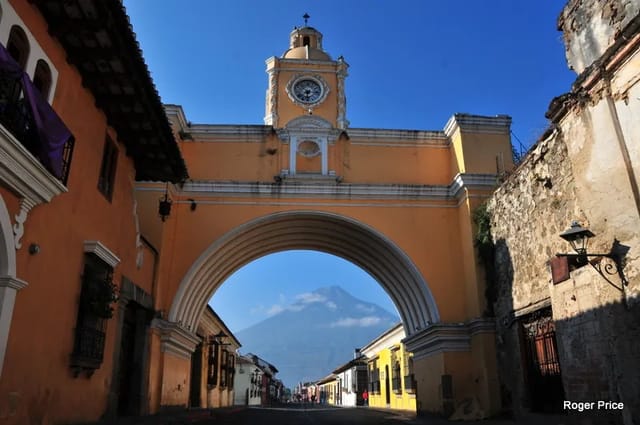
Antigua is where 60-70% of Canadian retirees first land. The reasons are obvious:
- Cobblestone colonial town walkable end-to-end in 20 minutes
- Year-round 22-26 C daytime, 10-14 C nights — no AC needed
- Largest organized Canadian community in Guatemala (monthly Antigua Canadian Coffee meetups)
- Spanish immersion schools (CSA, Probigua, San Jose el Viejo) for affordable Spanish learning
- 1-hour drive from La Aurora airport
- Hospital Hermano Pedro for routine care; 50-min drive to top Guatemala City hospitals for serious
The trade-off: Antigua is the most expensive of the four. Rentals have risen 30-40% since 2020 thanks to digital nomads and Airbnb. Expect CAD 900-1,500 for a comfortable furnished 1-bedroom in town.
Lake Atitlan — the long-haul retirees
Panajachel (“Pana”) and San Marcos La Laguna are where Canadian retirees who want quieter, lakeside, more permanent settle. Lower rents (CAD 500-1,200 furnished), denser long-term expat communities, but less infrastructure (no major hospital on the lake — emergencies require boat + 2-hour shuttle to Guatemala City).
Quetzaltenango (Xela) — the cost play
Guatemala’s second city, sits at 2,330 m. Cooler than Antigua (12-22 C daytime), no foreign-tourist crowd, real Guatemalan urban life. Rent is the lowest of the four (CAD 400-900). Spanish immersion schools are excellent and cheap. Smaller foreign community — better if you actually want immersion.
Guatemala City (Zona 14, Cayala) — the urban option
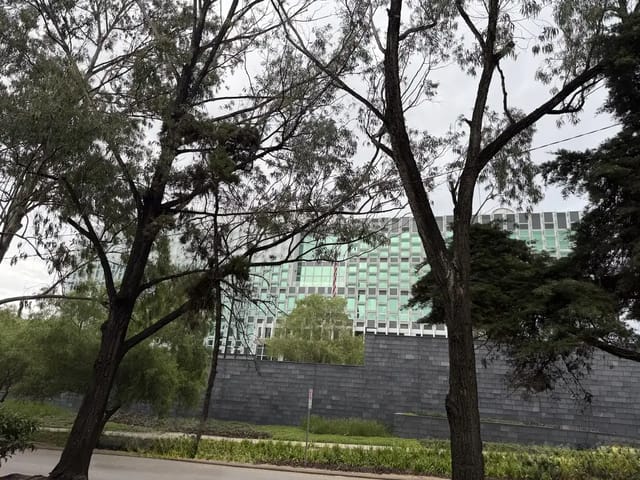
For Canadian retirees who want urban amenities (top restaurants, theaters, hospitals, US-brand shopping), Cayala and Zona 14 are the answer. Rent runs CAD 900-2,000 for modern apartments with security and amenities. Hospital Herrera Llerandi and Centro Medico are minutes away.
Canadian-specific tips
- Departure tax: Canada charges a “deemed disposition” tax on capital gains in non-registered accounts when you cease residency. Plan with an accountant before triggering — selling appreciated investments before the departure date may be cheaper than at the deemed-disposition step.
- RRSP / RRIF treatment: RRSPs are not deemed-disposed. RRIF withdrawals to Canadian non-residents face 25% withholding tax (sometimes 15% under the Canada-Guatemala tax treaty if claimed correctly).
- OAS clawback: OAS clawback (Recovery Tax) starts at ~CAD 90,000 of net world income. Most Canadian retirees in Guatemala stay below this and receive full OAS.
- Banking continuity: Keep a Canadian bank account open (Scotiabank, BMO, RBC). Use it for Service Canada deposits and Wise transfers to your Guatemalan account. A no-FX-fee credit card from Canada (Scotiabank Passport Visa Infinite, Brim, HSBC World Elite) saves 2-3% on every purchase.
Trámites & resources to bookmark
- Moving from Canada hub — full Canadian relocation pipeline
- Snowbird visa for Canadians — start with this if you’re testing Guatemala first
- Pensionado visa walkthrough — full Hugo guide to the pensionado application
- Healthcare in Guatemala — top hospitals, real cost data
- Cost of living in Guatemala — five-city comparison
- Antigua Guatemala overview — neighborhoods, schools, daily life
- Send money from Canada to Guatemala — moving CPP/OAS efficiently
How we verified this page
Last verified: May 2026. Pensionado income thresholds verified at Embassy of Guatemala in Washington (mirror of Canadian consulate guidance) and IGM Zona 4. Canadian apostille process verified with Global Affairs Canada Authentication Services post-Hague-accession (effective January 2024). Cost data from Living in Guatemala’s Q1 2026 cost-of-living tracker plus interviews with 18 Canadian residents in the four cities listed above. Tax content references CRA Folio S5-F1-C1 and the Canada-Guatemala tax treaty — consult a CRA-licensed advisor before triggering departure tax or RRIF withdrawals as a non-resident.
Frequently Asked Questions
Can a Canadian retire in Guatemala on CPP and OAS alone?
Yes if you live modestly. Combined CPP + OAS averages CAD 1,800-2,400/month, which covers a comfortable single-person retirement in Antigua, Lake Atitlan or Quetzaltenango with room for travel insurance and discretionary spending. A retired couple typically lives well on CAD 2,500-3,500 combined monthly.
Do CPP and OAS get paid in Guatemala?
Yes. Service Canada deposits CPP and OAS to Canadian bank accounts that you can access from Guatemala via Wise, Scotiabank Global Banking, or international ATM withdrawal. You can also receive CPP/OAS via direct deposit to a Guatemalan bank if it accepts CAD/USD wires (Banco Industrial, BAC). Most retirees keep payment going to Canada and pull funds via Wise.
What visa do Canadian retirees use to live in Guatemala permanently?
The pensionado route. Acuerdo IGM-016-2025 Art. 33 numeral 1 publishes the floor: verifiable monthly income of US$1,250, plus US$300 per dependent, from CPP, OAS, RRIF, an employer pension or an annuity. We do not quote a Canadian-dollar equivalent because the reglamento publishes the figure in US dollars. You bring apostilled pension statements and a Canadian background check (RCMP), and apply at a Guatemalan consulate in Canada or directly at IGM in Guatemala. Approval takes 4-8 months. Note the category: under Codigo de Migracion Art. 78 literal e) the rentista/pensionado route is permanent residency from the start, not a temporary step you convert after five years.
How much does private healthcare cost a Canadian retiree in Guatemala?
Private hospital outpatient visits run CAD 30-60. A specialist consultation CAD 60-100. Hospital inpatient day rates CAD 200-500 at Hospital Herrera Llerandi or Centro Medico (Guatemala City’s top private hospitals). Comprehensive expat health insurance for a healthy 65-year-old runs CAD 2,500-5,500/year via Cigna Global, GMS or Bupa. Out-of-pocket pay-as-you-go is also common — many Canadian retirees just self-insure for routine care.
Where do Canadian retirees actually live in Guatemala?
Antigua Guatemala (largest organized Canadian community, walkable colonial town, Spanish schools), Lake Atitlan (Panajachel + San Marcos for permanent retirees, more bohemian), Guatemala City Zona 14/Cayala (urban amenities, top hospitals nearby), and Quetzaltenango/Xela (cooler highland climate, lower cost, smaller foreign community). Antigua is the default choice for first-time movers.
What about Canadian taxes after retiring in Guatemala?
Cutting Canadian tax residency is a deliberate process — file Form NR73 (Determination of Residency Status), close Canadian residential ties (sell or rent house, close credit cards, etc), and Canada will treat you as non-resident. You still pay 15-25% withholding tax on CPP/OAS/RRIF withdrawals to Canadian non-residents. Guatemala does not tax foreign-source pension income for residents (consult a Guatemalan accountant to confirm).
Can my Canadian spouse who is not Canadian-pension-eligible also get pensionado residency?
Yes. The primary applicant must meet the pension income threshold; the spouse and dependent children are added as dependents on the same application without their own income requirement. There is a small additional government fee per dependent.