Returning to Guatemala from the United States is one of the most consequential decisions a Guatemalan in the diaspora can make. Whether you are coming back for retirement, family, a career change, or to raise your children in their heritage culture, the logistics span legal status, taxes, healthcare, banking, and household goods — across two systems that do not coordinate with each other.
This is the master checklist. We wrote it as Guatemalans, for Guatemalans coming home — not as American expat advice repackaged. The order matters: do these in sequence and the move stays manageable. Skip ahead and you will hit avoidable friction.
Quick summary for returnees: Refresh Guatemalan documents (passport, DPI, kids’ inscription) → settle US tax planning (FBAR, FATCA, FEIE, Social Security) → arrange healthcare bridge → handle vehicle and household goods → transition banking → register children for school. Each step has a dedicated guide linked below.
The honest reality before you start
Returning is rarely a single event — it is a 3 to 12 month transition. Most returnees underestimate two things:
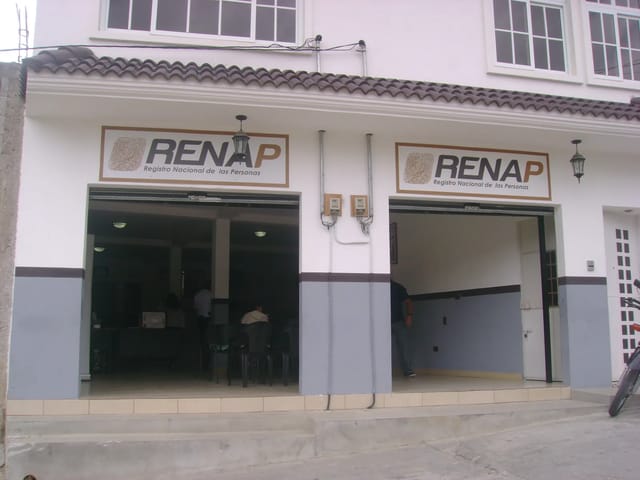
- Document lead time. Guatemalan passports and DPIs can take 8-16 weeks to process from a US consulate. Kids’ RENAP registration adds another 4-8 weeks on top. Start documents 6 months before your target move date.
- US obligations do not end when you board the plane. As a US citizen, you keep filing US taxes for life — including FBAR if you hold a Guatemalan bank account over $10,000 at any point in the calendar year. As a Medicare enrollee, you keep paying Part B premiums ($202.90 each month in 2026, or higher depending on income) if you want the option to return to the USA without penalty.
Get these two right and the rest of the move is logistics.
Step 1: Refresh your Guatemalan documents
Before anything else, make sure your Guatemalan papers are current. You will need them for everything from opening a bank account to enrolling kids in school.
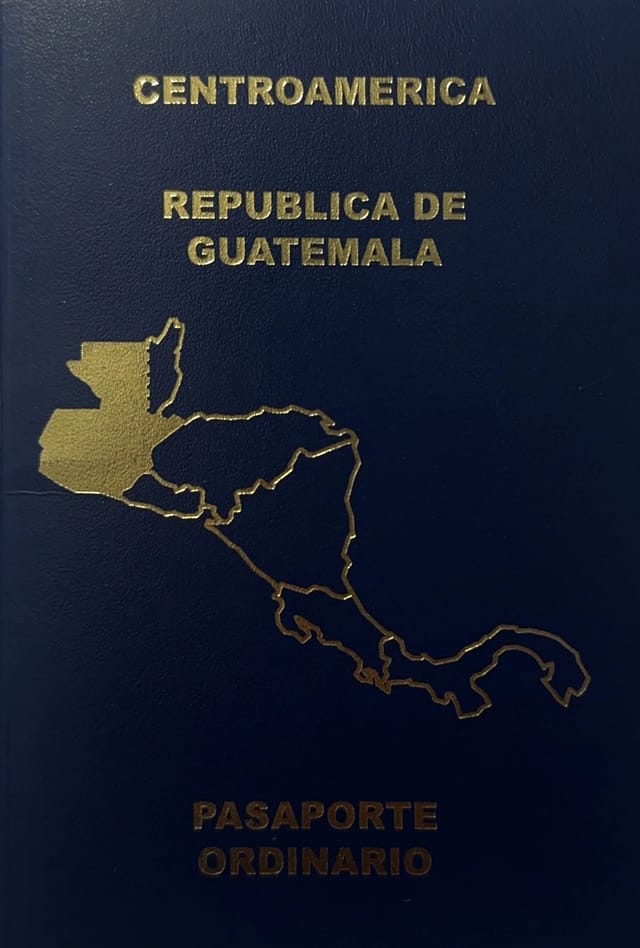
- Guatemalan passport. Renew at your nearest US consulate. See our Guatemalan passport guide for current fees and processing times. Allow 8-12 weeks.
- DPI (Documento Personal de Identificación). Required for almost every adult transaction inside Guatemala. If yours is expired or you have never had one, you can apply at a US consulate or wait until arrival to apply at RENAP. The DPI is the 13-digit number that also functions as your NIT for SAT purposes — see CUI-NIT consulta for the unified number rules.
- NIT (tax ID). If you already have a NIT, it stays valid and since March 2025 your CUI can be used alongside it. If you never registered with SAT, you still file the NIT request online (it works from abroad) — the CUI-NIT resolution does not register anyone.
- Dual nationality documentation. Most returnees are dual nationals — Guatemalan by birth or jus sanguinis, US by naturalization. Guatemala recognizes dual nationality fully. See US-Guatemala dual nationality for the rights and inheritance implications.
Bring your current US passport too. You will use it to enter Guatemala the first time, then your Guatemalan passport for everything thereafter (Guatemalan citizens must enter and exit using their Guatemalan passport — see poder consular for legal procedures from abroad).
Step 2: Settle US tax obligations as a future expat
This is where most returnees get blindsided. US citizenship-based taxation means you keep filing US returns forever, regardless of where you live.
- Form 1040 (regular US tax return). Continue filing annually with the IRS.
- Foreign Earned Income Exclusion (FEIE, Form 2555). Excludes up to $130,000 of earned income (2026) from US tax if you meet the Physical Presence Test (330+ days in Guatemala) or Bona Fide Residence Test. Applies only to earned income — not pensions, not Social Security, not investment income.
- FBAR (FinCEN Form 114). Required if your aggregate foreign accounts exceed $10,000 at any point in the calendar year. Penalties for non-filing start at $13,508 per violation and can reach 50% of account balances for willful violations. Due April 15 with automatic extension to October 15.
- FATCA (Form 8938). Separate from FBAR. Higher thresholds — $50,000 single filer at year-end or $75,000 anytime — and filed with your 1040.
Read the full breakdown: Tax Obligations When Returning to Guatemala from USA. For complex situations, hire a US-Guatemala dual specialist before you move, not after.
Step 3: Plan the healthcare transition
Healthcare is where the Medicare myth bites hardest. Medicare Parts A, B, and C generally do NOT cover services outside the United States. Read that sentence twice — many returnees discover this only when their first GT medical bill arrives.
- Keep Medicare Part B. Strongly recommended. The 2026 premium is $202.90 each month (or higher depending on income), and dropping it means you cannot re-enroll without penalty (10% per year missed, added to premium for life) if you ever return to the USA.
- Pay out-of-pocket at private hospitals. Centro Médico, Herrera Llerandi, Hospital Universitario Esperanza in Guatemala City, plus Centro Clínico Esperanza in Antigua. Costs are 70-90% lower than US equivalents.
- IGSS through a Guatemalan employer. If you take a salaried job in Guatemala, your employer enrolls you in IGSS, which covers care at IGSS hospitals. IGSS voluntary contribution is not a medical option: it covers IVS pensions only and requires at least 12 paid obligatory contributions in the last 36 months.
- Private insurance options. GT-based (BUPA, Pan American Life) or international expat plans (Cigna Global, GeoBlue, IMG, William Russell). Premiums typically $1,000-$3,500/year.
Full breakdown: Healthcare Transition When Moving from USA to Guatemala and our broader healthcare hub.
Correction, 23 September 2026. An earlier version of this page gave the 2026 Medicare Part B premium as about $185/month; medicare.gov lists “$202.90 each month” for 2026 (or higher depending on income). It also said IGSS voluntary affiliation covers public hospitals and prescriptions; IGSS’s March 2026 guidance says voluntary contribution covers IVS pensions only: “los beneficios no contemplan la cobertura de servicios médicos”. See our corrections policy.
Step 4: Decide about your vehicle
You have three options:
- Drive the car down. Cheapest if your vehicle is paid off and reliable. You handle border customs at the Tecún Umán or El Carmen crossings.
- Ship it by container. Worth it mainly for rare or collector vehicles, and you pay IVA and IPRIMA on arrival. Menaje de casa never covers vehicles (RECAUCA art. 585): the menaje de casa exemption is for household goods only, and for Guatemalans returning after 24 months abroad it waives 25-70% of the import duty by SAT resolution, never the IVA.
- Sell in the USA and buy in Guatemala. Often the simplest path — Guatemala has a mature used-car market and you avoid import duties entirely.
Full guide: Importing a US Vehicle to Guatemala.
Step 5: Transition your banking
Most returnees keep at least one US bank account. You will need it for:
- US Social Security direct deposit
- Pension or 401(k) distributions
- Continued US tax refunds
- Backup card when GT ATMs misbehave
- Receiving Wise/Remitly transfers from US-side family
Banks vary widely in how they treat customers with a Guatemalan address. Some close accounts; others (Schwab, Wise, Fidelity, Charles Schwab International) actively serve expats. See Keeping Your US Bank Account While Living in Guatemala for which banks are returnee-friendly.
On the Guatemalan side, open a quetzal account at a major bank (Banco Industrial, Banrural, G&T Continental, Banco Promerica). Some also offer USD-denominated accounts — see our USD accounts comparison for which institutions support dollar deposits without forced conversion.
Track exchange rates daily — see exchange rates for the live Banguat rate.
Step 6: Set up US Social Security and pensions
If you are at or near retirement age, this is the single biggest financial conversation of the return.
- Direct deposit to US bank account. Cleanest path. You then transfer to Guatemala via Wise or a US broker.
- International Direct Deposit (IDD) to GT bank. SSA pays directly to Guatemalan bank in quetzales. Conversion fees apply.
- GT taxation. Guatemala does NOT tax US Social Security under the territorial principle, provided the funds are paid into a US bank first. Direct deposit into a GT bank account may change the character — consult a GT tax professional.
- Annual SSA Foreign Enforcement Questionnaire. Required for any beneficiary living abroad.
Full breakdown: Receiving US Social Security and Pensions in Guatemala.
Step 7: Register children and enroll in school
US-born children of Guatemalan parents are Guatemalan citizens automatically at birth (jus sanguinis, Constitution Art. 144). However, citizenship is automatic — registration is what unlocks the DPI, passport, school enrollment, and IGSS access.
- Register at a Guatemalan consulate while still in the USA (best option).
- Or register at RENAP after arrival in Guatemala — slower but possible.
- Documents needed: apostilled US birth certificate, certified Spanish translation, parent’s DPI or passport, parent’s marriage certificate if applicable.
Then enroll in school — see return to Guatemala school enrollment for the academic-year calendar and document mismatch challenges.
Full breakdown: Bringing US-Born Kids When You Return.
Step 8: Property and housing
Will you rent or buy? Most returnees rent for 6-12 months first to confirm the city, neighborhood, and lifestyle fit before committing capital.
If you do buy, your dual-national status is a major advantage — you can buy in ANY zone, including beachfront and lakefront, because the Article 122 foreigner restrictions do NOT apply to Guatemalan citizens. See Buying Property in Guatemala as a US Returnee for the title search, RGP verification, and transaction cost breakdown.
Returnee checklist summary table
| Phase | Task | Lead time | Where |
|---|---|---|---|
| 6 months out | Renew Guatemalan passport | 8-12 weeks | US consulate |
| 6 months out | DPI renewal or first issuance | 8-16 weeks | US consulate or RENAP |
| 5 months out | Register US-born kids at RENAP/consulate | 8-16 weeks | Consulate or RENAP |
| 4 months out | US tax specialist consult | 2-4 weeks | US-based CPA |
| 3 months out | Healthcare plan decision (keep Part B, choose GT option) | Ongoing | US + GT |
| 3 months out | Vehicle decision (drive, ship, sell) | 4-8 weeks | SAT / customs broker |
| 2 months out | Set up US bank for SSA direct deposit | 2-4 weeks | US bank |
| 1 month out | Notify SSA of address change | 2 weeks | SSA |
| Arrival | Open GT bank account | 1-3 days | GT bank |
| Month 1 | Enroll kids in school | 1-2 weeks | School + RENAP |
| Month 1-6 | File first FBAR (April 15 next year; automatic extension to October 15) | Annual | IRS / FinCEN |
| Month 6-12 | Property purchase if buying | 2-4 months | RGP + notary |
Returnee resources hub
- US-Guatemala Dual Nationality — rights, inheritance, voting
- Tax Obligations When Returning — FBAR, FATCA, FEIE detail
- Healthcare Transition — Medicare reality + GT alternatives
- Importing a US Vehicle — customs and plates
- Menaje de Casa: Household Goods and Import Duty — the container move: who qualifies, inventory format, and why IVA is still due
- Keeping Your US Bank Account — returnee-friendly banks
- Receiving US Social Security — direct deposit options
- US-Born Kids and Return — RENAP, school, documents
- Buying Property as a Returnee — dual-national advantages
- Voting from USA — if you keep US residence, register before TSE deadline
- Poder Consular — power of attorney from abroad
- Sending Packages Home — before your move
A note from us
Most “moving to Guatemala” content online is written by American expats who arrived as foreigners. Their advice — about visas, residency permits, foreigner property restrictions — does not apply to you. You are coming home as a Guatemalan citizen with full rights.
The returnee path is genuinely simpler in many ways: no residency permit, no visa renewal, no foreigner property restrictions, no foreigner work limitations. The hard parts are the cross-border tax and healthcare logistics, which this guide and the linked deep-dives address.
If you have a specific question we have not covered, email stu@livinginguatemala.com. The site owner is Guatemalan and has walked this path himself.
Frequently Asked Questions
How long does it take to fully return to Guatemala from the USA?
Plan 3-12 months end-to-end. Document refresh (Guatemalan passport, DPI, kids’ RENAP inscription) takes 2-4 months. Tax planning with a US-Guatemala specialist takes 1-2 months. Vehicle import, household shipping (menaje de casa), and bank transitions take another 2-4 months. Returnees who plan the sequence — documents first, then taxes, then logistics — finish faster and with fewer surprises.
Do I lose my US citizenship if I move back to Guatemala?
No. US citizenship is permanent unless you formally renounce it at a US consulate (a deliberate, paid process). Simply moving to Guatemala has zero effect on your US citizenship. You remain a US citizen for life, including the obligation to file US taxes annually regardless of where you live.
Will my US Social Security keep paying when I live in Guatemala?
Yes, if you are a US citizen. The SSA classifies Guatemala in its country list that allows full payment of retirement, survivors, and disability benefits to US citizens living there. Direct deposit to a US bank account is the simplest option. Non-citizens (green card holders or those who never naturalized) face stricter rules and may see benefits stop after 6 months abroad.
Can I bring my US car to Guatemala?
Yes, but you pay the import taxes. The import duty (DAI) on cars is 0%; what you pay is 12% IVA plus IPRIMA, which is set by vehicle type, not by year or engine size: 20% for a car up to 5 seats, 15% for 6-9 seats or a 4x4 with a two-range transfer case, 10% for a motorcycle, 5% for a hybrid or electric vehicle (Decreto 10-2012 art. 114). Menaje de casa does not help: RECAUCA art. 585 says vehicles are never part of it. See our vehicle import guide for the full breakdown.
Do I need a Guatemalan DPI if I have a US passport?
Yes. If you are Guatemalan-born or registered through jus sanguinis, you need a DPI to open bank accounts, sign contracts, enroll kids in school, register property, and use IGSS. A US passport alone is not sufficient inside Guatemala. Renew your DPI at the nearest Guatemalan consulate before your move, or at RENAP after arrival.
Do my US-born kids automatically become Guatemalan citizens when we return?
Citizenship is automatic from birth under jus sanguinis (Art. 144), but registration is required. If you did not register them at a Guatemalan consulate while in the USA, you can register them at RENAP after arrival using their apostilled US birth certificate, translated to Spanish, plus your own Guatemalan documents. Children receive their first DPI at age 7.
Is there a Guatemalan tax I need to worry about as a returnee?
Guatemala uses a territorial tax system — only Guatemala-source income is taxed. Your US Social Security, US pension, US rental income, and US investment dividends are generally NOT taxed by Guatemala. The tax you keep facing is the US side: as a US citizen you must file IRS Form 1040 annually, plus FBAR (FinCEN 114) if your foreign accounts exceed $10,000 combined, plus FATCA Form 8938 above higher thresholds.