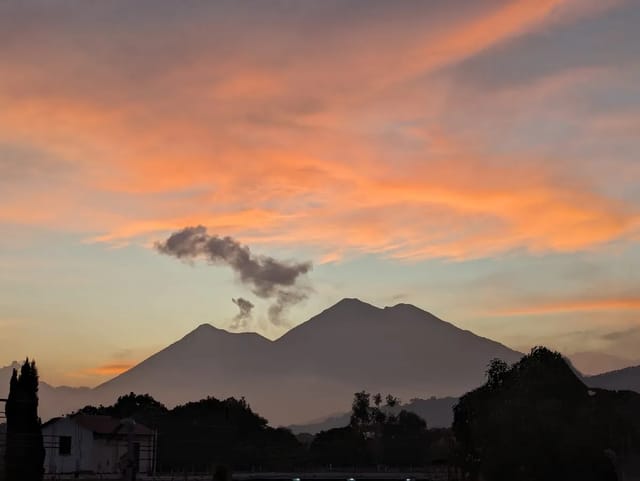

Cayalá is Zone 16 of Guatemala City — a master-planned, walkable, gated upscale district centered on the Paseo Cayalá mixed-use development (inaugurated 2011). It is the most expensive residential area in Guatemala City and the safest neighborhood density in the country. A 2-bedroom apartment inside Paseo Cayalá runs $1,800-4,500/month; surrounding gated houses run $2,200-5,500. You are paying for walkability, gigabit internet, 24/7 private security, and Western-coded retail — at a 40-80% premium over equivalent square footage in Zone 14. It works for diplomats, executives, expat transferees, and wealthy Guatemalan families. It does not work for anyone wanting authentic Guatemalan immersion or anyone on a budget.
What Cayalá Actually Is
Cayalá is not a separate city. It is a master-planned mixed-use development inside Zone 16 of Guatemala City, inaugurated in 2011 by the Cayalá Real Estate group. The architects modeled it loosely on European pedestrian quarters — uniform building heights, ochre and terracotta facades, cobblestone-style pedestrian streets, plazas with fountains, and zero vehicular traffic in the core. Cars enter through controlled access points and park in underground garages or peripheral surface lots.
The development sits on a hilltop in Zone 16, surrounded by older gated residential communities (Cayalá Real, Cumbres de Cayalá, Bosques de Cayalá, Las Praderas de Cayalá) that predate the Paseo development by 5-15 years. Together, this cluster forms what most people mean when they say “Cayalá” — Paseo Cayalá at the center plus the residencias radiating outward.
The demographic is unmistakable: upper-middle class Guatemalan families, diplomats from the embassies cluster nearby, executives at multinationals headquartered in Zones 10 and 14, expat corporate transferees on housing allowances, wealthy retirees, and Universidad Francisco Marroquín (UFM) faculty and graduates. UFM — Guatemala’s most expensive private university and a stronghold of free-market and Austrian-school economics — sits adjacent to Cayalá and contributes heavily to the area’s character.
The Housing Comparison
Prices in USD/month, furnished where indicated, based on active encuentra24.com listings and owner field research. Cayalá is unusual in Guatemala in that USD pricing is the norm rather than quetzales — landlords expect international-coded tenants.
| Sub-area | Type | 2BR Rent (USD/mo) | Walkable to Paseo? | Security tier | Best for |
|---|---|---|---|---|---|
| Inside Paseo Cayalá | Apartment | $1,800–4,500 | ⭐⭐⭐⭐⭐ Already there | ⭐⭐⭐⭐⭐ | Single executives, couples, no-car lifestyle |
| Cayalá Real | Gated houses | $2,500–5,500 | ⭐⭐⭐⭐ 5-min walk | ⭐⭐⭐⭐⭐ | Families with 1-2 kids, upgrade buyers |
| Cumbres de Cayalá | Gated houses | $2,200–4,500 | ⭐⭐⭐ 10-min walk | ⭐⭐⭐⭐⭐ | Families wanting more space, larger lots |
| Bosques de Cayalá | Gated houses | $2,500–5,000 | ⭐⭐⭐ 10-15 min drive | ⭐⭐⭐⭐⭐ | Larger families, more privacy, mature trees |
| Las Praderas de Cayalá | Mixed houses + small condos | $1,800–3,800 | ⭐⭐ Drive only | ⭐⭐⭐⭐⭐ | Budget-end of Cayalá, smaller families |
Price comparison: A 2BR equivalent in Zone 14 (Edificios on Avenida Las Américas) runs $1,200-2,800/month — roughly 30-50% less than equivalent square footage in Cayalá. Zone 10 condos run $1,400-3,200/month. The Cayalá premium is real and consistent.
Inside Paseo Cayalá — The Apartments
The apartments inside Paseo Cayalá itself are the defining residential product of the area. The buildings sit above the retail level, accessed by private elevators with key-card entry. Most units are 2-bedroom, ranging from compact 80m² (~860 sq ft) units to spacious 150-200m² (~1,600-2,150 sq ft) layouts with terraces overlooking the plazas.
Rent runs $1,800-4,500/month furnished. The lower end ($1,800-2,500) gets you a smaller unit, possibly facing the parking side rather than the plaza, with standard developer finishes. The mid-range ($2,500-3,500) gets you a plaza-facing unit, larger floor plan, upgraded kitchen and bathroom finishes. The upper tier ($3,500-4,500+) gets you penthouse-tier units with terraces, premium materials, and views down Calle Real toward the volcanoes on clear days.
The defining benefit is what you do not need a car to access: groceries (Walmart Express right inside the development plus a smaller Paiz market), restaurants (50+ within walking distance), pharmacies, banks, the Cinépolis cinema, dry cleaners, gyms, doctors, dentists, hair salons. Paseo Cayalá is engineered as a self-contained urban environment, and unlike the rest of Guatemala City, the engineering actually works.
The constraint is the apartment shell itself. Most units are designed for couples or single executives, not families. Storage space is minimal by US suburban standards. Closets are small. Kitchen appliances are typically European-sized (compact dishwashers, smaller refrigerators). Families with 2+ children almost always rent a house in the surrounding residencias rather than a Paseo apartment.
Who Paseo apartments are for: Diplomats on embassy housing, single corporate transferees, couples without children, retirees who want walkability, remote workers who need everything within 200 meters of their door.
Who should look at the residencias instead: Families with 2+ children, anyone bringing significant furniture or storage from abroad, anyone who wants outdoor private space (a yard rather than a terrace).
The Surrounding Residencias
Four gated residential developments surround Paseo Cayalá, each with its own character and price point. All four predate the Paseo development and have a more conventional Guatemalan upper-class residential character — single-family homes on lots, walled compounds, controlled access at the entrance.
Cayalá Real is the closest residencia to Paseo Cayalá and the most expensive of the four. Houses are 250-450m² on lots of 200-400m². Architecture is uniformly Mediterranean-influenced (terracotta tiles, white stucco, wrought-iron details). Many residents are 5-minute walks from Paseo Cayalá and treat the development as their extended living room. Rent runs $2,500-5,500/month for 3BR-4BR houses. Buy prices: $400,000-900,000 USD.
Cumbres de Cayalá is slightly more spacious and somewhat further from Paseo (10-minute walk or 5-minute drive). Houses are larger (300-500m²) on bigger lots (300-600m²). Rent runs $2,200-4,500/month. The vibe is more residential-suburban than Cayalá Real’s tighter density. Families with school-age children predominate.
Bosques de Cayalá sits further north, with mature trees and the most privacy of the four residencias. Lots are 400-800m². Houses are 350-600m². Rent $2,500-5,000/month, buy $500,000-1.2M. Reaching Paseo Cayalá requires a 10-15 minute drive — too far for daily walking. The compensation is the trees, the quiet, and the larger plots.
Las Praderas de Cayalá is the budget end of the cluster — smaller lots, slightly older construction (1990s rather than 2000s), some condo-style units alongside the houses. Rent $1,800-3,800/month, buy $250,000-600,000. For families who want the Cayalá zip code and security profile but cannot stretch to Cayalá Real prices, Las Praderas is the practical option.
Who Cayalá Is Actually For
Diplomats and Embassy Staff
The US Embassy is in Zone 10, but Canadian, European, and several Latin American embassies have staff housing in Cayalá specifically because of the security profile. The standard housing allowance for mid-level diplomatic staff covers Cayalá rents comfortably.
Corporate Transferees
Multinationals headquartered in Zone 14 (Coca-Cola FEMSA, Walmart Centroamérica, Cervecería Centro Americana, Cementos Progreso) routinely place expatriate transferees in Cayalá. The corporate housing budget for senior international hires generally lands in the $2,500-4,500/month range, which is precisely the Cayalá apartment + residencia overlap zone.
UFM Faculty and Affiliated Wealthy Guatemalan Families
Universidad Francisco Marroquín sits adjacent to Cayalá, and its faculty and many of its students’ families live in the area. UFM’s institutional culture (free-market economics, libertarian-influenced, English-comfortable) aligns with the international-coded character of Cayalá.
Wealthy Retirees
Cayalá’s combination of walkability, security, and Western retail makes it disproportionately attractive to wealthy retirees from the US, Canada, and Europe who want Guatemala’s lower cost-of-living and weather but cannot or will not live in less-controlled environments. The retiree demographic concentrates in Paseo Cayalá apartments rather than the residencias.
Wealthy Guatemalan Families (Especially Returnees)
Guatemalans who lived abroad for 10-30 years and returned often choose Cayalá specifically because it feels familiar from their time in the US or Europe. The Western-coded retail, walkability, and security replicate aspects of life abroad in a way that Zone 14 or Zone 10 do not.
Internet, Utilities, and Infrastructure
Cayalá has the best residential internet infrastructure in Guatemala. Both Tigo Fiber and Claro Fiber offer gigabit (1,000 Mbps) symmetric plans for $40-80/month depending on bundling. Apartments inside Paseo Cayalá are pre-wired for both. Surrounding residencias have fiber installed at the home level.
Reliability is excellent — outages are measured in hours per year, not hours per week. The remote-work and corporate-transferee demographic depends on this infrastructure, and the providers know it; SLA-grade business plans (with redundant connections) are also available for $150-300/month for residential subscribers willing to pay.
Electricity is from EEGSA (the more reliable Guatemala City utility, contrasted with ENERGUATE which serves outer departments). Outages are rare and brief. Most apartment buildings inside Paseo Cayalá have backup generators that kick in within 5-10 seconds of an outage. Surrounding residencias have higher rates of generator ownership at the household level than any other neighborhood in Guatemala City.
Water service is municipal (EMPAGUA) and consistently reliable in Cayalá — the area was developed with proper water infrastructure from the start, unlike many older neighborhoods that retrofit municipal connections. Backup cisterns exist in most apartment buildings but are rarely needed.
Cell coverage from Tigo and Claro is excellent. 5G is available in patches.
The Critique: “Disneylandia”
Locals — particularly Guatemalans from older Zone 1, Zone 4, and Zone 9 backgrounds — call Cayalá “Disneylandia” or “Europa Falsa” (fake Europe). The criticism is structural: the development is master-planned, the architecture is uniform, the retail is overwhelmingly Western (US chains, international brands), and the demographic skew is so pronounced that you can spend weeks inside Cayalá and never encounter the working-class Guatemala that constitutes 80% of the country.
This is real. If you came to Guatemala specifically to experience Guatemala, Cayalá will disappoint you. The chicken bus does not run here. Street vendors are not allowed inside Paseo Cayalá. The food court is heavily international (sushi, Italian, French, American steakhouse) rather than traditional Guatemalan. Even the marimba — which plays in nearly every other plaza in Guatemala — is conspicuously rare in Cayalá.
The trade-off is the entire pitch. You are paying a premium specifically for an environment that does not include the rougher edges of Guatemalan life. People who want those edges should live in Zone 4 (the bohemian-creative-edge district), Zone 1 (the historic core, more working-class), or Zone 10 (mixed, somewhat more authentic). People who want exactly what Cayalá delivers — safety, walkability, predictability, Western retail, security at a level you simply cannot get elsewhere in Guatemala City — will find it nowhere else.
Both choices are legitimate. Pick deliberately.
Schools and Family Considerations
The schools serving Cayalá families are among the most expensive in Guatemala. The standard cluster:
- Colegio Americano de Guatemala (CAG) — bilingual English-Spanish, US accreditation, $9,000-14,000/year
- Colegio Maya — IB program, English-medium, $11,000-16,000/year
- Colegio Internacional Montessori — Montessori method, $5,000-9,000/year for older grades
- Liceo Javier — Jesuit, Spanish-medium, $4,000-7,000/year (the most “Guatemalan” of the cluster)
Most school commutes are 10-25 minutes by car from Cayalá. Several schools run private bus services that stop at the gates of Cayalá Real and Cumbres. Tuition costs scale with grade level — kindergarten is the cheapest tier, secondary is the most expensive.
For families bringing teenage children into the country, the IB program at Colegio Maya is the standard choice if college admissions in the US, Canada, or Europe is the goal. For younger children, CAG and Montessori are the most common picks. Liceo Javier is the choice for Guatemalan families who want their children educated in Spanish and immersed in Guatemalan culture, not the international expat bubble.
Getting Around: The Uber + Walking Stack
There is no public transit serving Cayalá meaningfully. The TransMetro bus system does not run to Zone 16. Chicken buses do not service the area. The infrastructure is car-dependent at the macro level.
But Uber works perfectly here. Coverage is dense, response times are 3-7 minutes, and prices are cheap by US standards: Q25-40 ($3-5) to Zone 10 or Zone 14, Q40-60 ($5-8) to the airport, and an app-quoted fare to Antigua — expect more than the ~Q320 airport–Antigua run, since Cayalá sits farther out (about an hour’s drive). Ride-share is the standard mobility solution for non-car-owning Cayalá residents.
For residents with cars, the area is straightforward to drive in — wide boulevards, low traffic density compared to central Guatemala City, controlled gates at residencias. Parking inside Paseo Cayalá is included with apartment rentals (1-2 spaces) and abundant in surface lots for visitors.
The functional pattern most Cayalá residents adopt:
- Inside the development: walk
- To Zone 10/14 (work, dentist, specialty stores): Uber or own car
- To airport, Antigua, lake: own car or hired driver
You can live in Cayalá car-free as a retiree or single corporate transferee. Families with children almost always have at least one car for school runs, weekend trips, and bulk grocery hauls.
Buy vs. Rent
The Cayalá real estate market favors renters more than buyers, in our assessment. A few reasons:
Rents are high but transparent. You see the price, you sign a lease, and you know your housing cost for 12-24 months. No surprises.
Buy prices are very high in absolute terms. A 2BR Paseo Cayalá apartment lists at $250,000-450,000 USD. A house in Cayalá Real lists at $500,000-1,200,000. These are New York or Los Angeles prices in a country where the median household income is approximately $9,000/year. The market is liquid for international buyers, but it is thin for resale — finding a buyer at your asking price can take 6-18 months.
Property taxes and maintenance fees stack up. Cayalá apartment HOA fees run $200-500/month. Annual property taxes are 0.9% of declared value, generally underdeclared. Maintenance reserves for the residencias add another $100-300/month in implicit costs.
The political and economic context adds risk. Guatemala is politically stable but not bulletproof. Currency stability is generally good but the quetzal has weakened periodically (currently about Q7.63 = $1, historically as weak as Q8.4). Real estate price stability over 5-10 year holds is real but not guaranteed.
The pattern most expat transferees adopt is to rent for a 2-4 year posting, then leave when the assignment ends. The pattern most retirees adopt is to rent for 1-2 years to confirm the choice, then either buy or relocate to a smaller town (Antigua is the most common second-stage destination). Buying directly upon arrival, without a year of in-country lived experience, is rarely the optimal sequence.
Frequently Asked Questions
How much does an apartment in Cayalá cost in 2026?
A 2-bedroom inside Paseo Cayalá rents for $1,800-4,500/month furnished, depending on building, view, and finishes. A 1-bedroom runs $1,200-2,400. The surrounding gated residencias of Zone 16 (Cayalá Real, Cumbres de Cayalá, Bosques de Cayalá) offer 2BR-3BR houses for $2,200-5,500/month. Cayalá is the most expensive residential zone in Guatemala City — you are paying a 40-80% premium over Zone 14 for walkability and security.
Is Cayalá actually safe?
Yes — Cayalá is among the safest places in Guatemala City, full stop. The development is enclosed, private security covers every entrance and the main pedestrian streets 24/7, and PNC presence is light because private security handles everything. Surrounding gated communities (residencias) in Zone 16 are equally controlled. Crime inside Paseo Cayalá is essentially limited to occasional vehicle break-ins in surface lots.
What internet is available in Cayalá?
Both Tigo Fiber and Claro Fiber serve Cayalá with gigabit (1,000 Mbps) plans for $40-80/month. Reliability is excellent — outages measured in hours per year, not per week. Apartments inside Paseo Cayalá are pre-wired for fiber. Surrounding residencias all have fiber installed.
Who is Cayalá actually right for?
Diplomats and embassy staff, executives at multinationals, expat corporate transferees on housing allowance, wealthy retirees, and upper-middle class Guatemalan families. It is not for budget-conscious newcomers, anyone seeking authentic Guatemalan immersion, or families on a single household income under $80,000/year.
What’s the criticism of Cayalá?
Locals call it “Disneylandia” or “fake Europe” — the development was master-planned and inaugurated in 2011, and the architecture, retail, and demographic are all uniform and Western-coded. People wanting Guatemala “as it really is” should look at Zone 4 or Zone 1. People wanting safety, walkability, and a controlled environment will love Cayalá precisely for the same reasons critics dislike it.
Can I get around Cayalá without a car?
Inside Paseo Cayalá itself — yes, completely. Beyond the development, you need Uber or a car. There is no public transit serving Cayalá. Uber works perfectly and is cheap by US standards (Q25-60 for most rides). For weekly grocery runs, a car is more convenient.
Related Cayalá Resources
- Restaurants and Cafes in Paseo Cayalá — 25+ spots compared, from Tre Fratelli to local picks
- Things to Do in Cayalá — Paseo Cayalá Mall, Cinépolis, Mercado Cayalá, weekend programming
- Guatemala City Cost of Living — full-city comparison across zones
- Internet Speeds in Guatemala — ISP options and tier-by-tier comparison
- Every Cayalá and zone 16 sale listing we track, one grid