The Honest Map of British Expats in Guatemala
The British community in Guatemala is small — estimated 1,000-2,000 across the country, dwarfed by ~30,000-50,000 Americans — but it’s geographically concentrated. Three places hold the great majority:
- Antigua Guatemala — the largest, most walkable, most social
- Guatemala City (zones 14, 15, 10, plus Cayala) — the most cosmopolitan, best for families with kids in school
- Lake Atitlan (Panajachel, San Marcos, San Pedro) — the cheapest, most beautiful, most retiree-and-bohemian
A handful live in Quetzaltenango (Xela), Coban, Monterrico, Rio Dulce, or rural locations, but those are individual choices rather than communities.
Below: a tour of each, with the honest pros, cons, and what you’ll find when you land.
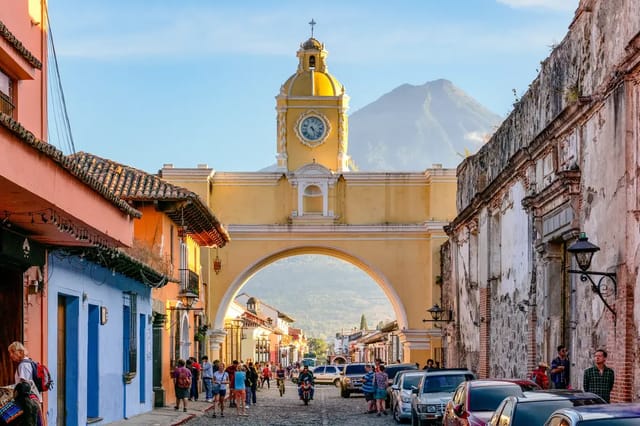
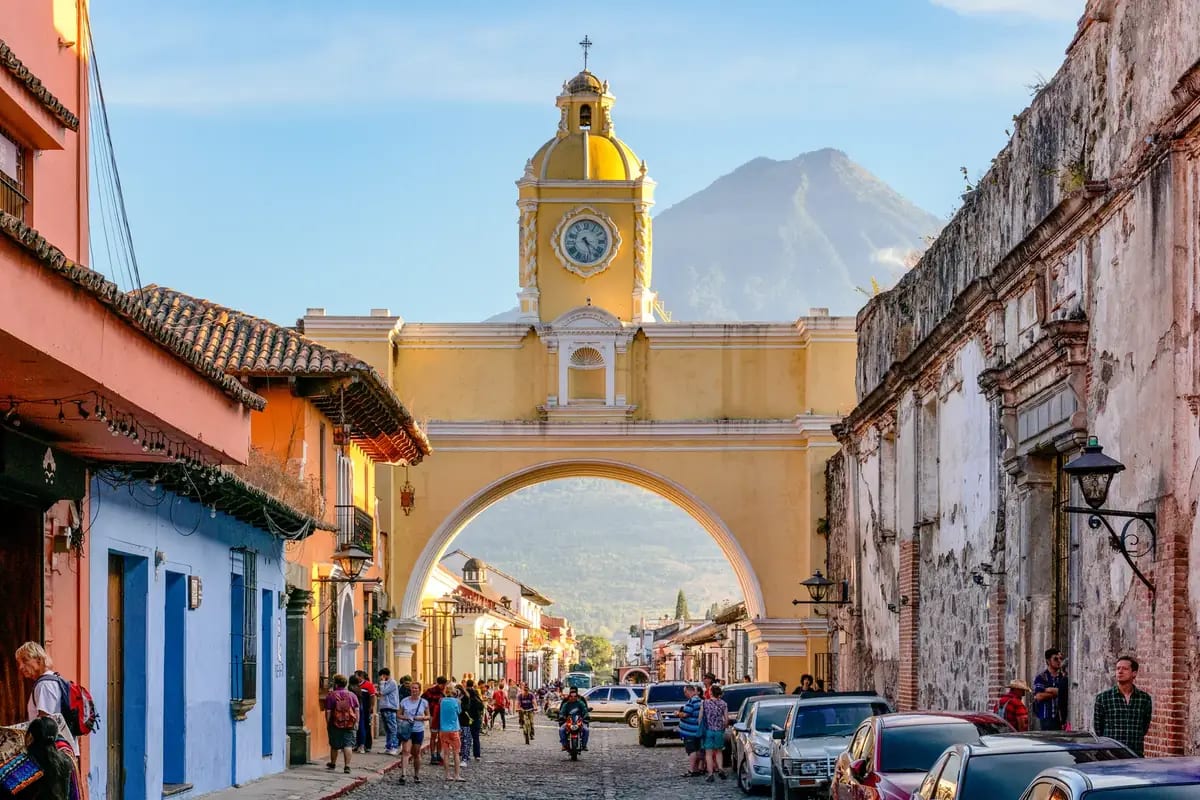
Antigua Guatemala — The Default British Choice
Location: 30-45 minutes by car from La Aurora International Airport (Guatemala City), depending on traffic. At 1,530m elevation, the climate is mild year-round — typically 10-25°C, no air conditioning needed, no central heating needed.
Why Brits like it:
- Walkable colonial centre, cobbled streets, no need for a car
- Largest concentration of English-speakers in Guatemala
- Multiple Spanish language schools (good if you arrive without Spanish)
- Mature expat services — international clinics, English-speaking lawyers, accountants, real estate agents
- Strong cafe and restaurant scene, often expat-owned
- 30 min to La Aurora airport for flights home
British social infrastructure:
- Reilly’s Irish Pub (Calle del Arco area) — the regular British/Irish/Australian hangout
- The Snug — smaller pub-style venue
- Cafe No Se — bohemian bar scene with mixed expat crowd
- British Society of Guatemala — informal Facebook + WhatsApp network, occasional meet-ups
- Anglican services — periodic at major holidays, often at the Cathedral of Santiago or private locations
- Antigua Country Club — golf, tennis, occasional cricket (intermittent)
Where to live in Antigua:
- Centro Historico — colonial centre, most walkable, most expensive (£500-1,200/month furnished 1-bed)
- San Felipe / Jocotenango — northern neighbourhoods, 10 min walk to centro, quieter, cheaper
- Pastores / Ciudad Vieja — outlying villages, larger houses, need a car, much cheaper
- San Lucas Sacatepequez — between Antigua and GC, hybrid commuter option
Estimated British population: 200-400 in Antigua proper + surrounding villages.
Downsides:
- More expensive than Lake Atitlan or rural Guatemala
- Tourist-heavy on weekends and Semana Santa — centro can feel crowded
- Limited international schools (primary only) — secondary-age kids commute to GC
Guatemala City — For Families, Executives, and Big-City Life
Why Brits choose Guatemala City over Antigua:
- International schools (Colegio Britanico, Colegio Maya, American School)
- Big-city amenities (shopping, restaurants, cinema, gyms)
- Direct embassy access
- Modern infrastructure (highways, hospitals, supermarkets)
- For working professionals: the actual jobs are here
Zone 14 / Cayala — The Modern Expat Hub
Cayala is a master-planned mixed-use district in Zone 14: walkable, designed in Spanish colonial revival style, with shops, restaurants, residences, offices, schools, churches, and clinics all within walking distance. It feels closer to a European neighbourhood than typical Latin American sprawl.
Why families love Cayala:
- Walkable in a country where most cities aren’t
- International schools nearby
- Security is excellent (gated, patrolled)
- Restaurants and shops aimed at international tastes
- 20-30 min to airport, 45 min to Antigua
Cost: Higher than Antigua. A 2-bed furnished apartment in Cayala runs £1,000-2,000/month; the same in Antigua is £600-1,200.
Zone 15
Quieter residential zone, larger plots, more traditional Guatemalan upper-middle-class feel. Several international schools nearby. Less walkable than Cayala but still safer-grade infrastructure. Good for families wanting a house with a garden.
Zone 10
Diplomatic district. Embassies (British, US, EU member states), 4-5 star hotels (Camino Real, Westin, Real Intercontinental), upmarket restaurants. Few permanent British residents — more transient: embassy staff, business travellers, short-term assignments.
Zone 4
Emerging creative district, smaller arts scene, lower-cost. A few digital nomads and younger Brits.
Estimated British population in GC: 300-500.
Lake Atitlan — The Cheap and Beautiful Option
Lake Atitlan is ~3 hours by car west of Guatemala City. Three towns along the lake hold most of the expat population:
Panajachel — The Main Town
The largest, most accessible lake town. Sometimes called “Gringotenango” for its long-established American/European presence since the 1970s. Beat-up backpacker vibe coexists with established expat retiree community.
Climate: 1,560m altitude. Slightly warmer than Antigua (similar elevation but different microclimate). Mountain views from everywhere.
Cost: Considerably cheaper than Antigua. A 1-bed furnished house can be £300-700/month.
British infrastructure: Limited — a few bars/restaurants run by English-speaking owners, informal expat WhatsApp groups, no Anglican services, no British school. Most Brits here are retirees or remote workers who don’t need formal community infrastructure.
San Marcos La Laguna
The bohemian end of the lake. Yoga, meditation retreats, raw food cafes, hostels. Smaller scale than Panajachel — perhaps 1,000 expats including a smattering of Brits, mostly drawn by the wellness/spiritual scene.
San Pedro La Laguna
Younger, more party-oriented than San Marcos. Spanish-language schools, hostels, backpacker scene. Some digital nomads. Less British presence than San Marcos or Panajachel.
Estimated British population at Lake Atitlan: 100-200 across all three towns.
Quetzaltenango (Xela) — The Authentic Highland Option
Guatemala’s second-largest city, in the western highlands at 2,330m. Cool year-round (10-22°C), cobbled colonial core, large Spanish-language-school industry.
Why a few Brits choose Xela:
- Authentic Guatemalan town with relatively few foreigners
- Spanish-immersion-friendly
- Cheaper than Antigua (£200-500/month furnished 1-bed)
- Beautiful highland setting
- Access to volcanoes and Western highlands
Why most Brits don’t:
- Much smaller English-speaking community
- Limited international schools or services
- Cooler climate may not suit retirees
- 4-hour drive from La Aurora airport
Estimated British population in Xela: 30-100.
Other Locations
- Rio Dulce + Livingston (Caribbean coast): Sailing community, mostly American boat-owners. A handful of Brits, mostly seasonal.
- Monterrico (Pacific coast): Beach town, mostly Guatemalan weekenders. Small expat presence.
- Coban (Alta Verapaz): Cloud forest, coffee region. Few foreigners, no British community.
Schools for British Children
Colegio Britanico-Guatemalteco (Guatemala City)
The flagship British curriculum school in Guatemala. Follows the English National Curriculum from Reception through Sixth Form. Offers IGCSE (taken around age 16) and A-Levels (age 18) — directly compatible with UK university entry.
- Location: Zone 16, Guatemala City
- Fees: Approximately £4,000-7,500/year (depending on age and currency conversion). Compare to £35,000+ at equivalent UK independent schools.
- Student body: Mix of British expat children and wealthy Guatemalan families seeking British curriculum
- Language: Primary teaching language English, Spanish as second language
Other International Schools (Guatemala City)
- Colegio Maya — American curriculum + International Baccalaureate
- American School of Guatemala — full American curriculum
- Colegio Aleman — German curriculum
- Colegio Suizo Americano — Swiss/American curriculum
- Colegio Sagrado Corazon — Catholic American
Antigua
Smaller international primary options:
- Antigua International School — American curriculum, primary + lower secondary
- Escuela Caracol — Waldorf method, bilingual
- Several bilingual primary schools
For secondary education in Antigua, most expat families either:
- Commute their kids to Guatemala City schools (long drive)
- Home-school using UK or US online curricula
- Enrol in local bilingual Guatemalan schools
Lake Atitlan
Limited formal options. Most expat families home-school. A handful of bilingual primary schools exist but no full international secondary.
British Embassy and Consular Services
British Embassy Guatemala
- Address: Avenida 16 calle, Edificio Torre Internacional, Level 11, Zone 10, Guatemala City
- Phone: +502 2380-7300
- Email: guatemala.consular@fcdo.gov.uk
- 24/7 emergencies: +502 2380-7300 (after-hours rerouted to FCDO London)
Services:
- Emergency travel documents (if your passport is lost/stolen)
- Notarial services and document apostille
- Registration of British nationals abroad
- Consular support if arrested, hospitalised seriously, or in distress
- Marriage registration support
- Information on UK voting from abroad
Note: routine passport renewals for British citizens abroad are handled through TLScontact in Mexico City for some services, not through the Guatemala embassy directly. Allow 4-8 weeks for renewals.
Safety: The Honest Picture
Guatemala has a reputation for crime in international media that doesn’t match the reality of the areas Brits actually live.
Low risk:
- Antigua (centro and outer villages)
- Guatemala City zones 10, 14, 15, 16
- Cayala specifically
- Lake Atitlan main towns (Panajachel, San Marcos, San Pedro)
- Quetzaltenango central zones
These areas have property crime rates similar to a UK midsize city. Personal violent crime against foreigners is rare in these zones.
Higher risk:
- Guatemala City zone 18 (peripheral north)
- Parts of zone 6 of GC
- Rural border zones with Mexico (Peten north, Huehuetenango)
- Some Pacific coast areas with gang activity
Practical basics:
- Don’t display valuables (expensive phones, watches, jewellery)
- Use Uber or registered taxis at night, not street taxis
- Avoid walking alone in unfamiliar areas after dark
- Keep emergency contacts saved offline (embassy, insurance medevac line)
- Register with the British Embassy when you arrive
The British Embassy publishes travel advisories at gov.uk/foreign-travel-advice/guatemala — check before travel to less-frequented departments.
How the British Scene Compares to the American One
Americans outnumber Brits by perhaps 10-to-1 in Guatemala. The American community is older (more missionary history), larger, has more pre-existing infrastructure (American School, American Society, more flights, more American-owned businesses), and is more geographically dispersed (Atitlan, Antigua, GC, Atlantic coast, Pacific coast).
The British scene is smaller and more concentrated — primarily Antigua and Cayala. Three implications:
- You’ll know each other. Within a few months, most Antigua Brits know each other by sight or name.
- Less formal infrastructure. No British school in Antigua (the closest is in GC). No British grocer. No formal British Society building with dues. Most Brit networking is informal — Facebook groups, WhatsApp, pub nights.
- You’ll integrate more with Guatemalans + other nationalities. Smaller community means less ability to live in an exclusively British bubble. Most British expats end up with friend groups mixing Brits, Americans, Canadians, Germans, French, Australians, and Guatemalans.
For most Brits, the smaller community is a feature, not a bug.
Cross-Links
- Moving to Guatemala from the UK — main guide
- Cost of Living for British Retirees
- Healthcare for British Expats
- UK Driving License in Guatemala
- Flights London to Guatemala
- Australian Expat Communities in Guatemala — the sibling guide for Aussies
- UK Citizen Services at the British Embassy — passports, ETDs, registering a birth
Sources
- British Embassy Guatemala — published address and services 2026
- Colegio Britanico-Guatemalteco — published curriculum and fees. No official school website could be located on 2026-09-01, so the school is named here rather than linked.
- GOV.UK Foreign Travel Advice: Guatemala
- INE Guatemala (Instituto Nacional de Estadistica): foreign resident statistics
- British Society of Guatemala — informal Facebook group. A social-media group rather than a publication; it has no citable public URL.
This page provides general guidance for British nationals living in or moving to Guatemala. Communities, schools, embassy services, and safety conditions evolve — confirm current information with the British Embassy in Guatemala, local schools, and resident expats before relying on this guidance.
Frequently Asked Questions
Where do most British expats live in Guatemala?
Three main clusters. (1) Antigua Guatemala — the largest English-speaking community in the country, walkable colonial centre, 30-45 min from La Aurora airport depending on traffic, mild year-round mountain climate, estimated 200-400 British residents in the town and surrounding villages. (2) Guatemala City — Zone 14 / Cayala / Zone 15 — for executives, families with school-age kids, embassy staff. (3) Lake Atitlan — Panajachel, San Marcos La Laguna, San Pedro La Laguna — for retirees, digital nomads, and yoga/retreat seekers. Quetzaltenango (Xela) attracts a smaller group of Brits wanting an authentic Guatemalan town without an expat bubble.
Is there a British school in Guatemala?
Yes. Colegio Britanico-Guatemalteco in Guatemala City follows the English National Curriculum and offers IGCSE and A-Levels. Fees roughly £4,000-7,500/year (vs £35,000+ in UK for an equivalent independent school). Attended by both British expat children and wealthy Guatemalan families wanting a British curriculum. Other international schools in GC include Colegio Maya (American curriculum + IB), American School of Guatemala, Colegio Aleman (German curriculum), and Colegio Suizo Americano. Antigua has smaller international primary options.
Are there British pubs or Sunday roast in Guatemala?
Antigua has the closest things: Reilly’s Irish Pub (Calle del Arco area, the regular Brit/Irish hangout, occasional pub quiz nights), The Snug (intimate British/Irish style pub), Cafe No Se (lively bar scene). A few Antigua cafes serve Sunday roast on rotation — listings change, so check the Antigua expat Facebook groups. Guatemala City has fewer obviously British venues, but several international hotels in zone 10 serve roast dinners on Sundays. Imported British beer (Guinness, Boddingtons, Newcastle Brown) is available at most expat-frequented bars but pricey.
Are there British clubs or sports leagues in Guatemala?
Loose and informal. The British Society of Guatemala operates as a Facebook group + WhatsApp network plus occasional in-person meet-ups (pub nights, embassy receptions, expat dinners). The Guatemala Country Club has an intermittent cricket club, mostly Brits, Australians and South Asians — activity depends on who’s currently in country. Anglican services run occasionally at the Cathedral of Santiago in Antigua and at the British Embassy chapel for major holidays. Football (soccer) and tennis are widely played and easy to join via local leagues.
Where is the British Embassy in Guatemala?
British Embassy Guatemala: Avenida 16 calle, Edificio Torre Internacional, Level 11, Zone 10, Guatemala City. Phone +502 2380-7300. Email guatemala.consular@fcdo.gov.uk. Consular emergencies for British nationals 24/7 line: +502 2380-7300 (after-hours rerouted to FCDO London). Services: passport renewals (through TLScontact via Mexico City for some services), emergency travel documents, notarial services, registration of British nationals abroad, consular support if arrested or hospitalised.
Is Guatemala safe for British expats?
Yes, in the areas Brits actually live (Antigua, zones 10/14/15 of GC, Lake Atitlan main towns, Cayala). These zones have similar property crime rates to a UK midsize city. Higher-risk areas to avoid: Zone 18 and parts of Zone 6 of Guatemala City, rural border zones with Mexico and Belize (organised crime). The British Embassy publishes travel advisories — check before travel to less-frequented departments. Personal safety basics apply: don’t display valuables, use registered taxis or Uber at night, avoid solo late-night walking in unknown areas.
What schools are available for British children in Guatemala?
In Guatemala City: Colegio Britanico-Guatemalteco (English National Curriculum, IGCSE, A-Levels), Colegio Maya (American + IB), American School of Guatemala (American), Colegio Aleman (German), Colegio Suizo Americano (Swiss/American). Most teach in English with Spanish as a second language. In Antigua: smaller international primary schools include Antigua International School (American curriculum), Escuela Caracol (Waldorf), plus several bilingual primary options. For Lake Atitlan: limited international schools — many expat families home-school or commute to Antigua schools (~90 min each way).
How does the British expat scene in Guatemala compare to the American one?
Americans dominate the expat scene in Guatemala by 5-10x — bigger missionary footprint, larger remittance community in the US, more direct flights, lower geographical and cultural distance. Brits are a smaller but distinct group, more concentrated in Antigua and Cayala. The two communities mix freely at expat events, language schools, and bars. The Brit advantage: smaller community means tighter networks; one good contact in Antigua opens up most of the rest. The Brit disadvantage: less pre-existing infrastructure (no British grocer, no British school in Antigua, fewer British-specific service providers).