September 15 is the biggest civic holiday in Guatemala. It is the day Central America declared independence from Spain in 1821 – and Guatemalans celebrate it with a level of energy, organization, and patriotic pride that makes July 4th in the United States look understated.
If you are visiting Guatemala in September or happen to be living here, this guide covers everything you need to know about September 15, 2026: the schedule, the torch relay, the parades, where to go, and what to expect.
Quick summary: September 15, 2026 falls on a Tuesday. The main celebrations are September 14-15. The Antorcha relay arrives from the Mexican border on September 14 at midnight. School parades run all day September 15. The biggest parades are in Guatemala City (Zona 1) and Quetzaltenango.
The History in Brief
On September 15, 1821, the Act of Independence of Central America was signed at the Palacio de los Capitanes Generales in Guatemala City. The document declared independence from Spain for Guatemala, El Salvador, Honduras, Nicaragua, and Costa Rica simultaneously. Guatemala City served as the capital of the Captaincy General of Guatemala, which governed all of Central America.
Unlike many Latin American independence movements, Guatemala’s separation from Spain was relatively peaceful – it was more of a political declaration by elites than a military revolution. The real struggles came afterward, during the brief annexation to the Mexican Empire (1822-1823) and the Federal Republic of Central America (1823-1838).
What makes September 15 significant today isn’t just the historical act. It has become a celebration of Guatemalan identity, culture, and community. The preparations involve entire communities for months.
Key Dates and Schedule for 2026
| Date | Time | Event |
|---|---|---|
| September 1-14 | All month | Schools rehearse marching bands and choreography |
| September 14, morning | 6:00 AM | Antorcha departs from La Mesilla, Huehuetenango |
| September 14 | All day | Torch relay passes through departments en route to Guatemala City |
| September 14 | 6:00 PM | Quema de Chatarra (symbolic bonfire) in some neighborhoods |
| September 14 | 11:00 PM | Torch arrives at Palacio Nacional, Guatemala City |
| September 14 | 11:59 PM | Grito de Independencia – bells ring, fireworks, anthem |
| September 15 | 6:00 AM | Morning civic acts begin in schools nationwide |
| September 15 | 8:00 AM - 2:00 PM | School parades in every town across the country |
| September 15 | 10:00 AM | Main parade in Guatemala City, 6a Avenida, Zona 1 |
| September 15 | Evening | Community festivals, concerts, fireworks |
The Antorcha de la Independencia (Torch Relay)
The Antorcha is the emotional centerpiece of Guatemala’s independence celebration. A symbolic flame is lit at the Guatemala-Mexico border and carried by relay runners across the country. Here is how it works.
The route: The torch starts at La Mesilla, the border crossing with Chiapas, Mexico. It travels roughly 300 km south through Huehuetenango, Quetzaltenango, Solola, Chimaltenango, Sacatepequez, and finally into Guatemala City. Each department has its own parallel torch relay that converges on the departmental capital.
The runners: Thousands of students, athletes, and volunteers carry the torch in relay segments. Each runner carries it for a few hundred meters before passing it to the next. Entire communities line the highways to cheer the runners on.
The arrival: The torch arrives at the Palacio Nacional in Guatemala City before midnight on September 14. At exactly 11:59 PM, the president (or a designated official) receives the torch. Church bells ring across the country, fireworks explode, and people shout “Viva Guatemala!” This moment – the Grito de Independencia – is the emotional peak.
Practical tip: If you want to see the torch relay, position yourself along the Interamericana highway (CA-1) between Chimaltenango and Guatemala City between 8:00 PM and 11:00 PM on September 14. The road will be partially closed, and crowds gather along the route with flags and candles.
The Parades: What to Expect
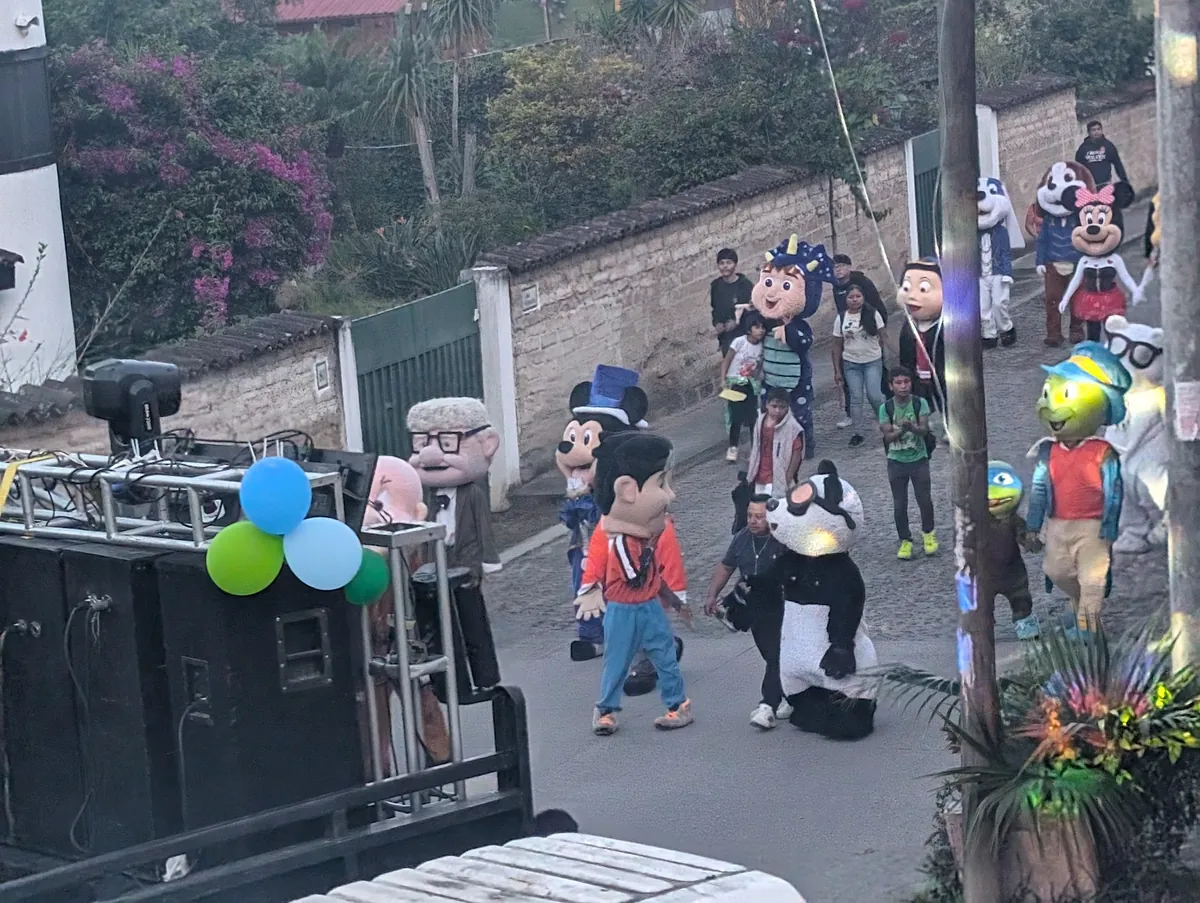
September 15 parades in Guatemala are not military displays. They are school parades – and they are spectacular in a completely different way.
What Makes Them Unique
- Marching bands (bandas de guerra): Schools compete to have the best marching band. Drums, lyres, trumpets, and majorettes practice for months. Some bands have 100+ members.
- Bastoneras: These are baton twirlers and majorettes, usually teenage girls, in elaborate uniforms. Their routines are choreographed performances.
- Civic floats: Schools and civic organizations build floats representing Guatemalan culture, Mayan heritage, and independence themes.
- Traditional dances: Groups perform dances like the Danza de los Venados (Deer Dance) and Baile de la Conquista (Dance of the Conquest).
Best Viewing Spots
| Location | What to Expect | Crowd Level |
|---|---|---|
| Guatemala City, 6a Av. Zona 1 | Largest parade, biggest bands, most floats | Very crowded |
| Quetzaltenango, Parque Central | Highland tradition, excellent bands | Crowded |
| Antigua Guatemala, Parque Central | Colonial setting, smaller but charming | Moderate |
| Coban, Alta Verapaz | Unique Q’eqchi’ cultural elements | Moderate |
| Your local town | Intimate community experience | Low to moderate |
Pro tip: Every single town in Guatemala holds its own parade. If you are outside the major cities, attend the local one. You will see a more authentic celebration and the community will appreciate your presence. Small-town parades often start at 6:00 AM and finish by noon.
The Soundtrack of September
You will hear certain songs everywhere during Fiestas Patrias:
- “Guatemala Feliz” – the national anthem, played at every civic act
- “Luna de Xelaju” – the unofficial anthem, a marimba waltz about Quetzaltenango
- “Soy de Zacapa” – a classic Guatemalan folk song
- Marching band cadences – each school has signature drum patterns
The marimba is the national instrument of Guatemala, and September 14-15 is when you will hear it the most. Municipal buildings, restaurants, and town squares set up marimbas for live performances.
Food and Street Vendors
Independence Day celebrations come with specific food traditions:
| Food | Description | Typical Price |
|---|---|---|
| Tostadas | Fried tortillas with guacamole, salsa, curtido | Q5-10 ($0.65-1.30) |
| Chuchitos | Guatemalan tamales (smaller, with tomato sauce) | Q5-8 ($0.65-1.04) |
| Rellenitos | Plantain filled with sweetened black beans | Q5-10 ($0.65-1.30) |
| Atol de elote | Sweet corn drink served warm | Q5-10 ($0.65-1.30) |
| Elotes locos | Corn on the cob with mayo, cheese, hot sauce | Q10-15 ($1.30-1.95) |
| Shuco | A late-night hot dog with guacamole and cabbage | Q15-25 ($1.95-3.25) |
Street vendors set up along parade routes starting early morning. Cash is essential – very few vendors accept card payments.
Safety Tips
September 15 is generally safe. It is a family celebration, not a party holiday. That said, keep these tips in mind:
- Crowds attract pickpockets. Keep valuables in front pockets or a cross-body bag, especially along parade routes in Guatemala City.
- Fireworks are everywhere. Guatemalans love firecrackers (cuetes) and some can be loud and unpredictable. If you are sensitive to loud noises, bring earplugs.
- Traffic is chaotic. Major roads are closed for parades. If driving, expect detours and delays. Leave early or use public transport.
- ATMs may run out. Banks are closed September 15. Withdraw cash on September 13-14.
- Stay aware on September 14 night. The midnight celebrations involve large crowds and fireworks. Stay in well-lit, populated areas.
For current safety information by department, check our Guatemala safety data.
Celebrating Outside Guatemala City
While the largest events are in the capital, some of the best experiences are in smaller cities:
Quetzaltenango (Xela): The highland city takes September 15 seriously. The parade through the Parque Central is one of the best outside the capital. The altitude (2,333 m) means cool weather for marching.
Antigua Guatemala: The colonial architecture creates a dramatic backdrop. Parades are smaller but photogenic. The town fills up but nowhere near Semana Santa levels.
Coban, Alta Verapaz: If the Feria de Agosto (Rabin Ajau) is happening nearby, you get a double cultural experience. Q’eqchi’ traditional elements blend with standard patriotic celebrations.
Chichicastenango: The Thursday/Sunday market continues, and if September 15 falls near a market day, you get a unique combination of commerce and patriotic celebration.
What to Wear
Guatemalans take Fiestas Patrias dress seriously:
- Blue and white are the colors of the day (the Guatemalan flag)
- Many people wear traditional Maya textiles (huipiles, cortes) with pride
- Students wear school uniforms for parades
- Casual but neat attire is appropriate for spectators
- Comfortable shoes are essential – you will be standing for hours
Weather in September
September is in the middle of the rainy season. Expect:
- Morning: Usually dry, 18-25 C (64-77 F) depending on altitude
- Afternoon: Rain likely after 2:00 PM, sometimes heavy
- Evening: Clearing skies for fireworks (usually)
Bring a light rain jacket or umbrella. Parades happen rain or shine – Guatemalans do not cancel for rain. Check our weather page for real-time forecasts.
For Guatemalans Living Abroad
If you are part of the diaspora, September 15 is a bittersweet day. Many Guatemalan communities in the United States organize their own celebrations:
- Los Angeles: The largest Guatemalan community in the US holds parades and festivals in MacArthur Park area
- Houston, TX: Celebrations in the Gulfton/Sharpstown area
- New York/New Jersey: Events in Trenton, NJ and parts of Brooklyn
- Washington, DC: Embassy events and community gatherings
If you are sending money home for family celebrations, compare remittance rates to get the best exchange rate. September is a popular month for remittances.
Practical Information Summary
| Detail | Information |
|---|---|
| Holiday date | September 15, 2026 (Tuesday) |
| Official holiday | Yes – banks, government, schools closed |
| Main celebration | September 14 night + September 15 all day |
| Best city for parades | Guatemala City (largest), Quetzaltenango (best highland) |
| Estimated crowd (capital) | 200,000+ along parade route |
| What to bring | Cash, umbrella, comfortable shoes, blue/white clothing |
| Safety level | Generally safe; watch for pickpockets in crowds |
Guatemala’s Independence Day is one of those experiences that connects you to the country in a way that tourist attractions cannot. Whether you are standing on 6a Avenida in the capital watching a 200-piece marching band thunder past, or sitting in a small-town parque central watching local kids proudly carry the flag, September 15 gives you a window into what it means to be Guatemalan.