November 1 in Guatemala is not a somber, quiet day of mourning. It is a vivid, loud, colorful celebration of life, death, and connection with those who have passed. While most of the world associates the Day of the Dead with Mexico’s sugar skulls and marigold altars, Guatemala has its own completely distinct traditions – and they are arguably more spectacular.
The centerpiece is the Festival de Barriletes Gigantes: massive kites up to 18 meters in diameter, flown in cemeteries to communicate with the dead. Add a traditional dish with 50+ ingredients that takes days to prepare, cemetery picnics with live marimba music, and you have one of the most unique cultural events in the Americas.
Quick summary: November 1, 2026 falls on a Sunday and is an official public holiday. The giant kite festivals in Sumpango and Santiago Sacatepequez (both in Sacatepequez department, near Antigua) are the main attractions. Fiambre is the traditional dish. Expect 50,000+ visitors at Sumpango.
When and Where: Key Details for 2026
| Detail | Information |
|---|---|
| Date | November 1, 2026 (Sunday) |
| Official holiday | Yes – Dia de Todos los Santos |
| Giant kite festival (Sumpango) | November 1, 8:00 AM - 5:00 PM |
| Giant kite festival (Santiago Sacatepequez) | November 1, 8:00 AM - 4:00 PM |
| Cemetery visits | November 1, all day (peak 7:00 AM - 2:00 PM) |
| Fiambre served | November 1, typically at lunch |
| November 2 | Dia de los Fieles Difuntos – smaller gatherings, some cemetery visits continue |
The Giant Kites (Barriletes Gigantes)
The festival de barriletes gigantes is Guatemala’s most unique November 1 tradition and has been recognized by the Guatemalan government as Intangible Cultural Heritage. Two towns in Sacatepequez department hold the main festivals.
Sumpango
Sumpango is the larger and more famous of the two festivals. Here is what makes it remarkable:
The kites: Barriletes range from 2 meters to over 18 meters (60 feet) in diameter. The largest ones are not actually flown – they are displayed vertically as massive works of art. Medium-sized kites (4-8 meters) are actually launched.
The construction: Community groups spend 2-6 months building the barriletes. They use only traditional materials: tissue paper (papel de china), bamboo, rope, and homemade glue. The designs carry messages – social commentary, political themes, environmental messages, and tributes to the deceased.
The belief: The Kaqchikel Maya tradition holds that the sound of the wind passing through the kites carries messages to the dead. The kites serve as a bridge between the living and the spirit world.
Practical information for visiting Sumpango:
| Detail | Information |
|---|---|
| Distance from Antigua | 15 km (30 minutes) |
| Distance from Guatemala City | 55 km (1.5 hours, more with traffic) |
| Entrance fee | Free (some years a small fee of Q10-20) |
| Expected attendance | 50,000-80,000 visitors |
| Parking | Limited – arrive before 8:00 AM or use shuttle from Antigua |
| Food available | Street vendors throughout the cemetery and town |
Tips for Sumpango:
- Arrive by 7:30 AM to see the kites before crowds peak
- The largest kites are displayed starting around 9:00 AM
- Wind picks up in the afternoon, which is when medium kites fly
- Bring sun protection – you will be in an open field
- The cemetery terrain is uneven; wear comfortable shoes
- Photography is welcome and encouraged
Santiago Sacatepequez
Santiago Sacatepequez holds a similar but smaller festival, about 10 km from Sumpango. Some visitors prefer it for its more intimate atmosphere. The kites here tend to be slightly smaller but the cultural experience is equally authentic.
Key difference: Santiago’s festival takes place directly in the town cemetery, making the connection between the kites and the deceased more visible. Families visit graves, leave flowers, and fly smaller kites over the tombs of their relatives.
Fiambre: The Dish You Wait All Year For
Fiambre is to November 1 what turkey is to Thanksgiving – except it is far more complex. This cold salad has no equivalent in any other cuisine.
What Goes Into Fiambre
A traditional fiambre contains 50 to 80 ingredients. Here are the main categories:
| Category | Typical Ingredients |
|---|---|
| Cold cuts | Salami, mortadella, chorizo, longaniza, jamon |
| Cheeses | Queso de capas, queso seco, queso fresco |
| Vegetables | Beets, green beans, carrots, pacaya (palm flower), brussels sprouts |
| Pickled items | Olives, capers, baby corn, gherkins, pearl onions |
| Sausages | Butifarras, salchicha de huevo, embuchado |
| Garnishes | Hard-boiled eggs, radish roses, lettuce |
| Dressing | Vinegar, mustard, Worcestershire sauce, chicken broth, spices |
The Two Styles
- Fiambre rojo: Includes beet juice in the dressing, giving it a pinkish-red color. More common in Guatemala City.
- Fiambre blanco: No beet juice, lighter colored. Some families consider this the more refined version.
The Preparation
Fiambre preparation starts 2-3 days before November 1. The vegetables are cooked separately, the meats are sliced, and the dressing is prepared in stages. Many families have recipes that have been passed down for generations, with each household adding its own secret ingredients.
Where to try fiambre if you don’t have a Guatemalan family invitation:
- Restaurants in Antigua and Guatemala City offer fiambre specials throughout the last week of October and first week of November
- Market stalls in municipal markets sell individual portions (Q25-60)
- Some hotels in tourist areas include fiambre in November 1 buffets
For more Guatemalan food traditions, see our food guide.
Cemetery Visits: A Celebration, Not a Mourning
On November 1, Guatemalan cemeteries transform into festive gathering places. This is not the quiet, solemn cemetery visit you might be used to.
What Happens at the Cemetery
- Families arrive early (6:00-7:00 AM) to clean and decorate graves with fresh flowers, especially coronas (wreaths) of chrysanthemums and gladioli
- Marimba bands play next to the tombs – families hire musicians or groups play voluntarily
- Picnic lunches happen right in the cemetery, usually featuring fiambre
- Children play between the graves while adults reminisce about deceased relatives
- Vendors sell flowers, food, and drinks at cemetery entrances
Notable Cemeteries to Visit
| Cemetery | Location | What Makes It Special |
|---|---|---|
| Cementerio General | Guatemala City, Zona 3 | Largest in the country; elaborate mausoleums, heavy activity |
| Cementerio de Sumpango | Sumpango, Sacatepequez | Giant kite festival venue |
| Cementerio de Santiago Sacatepequez | Santiago, Sacatepequez | Kite festival + traditional cemetery activities |
| Cemeteries in Chichicastenango | Quiche | Strong Maya syncretism with Catholic traditions |
| Cementerio de Antigua | Antigua Guatemala | Colonial-era graves, well-maintained |
How Guatemala’s Day of the Dead Differs from Mexico’s
Many visitors expect to see Mexican-style Day of the Dead celebrations. Guatemala’s traditions are distinct:
| Element | Mexico | Guatemala |
|---|---|---|
| Iconic tradition | Ofrendas (home altars), sugar skulls | Barriletes gigantes (giant kites) |
| Traditional food | Pan de muerto, mole | Fiambre |
| Cemetery activity | Altar decoration, candles | Live music, picnics, kite flying |
| Flowers | Cempasuchil (marigolds) | Chrysanthemums, gladioli |
| Spiritual connection | Altars guide spirits home | Kites carry messages to the dead |
| Cultural influence | Aztec/Spanish | Kaqchikel Maya/Spanish |
| Media representation | Heavily featured in films, TV | Relatively unknown internationally |
Guatemala’s tradition is less commercialized and more community-focused. You will not find sugar skull face paint or Disney-influenced aesthetics here. The celebration is genuine and deeply rooted in Kaqchikel Maya spirituality.
Other November 1 Traditions
Convite Dances
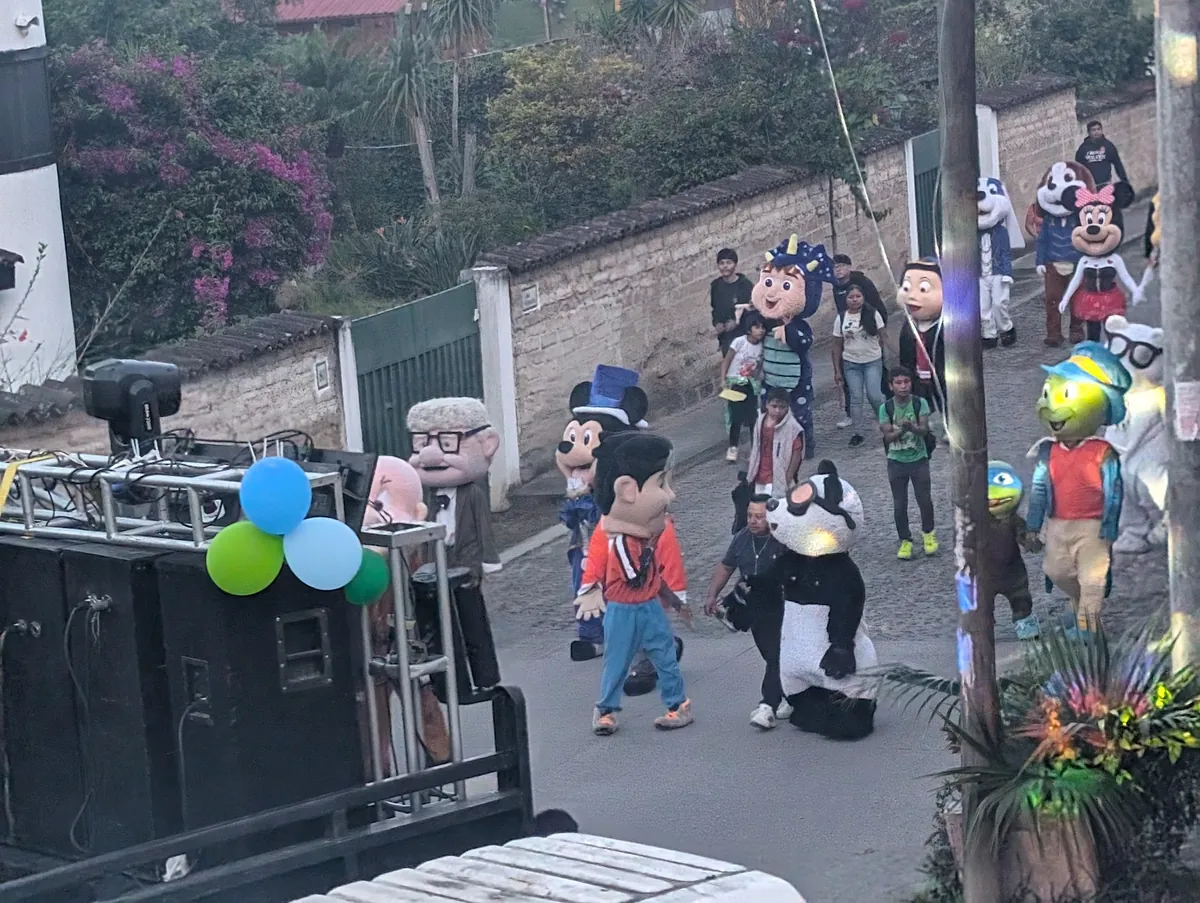
In many highland towns, groups organize convites – street dances with elaborate costumes and masks. Participants dress as historical figures, fictional characters, or satirical representations of politicians. The dances are accompanied by marching bands and can go on for hours. Key towns: Chichicastenango, Solola, Totonicapan.
Kite Flying Everywhere
While Sumpango and Santiago have the giant kites, children across Guatemala fly small kites on November 1. It is common to see the sky full of small paper kites over every town. Buying and flying a kite is a family activity – materials cost Q5-20 at any tienda or street vendor.
Visits to Hot Springs
Many families combine the holiday with a trip to aguas termales (hot springs). Popular spots include Fuentes Georginas near Quetzaltenango and the hot springs in Amatitlan.
Getting to Sumpango and Santiago from Antigua
| Option | Details | Cost |
|---|---|---|
| Shuttle from Antigua | Tour operators run shuttles starting 6:00 AM, book in advance | Q75-150 ($10-20) |
| Chicken bus | From Antigua terminal, buses run every 15-20 minutes | Q5-10 ($0.65-1.30) |
| Private car/taxi | 30 minutes from Antigua, parking is the challenge | Q150-300 ($20-40) |
| Uber/InDrive from Guatemala City | Available but surge pricing likely; 1.5+ hours | Q150-250 ($20-33) |
Important: Roads to Sumpango will be congested from 9:00 AM onward. If driving, arrive before 8:00 AM or expect significant delays. Returning to Antigua or Guatemala City in the afternoon can take 2-3 times the normal travel time.
Weather on November 1
November 1 falls near the end of the rainy season, but the weather is transitioning:
- Temperature: 18-24 C (64-75 F) in the highlands (Sumpango, Antigua)
- Rain: Possible afternoon showers, but less likely than September-October
- Wind: Important for kite flying – afternoon winds are usually 15-25 km/h
- Sun: Strong midday sun; bring sunscreen and a hat
Check our weather page for the latest forecasts.
Safety and Practical Tips
- Crowds are large but family-friendly. The atmosphere is celebratory, not rowdy. Still, watch belongings in crowded areas.
- Cash is essential. No vendors accept cards. ATMs near festival sites may run out. Bring enough for the day.
- Arrive early, leave early. Traffic to and from Sumpango becomes gridlocked by mid-morning.
- Respect the traditions. Ask before touching kites or photographing grieving families at graves. Most people are welcoming but use common sense.
- Sunscreen and water. You will be outdoors for hours in an open cemetery field.
- Comfortable shoes. Cemetery terrain is uneven, dusty, and potentially muddy.
Summary
| Detail | Information |
|---|---|
| Date | November 1, 2026 (Sunday) |
| Official holiday | Yes – Dia de Todos los Santos |
| Main attraction | Giant kite festival in Sumpango (50,000+ visitors) |
| Traditional food | Fiambre (cold salad, 50-80 ingredients) |
| Best arrival time | Before 8:00 AM at Sumpango |
| Distance from Antigua | 15 km (30 min without traffic) |
| What to bring | Cash, sunscreen, water, comfortable shoes, camera |
| Weather | 18-24 C, possible afternoon showers |
Guatemala’s November 1 celebrations offer something you simply cannot find anywhere else in the world. The giant kites of Sumpango alone are worth the trip, but combined with the cemetery traditions, the fiambre, and the genuine warmth of Guatemalan families celebrating their connection to loved ones who have passed, it becomes one of those experiences that changes how you think about life and death.